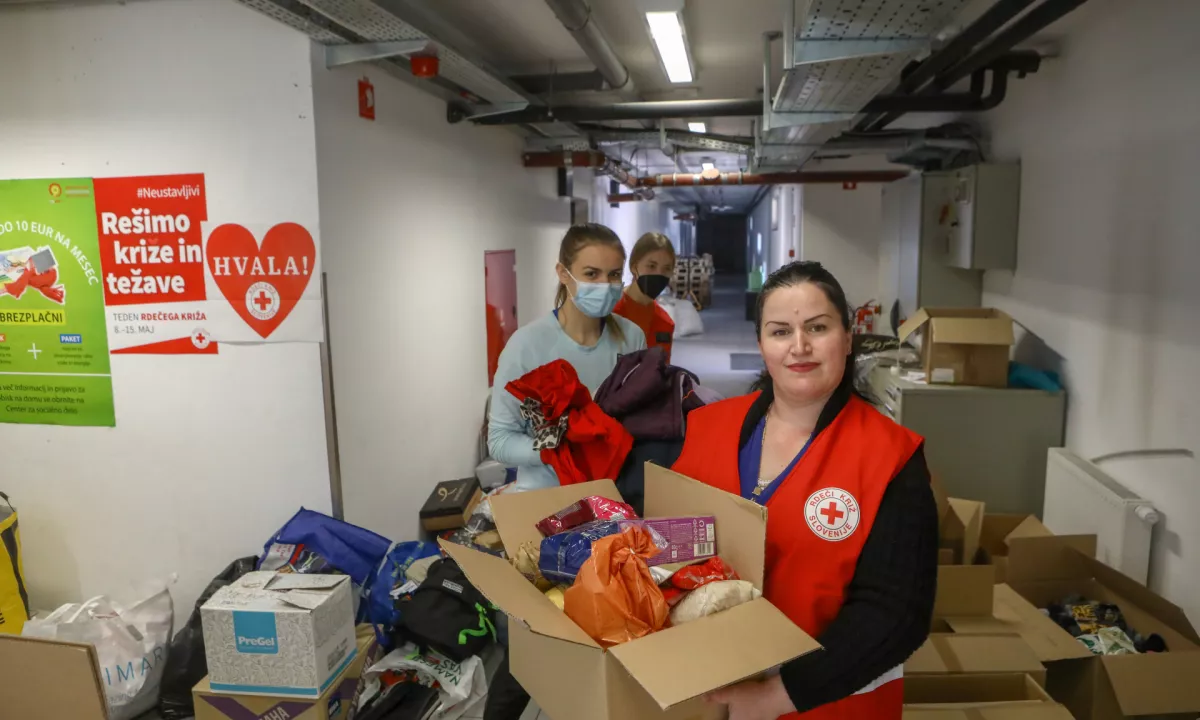
Collecting things for charity is a tradition that will not die out
Charity and empathy go hand in hand. With the latter, mother nature equipped us so that we could understand each other’s feelings and thus create an environment in which we could survive and survive as a species. If not, we’d be snapping each other’s necks from the start. There would be no one on the planet, at least not from the homo sapiens species, who would threaten, attack, bomb, blow up, evict, and all the other crazy things we do today. After all, nature has also equipped us with mechanisms to detect and respond to danger.
19 June 2026, 12:00 p.m

While we were emoting with others, defending ourselves and procreating, we also started to think, and until today we came up with a social system that was supposed to be fair to everyone and not leave anyone behind. But it’s not like that. Many people need help today, and good people help them in different ways. Also by collecting waste paper, plastic caps, clothes, food and corrective glasses.
Man belongs to the class of mammals. Mammals give birth to live, helpless young that cannot survive without parental care. In order for the mother to be able to take care of the puppy, she must be able to detect and feel his distress, crying, hypothermia, fear. This primal maternal bond developed empathy for the rest of the community. In some animal species, it could be attributed to instinct alone, but scientists have found through neurological experiments that practically all mammals have developed the foundations of empathy to a certain extent.
In addition to humans, our closest relatives, chimpanzees and bonobos, show an extremely high level of empathy. They know how to comfort and hug and even share food with someone who doesn’t have it, even if that means they themselves will have less. However, most mammals only feel strong empathy towards members of their herd, family or group, and can be extremely aggressive towards foreign members of the same species. This de facto also includes humans, as no one else currently shows such aggression towards foreign members of the same species.
However, there is something that separates him from others. Animals only react to the distress they see here and now. Humans are the only mammal that can feel empathy for someone on the other side of the world or for people they don’t know, and feel and understand their plight. That’s why he often helps, even by collecting things.
The tradition of collecting things
In Slovenia, the culture of collecting material and other goods for charitable purposes is well developed. We don’t only collect money, but with a very special drive, we also collect a wide variety of items with which we help people in need, sick children or animals. We provide basic assistance to the weakest by collecting food and other daily necessities. Permanent foods include flour, oil, pasta, rice, canned food, milk, cereals and the like. In many stores, baskets are placed at the exit, in which purchased products can be placed for those who need help. Personal hygiene products such as shampoo, soap, toothpaste, washing powder and diapers for children and adults are also collected.
The article is accessible only to subscribers
The article is accessible only to subscribers