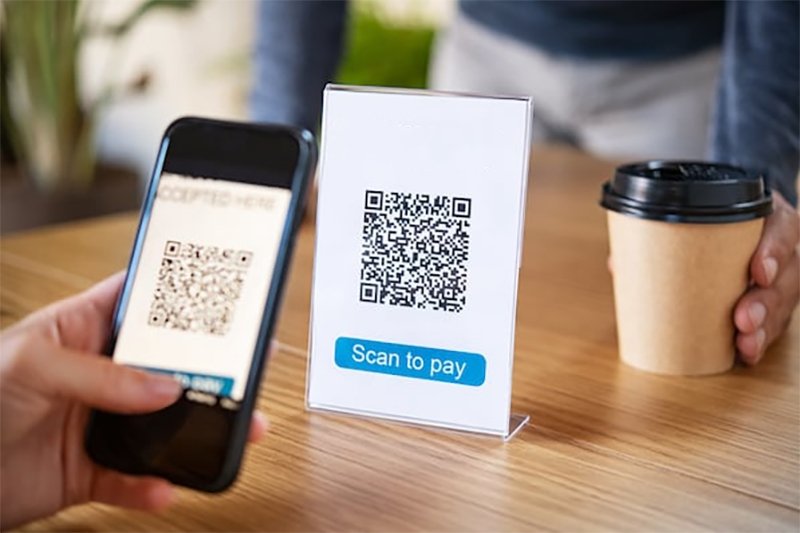
From July 1, it will be mandatory for businesses to use the unified UzQR system. The commission charged to the seller was set at 0.65 percent. In some cases, up to 1% of the transaction amount is deducted from the buyer. According to the Central Bank, the fee collected from consumers is not part of the system tariff, but is a personal initiative of the relevant participants. Work is underway to regulate these cases.
In December 2025, the presidential decree provides for the introduction of uniform QR-codes was signed. According to him, from January 1, the introduction of single QR-codes into the activities of all legal entities in the trade and service sectors began, and from July 1, their use will become a mandatory requirement. That is, legal entities will have to create an opportunity for their customers to pay not only in cash or through a terminal, but also through a single QR code. Violation of this rule will result in liability.
The main feature of the UzQR code is that the consumer can make a payment by scanning a single QR code through any bank application or mobile application of a payment organization. In this way, trade and service entities will be freed from the need to maintain several different QR codes and payment solutions.
Commission fee — 0.65 percent
to the data of the Central Bank according toa commission of 0.65 percent of the transaction amount is charged to the seller for UzQR. This commission is distributed as follows:
-
Acquirer bank (the bank that installed the QR-code to the merchant) — 0.10 percent;
-
Uzcard – 0.075 percent;
-
Humo — 0.05 percent;
-
QR-code operator (continuous system support) — 0.20 percent;
-
Payment initiator (mobile application that reads QR code) — 0.15 percent;
-
Paying bank (the bank making the payment in the system) — 0.05 percent.
“In order to objectively evaluate the general tariff of 0.65 percent of UzQR, it is appropriate to compare it with the existing tariffs in the current payment services market. Today, in the market of payment services, the acceptance of payments through QR-codes for trade and service entities is 1-3 percent,” said the MB report.
According to the regulator, the official tariff structure of the system does not provide for charging any commission from the payer (consumer). The total tariff consists of 0.65 percent paid by the merchant only and distributed among the chain participants as indicated above.
“At the moment, there are cases where some initiators collect an additional fee from the consumer. Such a fee is not a part of the system tariff — it is added by the relevant participants on their own initiative,” says the MB’s explanation.
The regulator noted that cases related to additional commission collection from the buyer are in the process of regulation.
Economist Otabek Bakirov said that the high commission may not make the single QR-code better than cash payments or terminal payments.
“It became clear that the single QR, which had high hopes, could not be better than cash payments or terminal payments with such huge commissions. Perhaps that is why it was declared mandatory. The scope of cashless payments is about to be expanded, and after that, consumers are witnessing a constant increase in fees for cashless payments and transactions,” he said. wrote she is.
Economist addedthe Central Bank could reduce the mandatory commission of 0.65 percent by half.
“What is the cost of passing payments through the system? Why, with regulatory and administrative measures, as well as other huge infrastructural resources, tariffs were not offered 2 times cheaper. The second question is the same, with 0.65%, +1% commission, UZQR cannot kill trade through cash (wasn’t that the purpose), both the seller and the consumer would still prefer cash or cheaper chooses to pay through the terminal (0.20 percent). And thirdly, the main risk to business and consumers is here, now the two monopolist payment systems have won the difference of increasing tariffs through terminals,” says Bakirov.