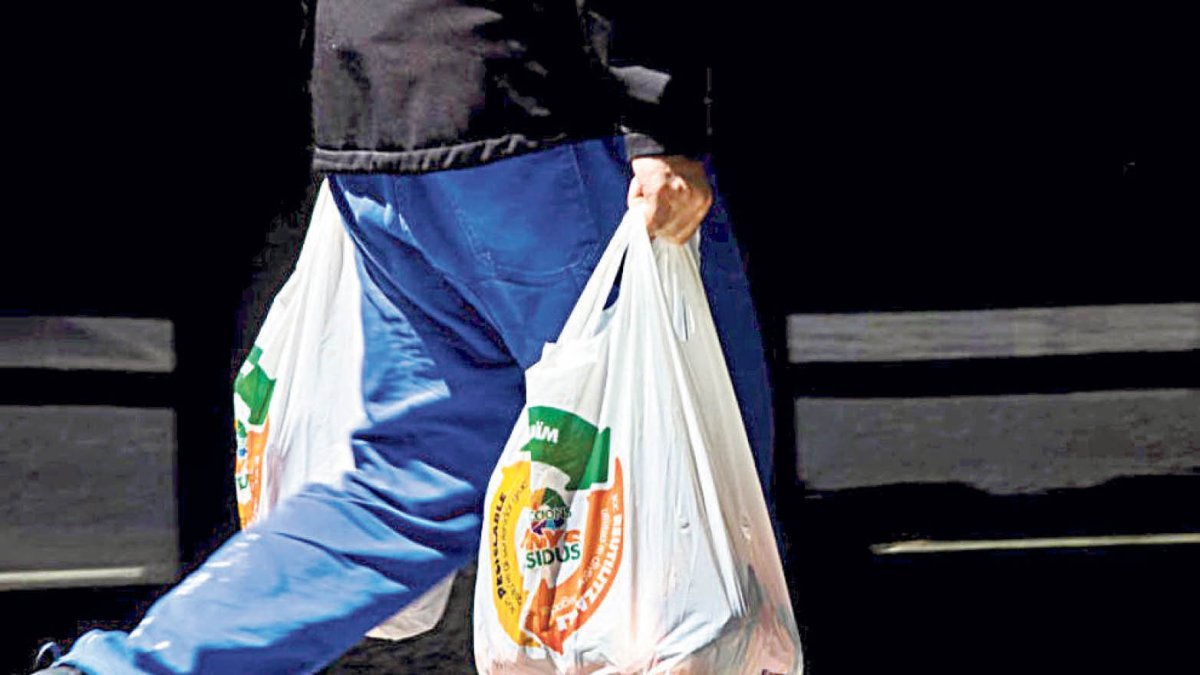

In 2017 the Government approved a decree for do away with plastic bags which were distributed for free at the shops’ checkouts, the aim was for everyone to bring their own and not single-use ones and for businesses to facilitate containers less aggressive to the environment and in any case of payment. The data collected showed the drastic reduction as early as 2021: in 2017, large shopping centers had handed out more than 3 million units, and four years later they had fallen to over 250,000. In addition, in 2024 to corroborate whether the reduction of plastic bags had been limited to a change of materials (because the supermarkets offered alternatives such as paper, raffia or also cardboard boxes) a data collection was carried out which corroborated that from 2017 to 2024, the distribution of bags in the boxes was reduced by 60%which “indicates that a important public awareness in this matter”. This is reflected in the balance of waste management from last year which remembers, however, the other plastic that continues to be consumed. Starting with the bags that continue to be dispensed especially in the fruit section, which represent practically 60% of the total that is distributed. In the boxes, and always according to the diagnosis of the year 2024, 24% of the total was given. But there are cases beyond the bags: the same year it went make a study of everything from single-use plastic products and existing alternatives. A list that includes a dozen items: drinking glasses, food containers, lightweight plastic bags, polystyrene trays, party items, razors, sanitary napkins, pads and tampons, balloons and fruit boxes. The report states that “a decrease in sales has been detected in items such as drinking glasses and food containers (by 2.5 and 6.2%, respectively), but on the other hand an increase has been noted in products such as sanitary napkins, single-use menstrual products or balloons. Monitoring of the data in the coming years will allow to determine if these trends are maintained“. The evidence is that in some cases there are quite a few alternatives. The diagnosis is that the need for reduction is high or very high in most cases (only Porexpan trays are listed as low) and average in menstrual hygiene products and fruit boxes. Regarding the feasibility of reduction, it is considered high in four cases: containers for drinks, celebration items, wipes and pads and tampons. Containers for food and fruit boxes are the ones with low viability (it’s already a matter of industry) and the rest are in the middle range. Reduction projections (the most immediate are milestones to be reached in 2030) are in line with reduction possibilities; thus, that year, drinking glasses, celebration items and sanitary napkins must be reduced by 55%, the most ambitious percentage.
The campaigns
The goal of reducing pads, panty liners and tampons is 35% by 2030; has been one of the focuses of a awareness campaign against single-use products to promote durable and more sustainable alternative items. The Ministry of the Environment promoted the distribution of menstrual cups and panties to women and last year 1,600 items were distributed.