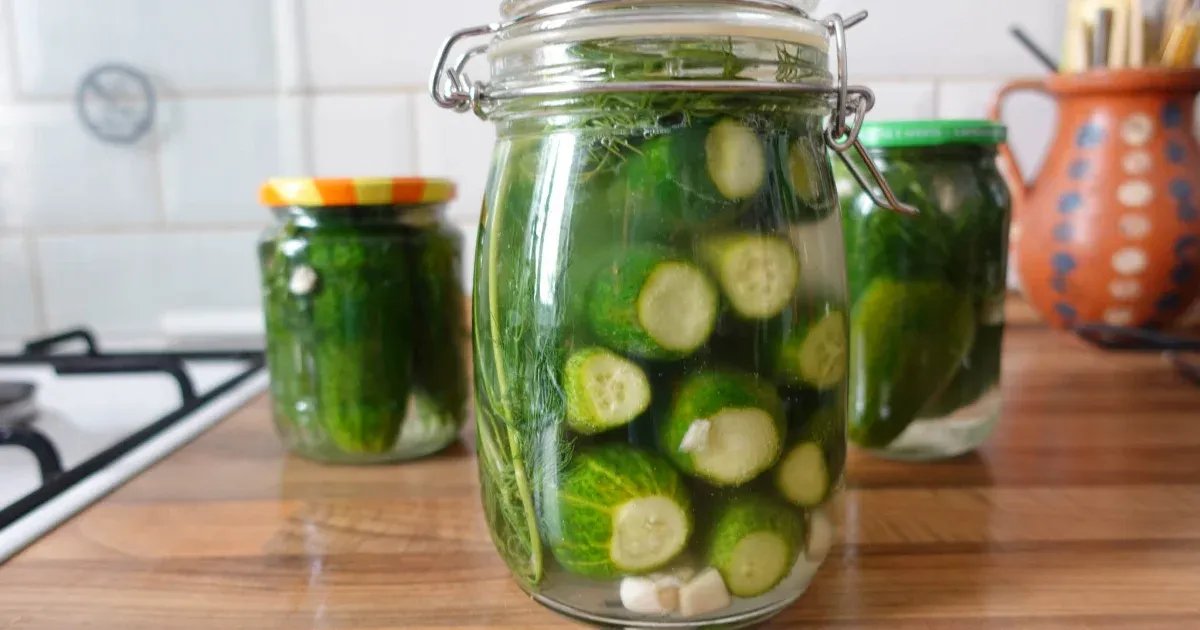
Most people are sure to crave ice cream when the temperature first rises above 30 degrees in summer, but I’m sure that like me, many people would rather have a bottle of ice cold pickles. It is also a food that we consider our own, we cannot imagine summer and potlucks without it, the gastro revolution also makes cream soups and ice cream from it, and it truly has a special place in the hearts (stomachs) of Hungarians.
Since fermentation fever has been raging in the last decade, I tested a couple of years ago to see what the difference is between the leavening method used in Hungarian traditions with bread, covered with a plate, and simple fermentation in a salt solution in a sealed bottle. About the results of the experiment here you can read more. The point is that each method starts the same lactofermentation process, it just happens at different speeds. The question is not that potatoes, bread, or none of them get into the jar, but that no bacteria other than what we put in it get into it, and that the jars are not affected by too much temperature fluctuation.
Since, according to my experience, there is less chance of goats slipping into the closed glass fermentation in salt water (which takes place without leaven, i.e. without bread) and the cucumbers remain crunchy more often, I have preferred this method ever since. Salt water, clean glass, cucumber and a few days, depending on the weather, a week standing on the counter or in the window.
Life has sped up even more since then, so now I’ve been looking for a solution that requires less waiting time. Day-old pickles go by the name of Russian pickles (malosolny), but after talking a few months ago With cookbook author Alissa Timoshkina about the complex issue of Russian-Ukrainian-Eastern European identity and its gastronomic effects and aspects, I would rather call it a Caucasian recipe. There are similar turbo pickles in Ukrainian, Russian and Polish cuisine.
The essence of the method is that they don’t wait until the cucumber is completely sour, they just let it ripen until the processes inside it start. In addition, the recipe is different from the basic fermenting recipes in that it contains slightly more salt.
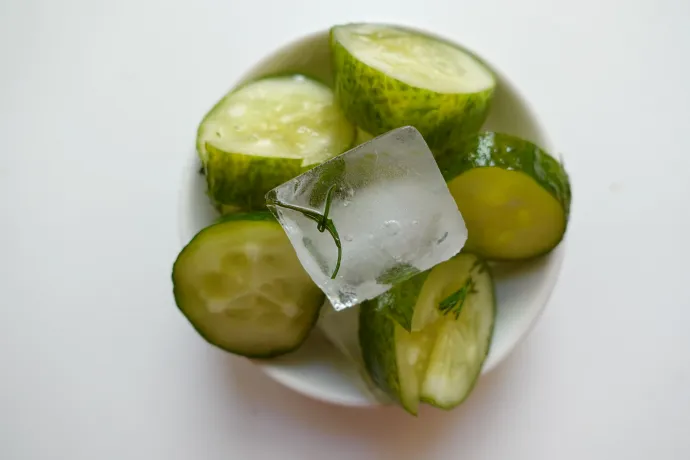
Same day – Photo: Bori Ács / Telex
In addition to these two conditions – that you have to wait 24 hours and that you need a bit more salt – each recipe is of course different. Most people also add spices to the brine, such as dill and lots of garlic. London chef Olia Hercules of Ukrainian origin, who is the biggest star of Caucasian cuisine in the Anglo-Saxon world, also packs other spices in the bottle, such as chili, celery, horseradish.
The most striking difference between the recipes is the way the salt, water and cucumbers are placed in the jar. Some people boil water with salt and pour it lukewarm over the cucumbers. Others simply stir the cold water until the salt dissolves. Timoshkina uses bubbly water to speed up the process. In short, the situation is the same as with domestic pickled cucumbers: there is no recipe for it, or there are thousands.
I tried the following method for the first time, the end result is a fresher, slightly salty, slightly sour cucumber, fresh when cold, and it works just as well with sweet potato fries, stews and shepherd’s tarragon as any pickled cucumber.
Quick Eastern European pickles
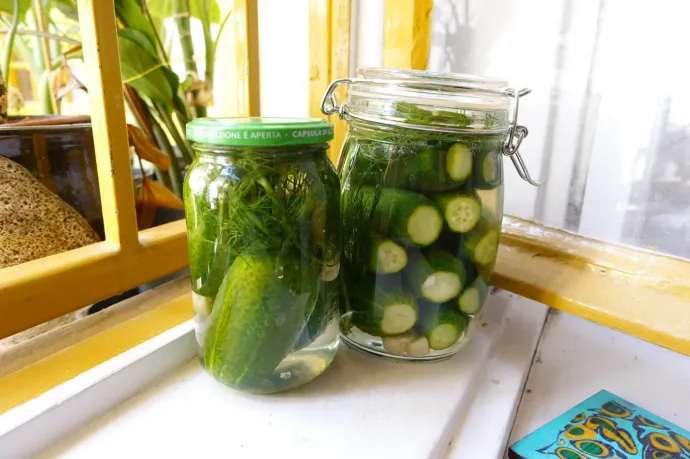
Summer = cucumber bottles in the window – Photo: Bori Ács / Telex
Basic materials:
- approx. a kilogram of pickled cucumbers – the smallest possible pieces
- approx. one liter of water, filtered or mineral water if possible, chlorine is not a good friend of the bacteria needed for fermentation
- one and a half to two tablespoons of salt, preferably non-iodized
- 5-6 cloves of garlic (more depending on taste)
- a large bunch of dill
I sterilize the bottle or bottles, i.e. wash them in the dishwasher at a high temperature. Otherwise, I wash it by hand and put it in the oven at 100 degrees for half an hour. If that’s not to my liking either, I boil water in a giant pot and boil the bottles in it for a few minutes.
I mix water and salt in a large jug.
I wash the cucumbers thoroughly, cut off both ends, make incisions, and prick them with the tip of the knife. I put peeled garlic cloves and a couple of dill sprigs on the bottom of the glass, and pile the cucumbers on top of that. Between them or on top, I place additional pieces of garlic and dill. I fill the jar with water so that it covers the cucumbers, they should not hang out from under it in any way, and I seal it airtight. I leave it in a warm place for a day or until it starts to bubble, on cooler days it can be two days. Then I refrigerate and then serve. The longer it sits in the fridge, the better it will be.