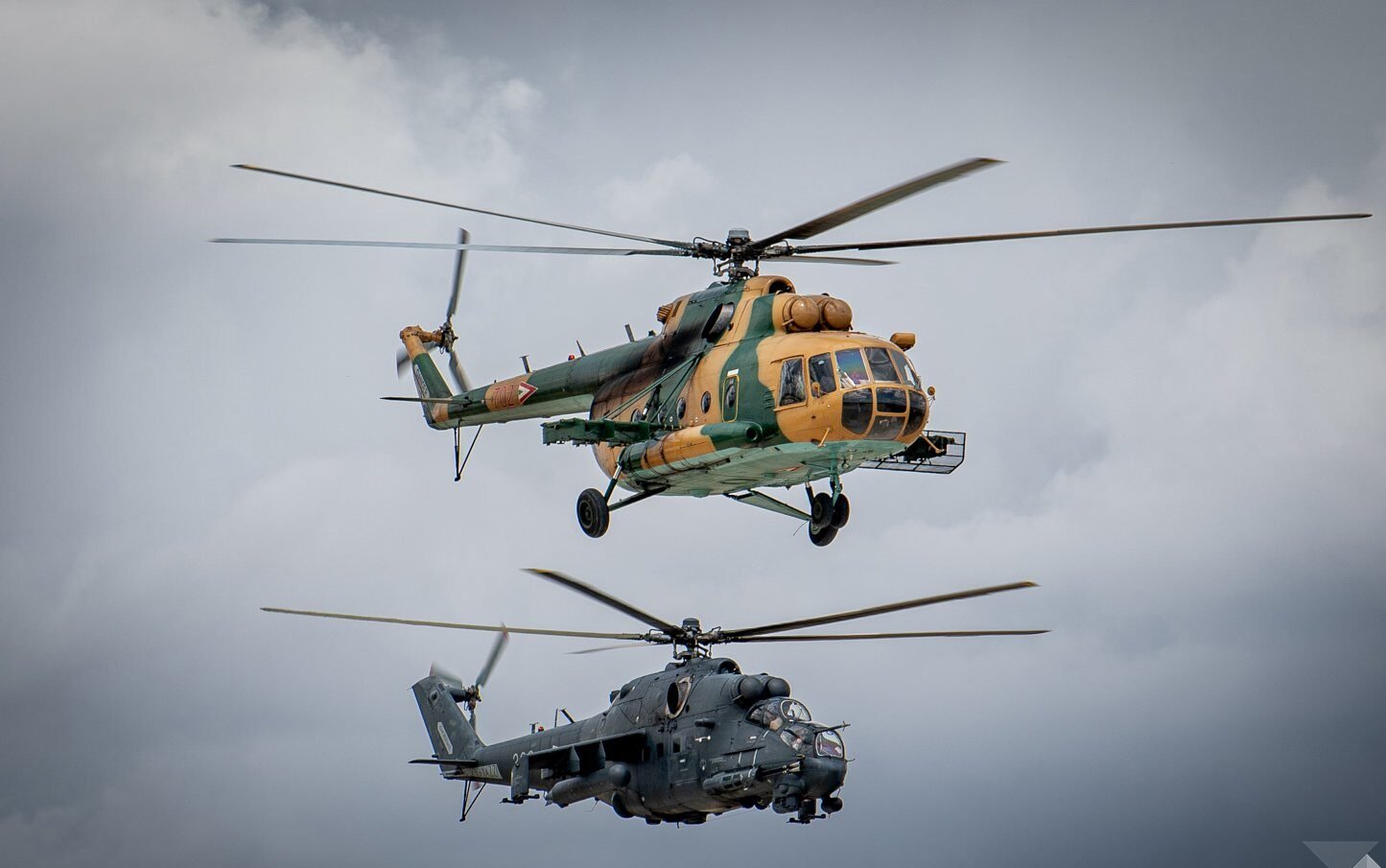

“The Mi-24 attack helicopters and the Mi-17 transport helicopters have served our country for decades. These aircraft were a constant presence during daily training and missions, and they also supported our comrades in international operations. They were always ready to enter service in times of need,” said Colonel Krisztián Kovács, commander of the Hungarian Defense Forces’ “Kiss József” 86th Helicopter Brigade, at the farewell ceremony for the Mi-24 and Mi-17 helicopters on June 17.
The Mi-24 helicopters were introduced into service in Hungary in 1978. They made their debut during the PAJZS-79 exercise, and their first live-fire exercise took place in 1980. In the 1980s, the Air Force reached the peak of its combat helicopter capabilities, with 39 Mi-24s in service at that time.

Mi-24 helicopter. Photo: honvedelem.hu/Franciska Veres

Mi-24 helicopter. Photo: honvedelem.hu/Franciska Veres
Interestingly, beyond their numerous overseas deployments and practical training exercises, these helicopters also made an appearance on the big screen.
In the fifth installment of the American action film Die Hard, filmed in Hungary, a previously damaged helicopter was destroyed in an explosion, while the helicopter bearing the serial number 333 also appeared in the movie.

Mi-24 helicopter. Photo: honvedelem.hu/Franciska Veres
The Mi-17 model family has become known for its reliability. The first units arrived to the Hungarian Defense Forces in 1987; a total of seven were purchased.
During more than three decades of service, the model has performed passenger and cargo transport missions, served in international missions, and carried out tasks such as search and rescue, medical evacuation (MEDEVAC), and support for firefighting and parachute jumps.

Mi-17 helicopter. Photo: honvedelem.hu/Franciska Veres

Photo: honvedelem.hu/Franciska Veres
“We honor the flight crew, flight engineers, aircraft maintenance technicians, and support staff. We honor all those who worked day and night to ensure that these aircraft were always ready for takeoff. I take particular pride in the community that has formed around these helicopters. Over the past decades, generations have passed down to one another their knowledge, professional humility, and commitment to aviation,” Colonel Kovács said in praise of the maintenance crew.

Mi-17 helicopter. Photo: honvedelem.hu/Franciska Veres
He added that a significant portion of the crew flew these aircraft for the first time, and many went on to become instructors, training the next generation on these rotary-wing aircraft. Although these aging aircraft are physically leaving the hangars, they will continue to be talked about for decades to come through memories and stories.

Photo: honvedelem.hu/Franciska Veres
The roles of the Mi-17 and Mi-24 helicopters have recently been taken over by the Airbus H145M and H225M rotary-wing aircraft currently in service.

An Airbus H225M (left) and an Airbus H145M helicopter. Photo: MTI/Czeglédi Zsolt

Via honvedelem.hu, Featured image: honvedelem.hu/Franciska Veres