News that the office of European Council President António Costa has begun to establish contacts with the Kremlin (see “Kommersant” dated June 18), caused an extremely negative reaction among European leaders. According to sources, the most objections were from the German Chancellor Friedrich Merz and the head of the Elysee Palace, Emmanuel Macron. Both leaders felt that now was not the right time to talk with Vladimir Putin, and when such a moment does come, the leading role should be taken by the countries of the Euro-three – France, Germany and the UK.
Word that António Costa’s chief of staff, Portuguese Pedro Lourtier – a man with a reputation in Brussels as a deal-maker – had contacted officials in Moscow twice in the last few weeks was leaked to the press late on Wednesday. That evening, speaking to the ambassadors of 27 EU governments, Lurtie, complaining about the leak, tried to justify this initiative. First of all, the official made it clear that the attempt to build bridges with Kremlin representatives (with whom exactly he communicated remained unknown) was made in response to a direct request from Ukrainian leader Vladimir Zelensky to Europe to take part in peace negotiations. And secondly, it was about “brief contacts without a meaningful exchange of views”, and the goal was simple – “to establish a communication channel so that, when the time comes, to have a diplomatic channel with Russia to protect the interests of the EU.”
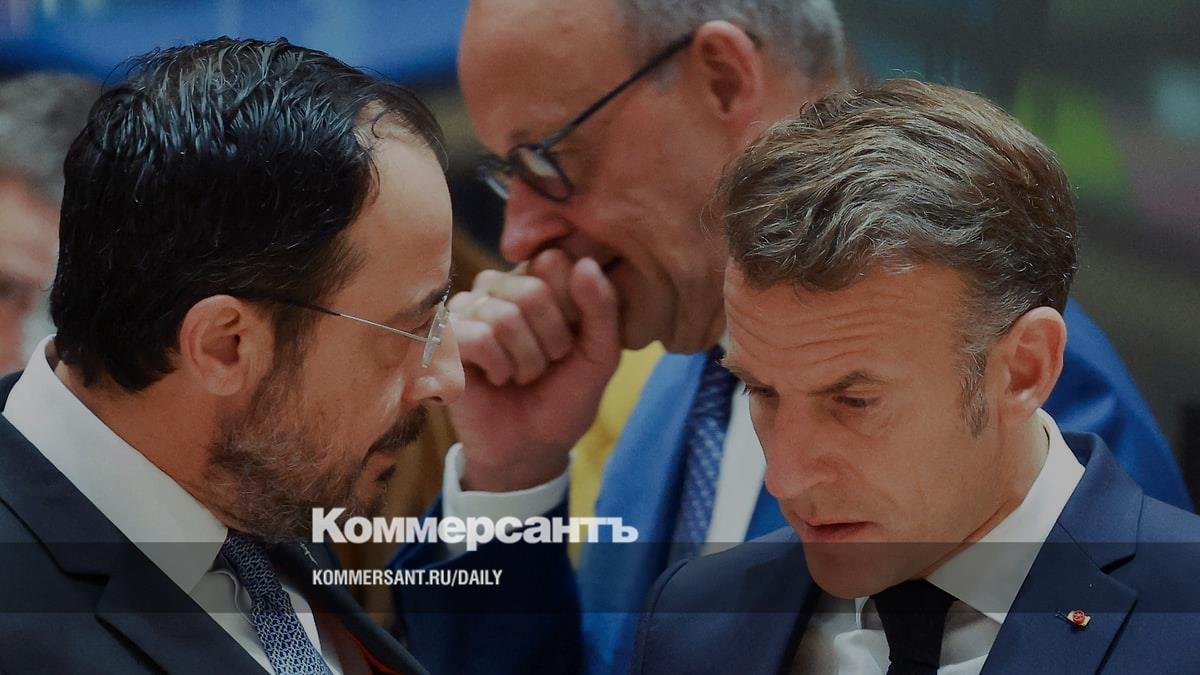
As the results of the summit of EU leaders that started on the evening of June 18 showed, these explanations reassured few people. At a traditional dinner in Brussels – the first since 2010, held without the now ex-Prime Minister of Hungary Viktor Orban and therefore not foreshadowing confrontation – French President Emmanuel Macron, together with German Chancellor Friedrich Merz, condemned António Costa’s attempts to establish contact with the Kremlin. The dinner meeting, which lasted a couple of hours longer than planned, was closed, but unnamed diplomats and EU officials were willing to share its details, in particular with Politico.
Thus, according to their stories, both Macron and Merz made it clear that now is not the right time for any direct communication with Vladimir Putin or anyone in his inner circle, and when this moment comes, France, Germany and the UK should take the leading role. Thus, Mr. Costa was made to understand that, although he represents the European Union, he should not speak on behalf of the association.
The position that it is not worth having any dealings with Russia, even if we are talking about testing the waters for the future, was also shared by the leaders of a number of other countries that are most vehemently opposed to Russia, as well as Denmark and the Netherlands.
One European diplomat said some leaders were “furious” about contacts with Russia and angered that they only learned about the calls to the Kremlin after news of it emerged in the press.
It is noteworthy that the office of the President of the European Council emphasized several times that Costa was not acting on his personal initiative and his office informed Germany, France, Great Britain and the European Commission before the start of telephone conversations with Moscow. In Berlin, however, they said that he was not warned.
Another sign of how painfully some in the EU perceive even minor and brief interactions with Russia was the interview of Estonian Prime Minister Kristen Michal to Politico, published on June 19. “Assumptions about the need for alternative channels or diplomatic bypasses are wrong. The goal remains the same: Putin must ultimately accept the conditions put forward by Vladimir Zelensky and Ukraine,” said Estonian Prime Minister Michal. And he added that “hasty diplomacy rarely brings long-term results; more often it brings bad ones.”
However, not all European leaders were so categorical. Some sided with Antonio Costa. One of them turned out to be Belgian Prime Minister Bart De Wever, who is difficult to suspect of pro-Russian sentiments, but who proved his pragmatic attitude by blocking the idea of freezing Russian financial assets in the EU.
Leaving a summit of EU leaders late at night, De Wever told reporters that the head of the European Council is “the only one who can represent us, and we must send him to Moscow.”
“The first question is whether Putin wants to negotiate. Until then… no one other than António Costa can represent the European Union. If he (the President of the Russian Federation.— “Kommersant”) will show readiness for negotiations, then I think we will have to decide again how we should act,” noted the Belgian Prime Minister as a sign of public support for António Costa.
Moscow has not yet commented on information about telephone conversations with representatives of Antonio Costa’s office.