Negotiations between the United States and Iran, which were supposed to take place in the Swiss city of Bürgenstock on June 19, have been postponed. According to American publications, the main reason for postponing the consultations, which are intended to lay the foundation for a broader settlement in the Middle East, was the situation around Lebanon, where the Israel Defense Forces (IDF), contrary to the US-Iranian agreements, continues to fight. As Iranian Supreme Leader Mojtaba Khamenei emphasizes, Tehran will not surrender its ally, Hezbollah, and will not make excessive concessions to the United States.
The Swiss Foreign Ministry informed about the cancellation of negotiations in the city of Bürgenstock on June 19. Foreign Ministry spokesman Nicolas Bidot did not give a reason, but stressed that his country “remains fully committed to its efforts to ensure dialogue” between the United States and Iran. The administration of President Donald Trump, in turn, announced the postponement of negotiations and linked this to logistical problems. “The logistics of these negotiations have never been simple or predictable,” the White House said in a statement released on the evening of June 18.
Sources of the Axios portal, meanwhile, spoke about a more likely reason for this development of events: according to them, the US-Iranian negotiations, which were supposed to be the next step in the settlement in the Middle East, were canceled due to the situation in Lebanon. An Israeli ceasefire in the republic, where the Iran-allied Shiite group Hezbollah operates, is one of the demands of the Islamabad Memorandum of Understanding, officially signed by Washington and Tehran on the evening of June 17.
The fact that Lebanon is the reason for the disruption of the meeting is also confirmed by Iranian news agencies, which noted that Tehran will not fulfill its obligations until it is convinced that Washington is implementing the agreement, including in Lebanon.
Beginning at midnight on June 19, the IDF launched a new wave of attacks on southern Lebanon. Beirut estimates that approximately 20 people were killed in the attacks. According to the press service of the Israeli army, the raids were a response to regular ceasefire violations by the Hezbollah group and its attacks in the northern regions of the Jewish state. One of the latest attacks led to the death of four Israeli soldiers in southern Lebanon, including the commander of a tank battalion.
Through bilateral channels, the government of Benjamin Netanyahu is trying to persuade the United States to allow IDF units stationed in Lebanon to remain there.
With regard to the American leader, Mr. Netanyahu intends to adhere to the principle of “saying “yes” where possible and “no” where necessary,” sources close to the prime minister told Israel Hayom.
“The enemies are at our borders, not at anyone else’s, and we will act against them,” one of Israel Hayom’s interlocutors emphasized.
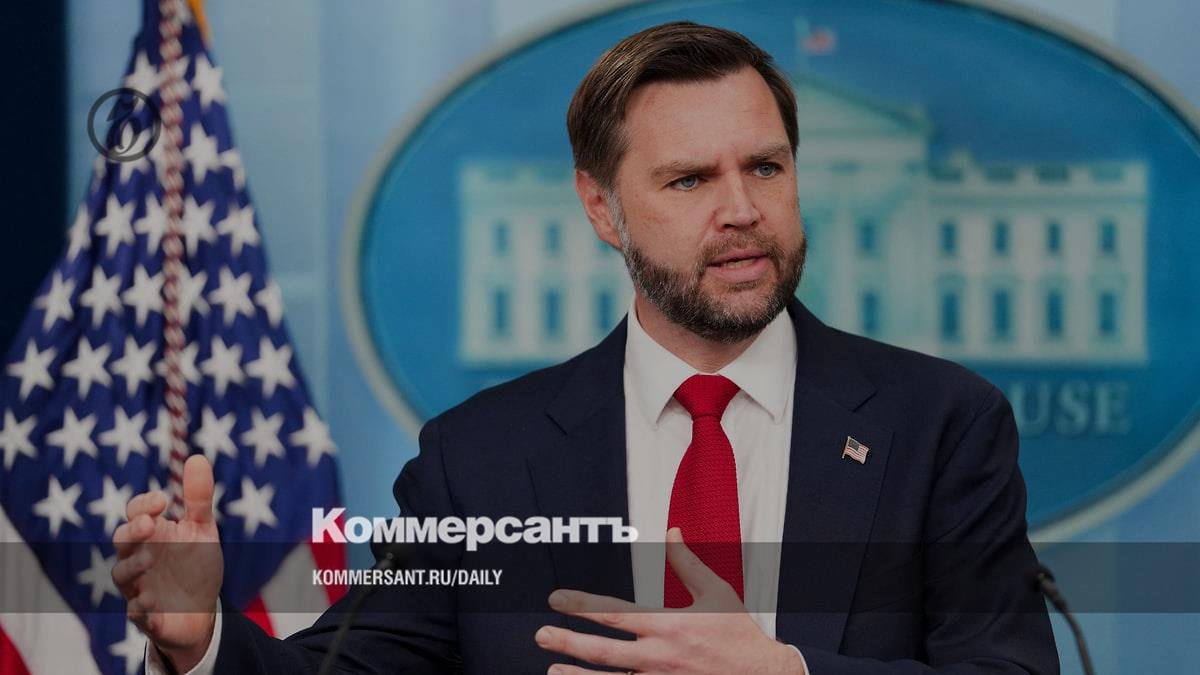
However, this position irritates Donald Trump’s team. As US Vice President J.D. Vance said on the evening of June 18, the head of the White House is “the only head of state in the entire world who currently sympathizes with Israel.” “It just so happens that he is the leader of a superpower. If I were in the Israeli cabinet, I might not have attacked our only powerful ally,” Mr. Vance hinted to the Israelis the need to be quieter.
Separately, the US Vice President recalled that “two-thirds of the defensive weapons” that Israel used during the last conflict with Iran “were created by American hands and paid for by American taxpayers.”
On the evening of June 18, Iranian Supreme Leader Mojtaba Khamenei made a separate statement regarding the negotiation process with the United States. He stressed that the ceasefire applies to all Tehran’s allies in the Middle East. If the American side tries to make excessive demands during further dialogue, Iran will not submit to them, he added. According to Mr. Khamenei, further negotiations with Washington will not mean that Tehran is “accepting the position of the enemy.”
In turn, the secretariat of Iran’s Supreme National Security Council said it would not allow the slightest concession to the Americans. “Under the conditions of complete distrust of the treacherous enemy who violates its promises and agreements, and careful monitoring of the negotiation process and the implementation of agreements, retaliatory measures will be taken in case of violation or non-fulfillment of obligations by the American side,” the Iranian security body warned.
The next step in the implementation of the Islamabad Memorandum of Understanding will be the development of its secret protocols, sources told CNN. According to them, a significant part of what Washington and Tehran have been able to agree on today are gentlemen’s agreements. Some of them are not advertised so as not to anger the American establishment, according to a CNN report.
The United States and Iran are “discussing next steps,” White House spokeswoman Olivia Wales told CNN. “But there are no final agreements beyond the memorandum of understanding, and the American negotiating team hopes to reach more agreements at future meetings,” she emphasized.
At the same time, already on Friday afternoon, as a sign of how fragile the agreements are, Tehran, according to the Bild newspaper, closed Strait of Hormuz in response to Israeli strikes on Lebanon. The Islamic Revolutionary Guard Corps radioed that all ships should not approach the Strait of Hormuz, and shots were fired in the area of the sea corridor, the newspaper reported. The Iranian Foreign Ministry called reports of the closure of the Strait of Hormuz false.
Added Bild message about the closure of the Strait of Hormuz and the reaction of the Iranian Foreign Ministry.