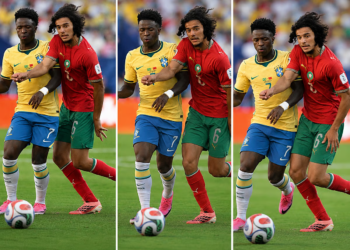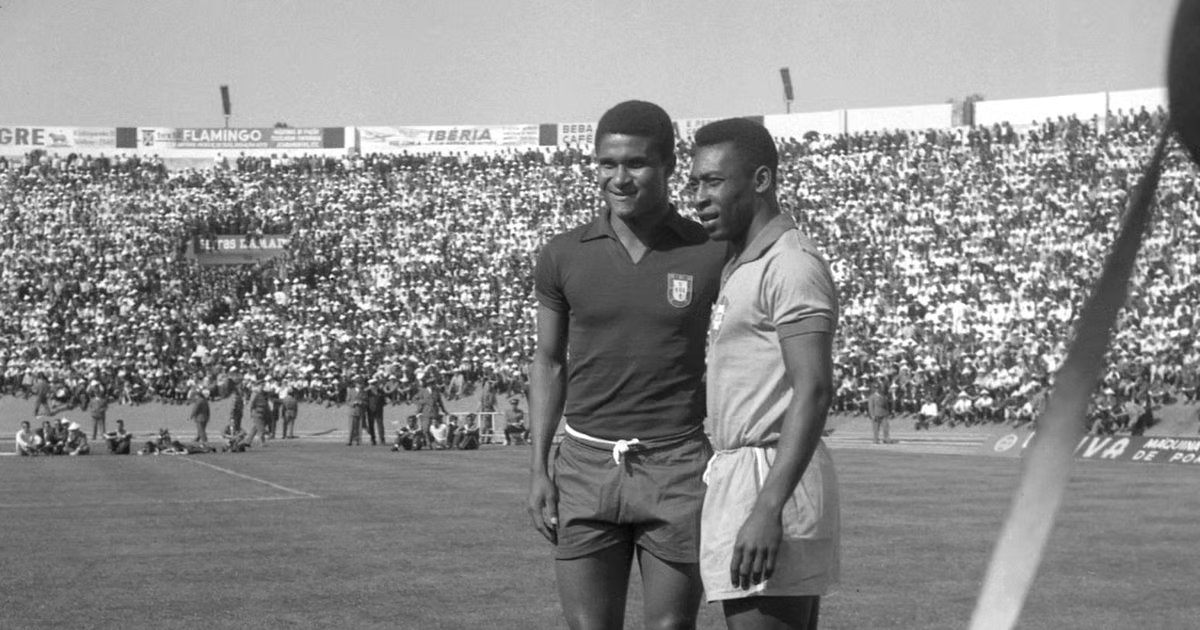
The second meeting took more than four decades to happen. In 2010, in South Africa, Real Madrid’s partners, Cristiano Ronaldo on one side and Kaká on the other, carried the expectations of two teams dreaming of the title. What we saw, however, was one of the weakest games of that World Cup.
With both teams already qualified, that match was marked by tough tackles, chances for both teams’ substitutes and few clear scoring opportunities – Brazil and Portugal drew 0-0. Subsequently, the Portuguese team would be eliminated by Spain in the round of 16, while Dunga’s team would fall in the next phase, against the Netherlands.
Scolari, the Brazilian who changed Portugal’s recent history
If there was anyone capable of uniting the recent stories of the two teams, it was Luiz Felipe Scolari. In 2002, Felipão, for Brazilians, led Brazil to the fifth world championship in South Korea and Japan, assembling a team that had Ronaldo, Rivaldo, Ronaldinho Gaúcho, Cafu and Roberto Carlos as main references. To this day, this was the last time that the Brazilian team lifted the most coveted trophy in football.
Just over a year later, Scolari chose a different challenge: leading Portugal, where he was part of one of the most remarkable periods in the recent history of the corner team. In his first major tournament, he led Portugal to the final of Euro 2004, played at home. Despite the fateful defeat against Greece, the campaign helped to create a new competitive mentality in a team that, historically, alternated between talented generations with results below expectations (it had been eliminated in the group stage at the 2002 World Cup).