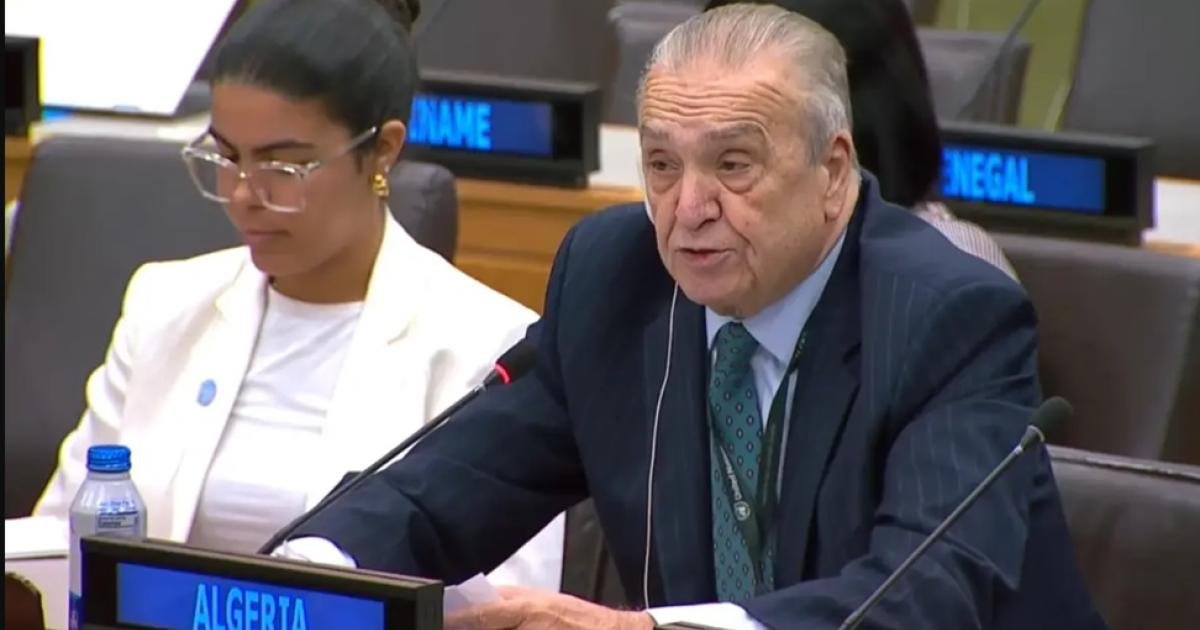
New York (United Nations), June 17, 2026 (SPS) – Algeria reaffirmed its firm and unwavering position on the issue of Western Sahara, the last colony on the African continent, while emphasizing Algeria’s firm commitment to support all sincere efforts aimed at reaching a just, lasting and final solution to the issue of Western Sahara that guarantees the people of Western Sahara the exercise of their inalienable right to self-determination.
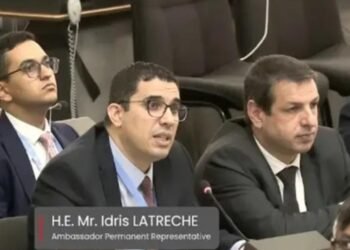
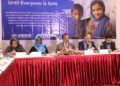
This confirmation was made by the Permanent Representative of Algeria to the United Nations, Ambassador Ammar Ben Jama, in his speech before the substantive session of the Special Committee on the Situation of the Implementation of the Declaration on the Granting of Independence to Colonial Countries and Peoples (the Committee of Twenty-Four), which began its work on Monday at the United Nations headquarters in New York.
Ambassador Ben Jama began his speech by saying that the issue of Western Sahara, the last colony in Africa, has been on the agenda of the Committee of Twenty-Four since 1963, that is, 63 years ago, indicating that this issue is still on the table because the people of Western Sahara have not yet been allowed to exercise their right to self-determination, which is an inalienable right.
Ambassador Ben Jama stressed that Algeria’s position on this issue is firm and unwavering, and will remain based on strict adherence to international law and relevant United Nations resolutions, noting that the basic principles governing the Sahrawi issue are clear.
In this context, he stressed that the issue is, above all, a matter of decolonization. The international legal authorities, and even judicial ones, that affirm the status of Western Sahara as a non-self-governing territory and enshrine the right of its people to self-determination—namely, the United Nations Charter (particularly Article 73), Resolutions 1514 and 1541, the advisory opinion of the International Court of Justice of 1975, and even the recent rulings (in October 2024)—resolve this issue once and for all.
Regarding recent developments, he pointed out that Algeria, like its sister Mauritania, responded positively to the call to participate in the ongoing political process, in its capacity as a neighboring state and an observer state at the same time, stressing that Algeria has consistently called for direct negotiations between the two parties to the conflict, Morocco and the Polisario Front, and has also steadfastly supported the efforts of the Secretaries-General of the United Nations and their personal envoys.
In this context, he stated that Algeria welcomed the direct negotiations that took place between Morocco and the Polisario Front earlier this year under the joint auspices of the United Nations and the United States, and stressed that Algeria will remain firmly committed to supporting all sincere efforts aimed at reaching a just, lasting and final solution to the Western Sahara issue that guarantees the people of Western Sahara the exercise of their inalienable right to self-determination.
He also pointed out that the resumption of direct negotiations between the Kingdom of Morocco and the Polisario Front is not an end in itself, as the two parties to the conflict have sat at the negotiating table several times in the past without reaching a final settlement of the conflict. Therefore, the goal this time will be to consolidate the political process on the basis of trust, good faith and sincere commitment, a foundation based on respect for international law, democracy and relevant UN resolutions.
He warned that continuing the discourse based on imposing a fait accompli and preconditions, belittling others, and denying their rights will only fuel frustration, which threatens to push the political process into a new dead end.
In conclusion, the Permanent Representative of Algeria to the United Nations stated that the mandate of the Twenty-Four Committee remains in effect as long as the peoples of the seventeen non-self-governing territories do not exercise their right to self-determination freely and fully, stressing that the people of Western Sahara cannot be an exception in this context. (Sass)