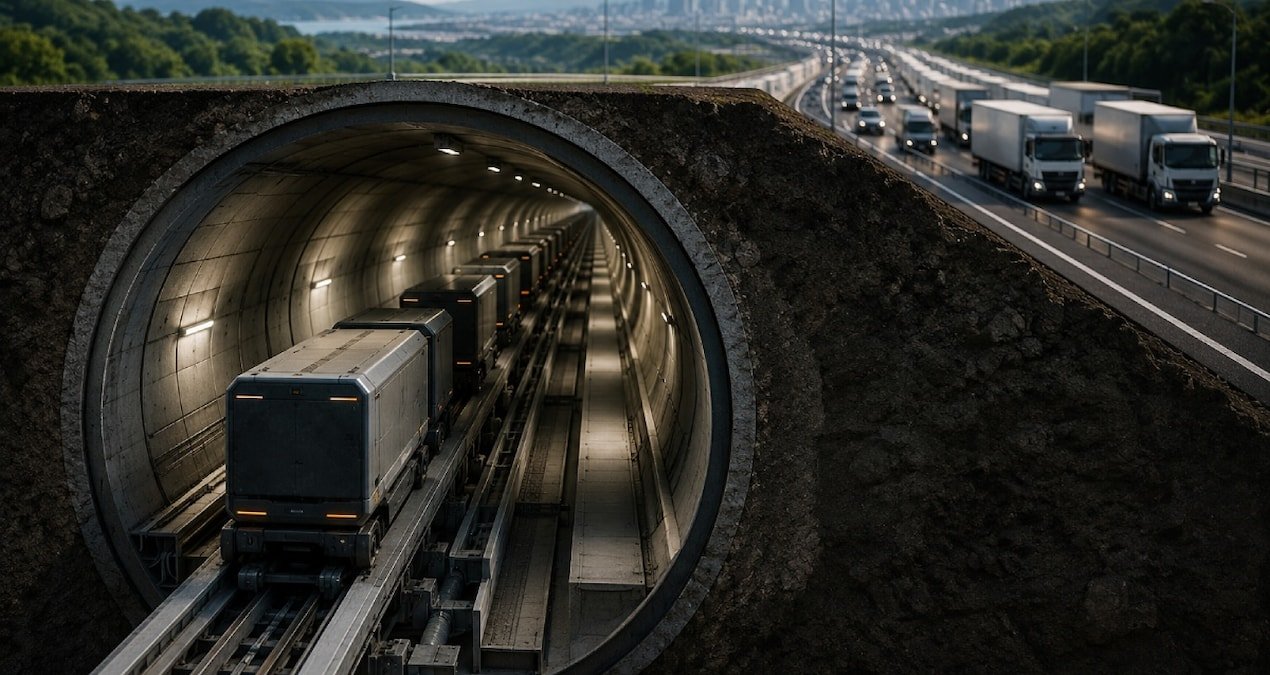
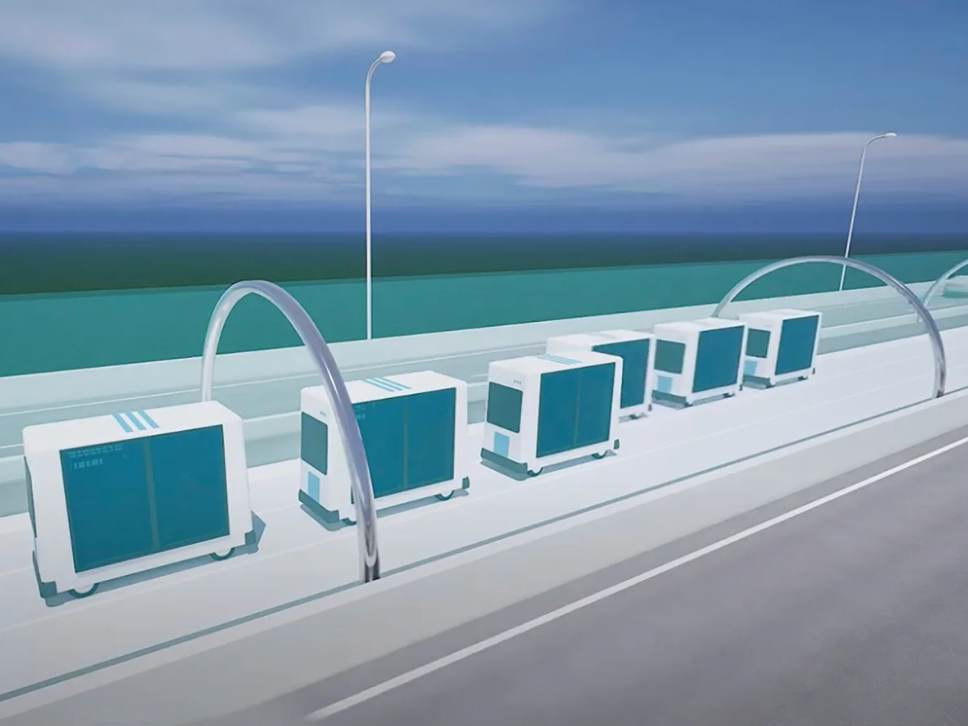
Although the project is often referred to as a ‘giant conveyor belt’ in the public, the latest designs feature automatically moving cargo capsules and special transportation corridors instead of a classical belt. It is being considered to build these corridors in the medians of existing highways, on the sidelines or in underground tunnels.
IT CAN REPLACE 25 THOUSAND TRUCKS PER DAY
According to officials, when the system reaches full capacity, it will be able to handle the load carried by approximately 25 thousand trucks every day. Thus, while a significant part of long-distance freight transportation will be automated, trucks will be used mostly in local distribution and final delivery processes.
A serious decline in the number of truck drivers is expected in Japan due to the aging population and new working time regulations. The government states that this situation may create a large deficit in logistics capacity in the coming years. Autoflow Road is aimed to provide a long-term solution to this problem.
FIRST TRIALS MAY START IN 2027 OR 2028
According to the current plan, small-scale tests of the system are expected to start in 2027 or 2028. The line, which will operate at full capacity, is aimed to be commissioned in the mid-2030s. According to officials’ assessments, the cost of the project could reach approximately 3.7 trillion yen (approximately 24-25 billion dollars). The majority of the cost consists of special corridors and tunnel infrastructure where the loads will be transported.

Authorities think that the system will not only alleviate the workforce problem, but also contribute to reducing carbon emissions by reducing density on highways. It is stated that if successful, similar automatic freight corridors can be spread to other parts of the country.
All copyrights of the articles, news and photographs published on the website www.sozcu.com.tr belong to Mega Ajans and Rek. Tic. It belongs to A.Ş. It cannot be quoted without permission, even by citing the source.