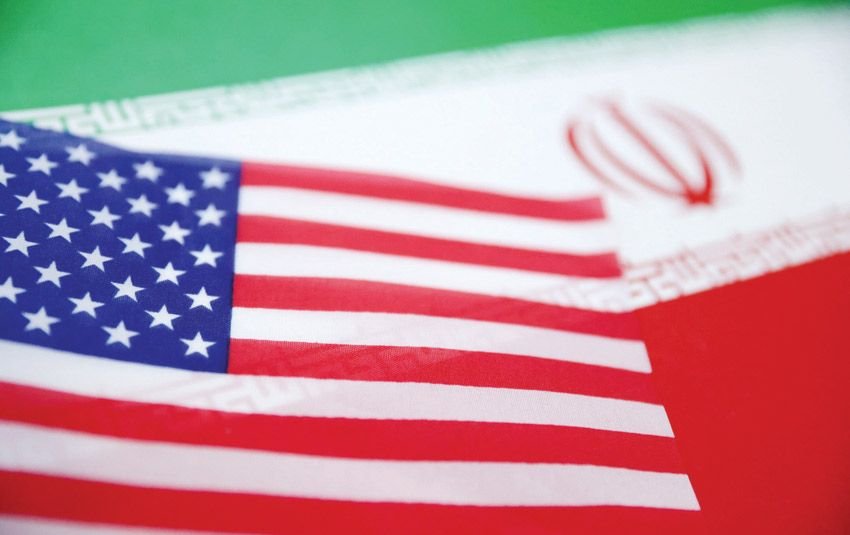
(Agencies): Yesterday, the countries of the world welcomed the agreement reached by Iran and the United States to end military operations between them and begin detailed negotiations within a period of 60 days with the aim of reaching a permanent agreement.
In a statement, Saudi Arabia expressed its aspiration to achieve peace in a way that enhances the security of the region and the world, by reaching a permanent agreement that takes into account the security interests of the countries of the region and commitment to the principle of respecting the internal affairs of countries. !
The UAE stressed the importance of fully adhering to the terms of the US-Iranian agreement, ensuring an immediate and comprehensive cessation of aggressive actions in the region, respecting the sovereignty of states and the principles of good neighborliness, and ensuring strict adherence to international law, protecting sea lanes and freedom of international navigation.
Kuwait expressed its aspiration that this understanding would constitute an important step towards broader approaches to addressing the outstanding issues through sustainable solutions that would consolidate the principles of good neighbourliness, foremost of which is mutual respect and strengthening trust, non-interference in the internal affairs of countries, non-use or threat of force, and ceasing to support proxies.
Qatar expressed its appreciation for the will of the American and Iranian sides and their keenness to move forward to resolve differences through negotiation and peaceful means, and in this context, it commends the partnership and efforts made by the Islamic Republic of Pakistan, and all regional and international parties, to reduce escalation and bring viewpoints closer to reaching agreement on this memorandum. !
The Organization of Islamic Cooperation welcomed “reaching an agreement on the memorandum of understanding between the United States of America and the Islamic Republic of Iran to end military operations and restore the security and freedom of navigation in the Strait of Hormuz as it was previously.”
Secretary-General of the League of Arab States, Ahmed Aboul Gheit, expressed his hope that this development will constitute an important step to put a final end to the Iranian and Israeli attacks on Arab lands, and will create the appropriate conditions to begin the path to ending the war and achieving sustainable stability in the region, warning of Israel’s continued efforts to sabotage the agreement and continue in a permanent state of war. !
Egypt expressed its hope that this agreement will constitute a major turning point towards enhancing mutual trust, laying new foundations for cooperation, creating an environment supportive of peace, and advancing diplomatic efforts aimed at addressing the rest of the various regional issues, in a way that will reflect positively on the security and stability of the Middle East region. !
Lebanese President Joseph Aoun appreciated the respect included in the memorandum of understanding for Lebanese privacy and the acknowledgment that Lebanon’s stability and security constitute an integral part of any serious effort to consolidate stability in the region, after the sacrifices and enormous burdens the Lebanese have endured during the past stage. !
Iraq expressed its hope that this development would lead to a final end to the state of war, stressing that the region today needs collective action based on the principles of collective security and joint cooperation, to ensure the sustainability of stability and security, and to achieve the aspirations of its people towards development and prosperity. !
United Nations Secretary-General António Guterres expressed his hope that “the parties will benefit from this new momentum and redouble their efforts to reach a final solution to the conflict,” according to a statement conveyed by Stephane de Jarric, spokesman for the Secretary-General.
European Commission President Ursula von der Leyen said in a post on the “X” platform: “This agreement should allow the immediate reopening of the Strait of Hormuz.”
She continued, saying, “Freedom of navigation must be restored without imposing fees, as this is necessary for regional stability and the global economy.”
German Chancellor Friedrich Merz said: “The agreement has the potential to pave the way toward a revitalized global economy and a safer Middle East.”
Indian Prime Minister Narendra Modi welcomed the peace talks between the United States and Iran in the midst of the conflict in the West Asia region, and called for accelerating the restoration of peace and stability in the region, along with ensuring freedom of navigation.
Japanese Prime Minister Sanae Takaishi described the peace agreement between the United States and Iran as a major step towards resolving the ongoing conflict, but she also stressed the importance of seeing the implementation of this agreement on the ground.