“Safaa” launched the initiative to offset carbon emissions
Written by: Ali Abdul Khaleq
Photography – Mahmoud Baba
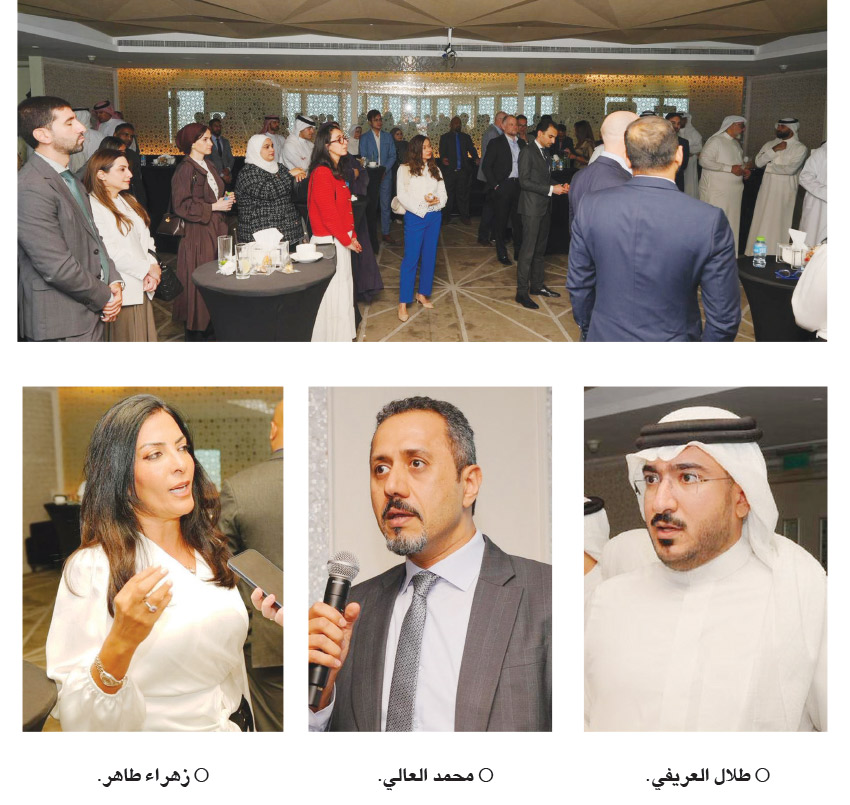
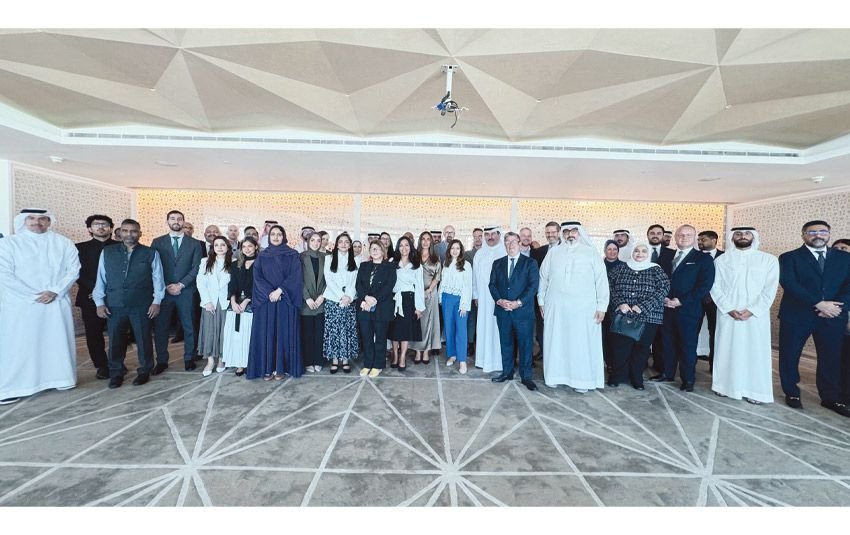
Economic activities have confirmed that sustainability has become a fundamental pillar in the strategies of institutions and companies, and a major driver for promoting responsible growth and supporting sustainable development goals. They added during a reception organized by the Middle East Sustainability Forum, with the participation of an elite group of experts, officials and representatives of the public and private sectors, that achieving the transition towards a more flexible and sustainable economy requires integrating efforts between the public and private sectors, accelerating the adoption of innovation and sustainable financing, in addition to strengthening governance and environmental and social responsibility.
For his part, Mohammed Al-Aali, Group Chief Strategy and Transformation Officer at the Bank of Bahrain and Kuwait, stressed that the bank continues its commitment to enhancing environmental, social, and corporate governance sustainability (ESG), reviewing the bank’s most prominent achievements and performance indicators in conjunction with the bank’s issuance of its 2025 sustainability report.
This confirmation, which reflects the continued progress in integrating sustainability principles into its banking operations and long-term strategy, comes in a way that enhances the building of a more flexible, responsible and sustainable banking model, and supports national development priorities in the Kingdom of Bahrain.
Al-Aali added that the bank’s sustainable financing assets amounted to 188 million Bahraini dinars by the end of 2025, directed towards sectors including renewable energy, energy efficiency and sustainable infrastructure, stressing that these efforts reflect the bank’s commitment to achieving long-term value for society, customers and shareholders.
Al-Aali pointed out that the bank also succeeded in reducing paper consumption by 39%, in addition to the volume of community investments reaching about 2.4 million Bahraini dinars, within the framework of its commitment to social responsibility and achieving a balance between economic growth and environmental sustainability.
Regarding governance, he explained that the bank continued to strengthen its institutional control system, as independent members constitute about 60% of the Board of Directors, with a prominent female representation, while the bank achieved a 100% commitment rate to approving the code of conduct for employees during the year 2025. He also confirmed that the bank will continue to develop certificate-based information security systemsISO/IEC27001, to enhance data protection and establish trust.
With regard to human resources, he pointed out that the percentage of Bahrainization reached about 95% of the total workforce, while women constitute 42% of employees, stressing that the bank continues to invest in developing national competencies and leadership programs, including the “Women in Leadership” program in cooperation with prestigious international universities, and the “Women in Leadership” program.GROW» Powered by artificial intelligence to develop talents.
He also pointed to the bank’s efforts to enhance work-life balance through a package of benefits that include maternity and paternity leaves, breastfeeding hours, and flexible work systems, which contribute to creating a more comprehensive and sustainable work environment.
For her part, Zahraa Taher, CEO of FinMark Communications, said that sustainability is no longer a choice for companies, but rather has become a strategic necessity for survival and growth in light of global economic and environmental transformations.
She added that small and medium-sized companies have great potential to make a positive impact if they adopt responsible practices and integrate sustainability into their business models, noting that sustainability has today become an essential element in enhancing competitiveness and attracting investments.
Taher stressed that the Kingdom of Bahrain has made important strides in supporting sustainability through national policies and government initiatives, pointing out that the private sector has become a major partner in achieving sustainable development goals.
She stressed that companies in Bahrain support the national trend towards achieving carbon neutrality by 2060, which is the goal announced by the Kingdom of Bahrain as part of its international climate commitments, in addition to the goal of reducing emissions by 30% by 2035, stressing that achieving these goals requires close cooperation between the public and private sectors and accelerating the adoption of innovation.
In a related context, Talal Al-Arifi, CEO of the Safaa Platform, confirmed that the platform, in cooperation with the Middle East Sustainability Forum, has launched an initiative to offset carbon emissions, noting the importance of carbon markets in supporting global climate action, explaining that they represent a major tool for mobilizing the capital necessary to finance environmental projects and reduce emissions.
He said that carbon markets allow institutions and individuals to take responsibility for their carbon footprint and direct funding towards projects with a measurable environmental impact, thus enhancing the efficiency of climate efforts.
He added that the initiative to offset the carbon footprint of participants in the Middle East Sustainability Forum through the “Safaa” platform represents a practical step to establish a culture of environmental responsibility, as it provides options to compensate for one ton of carbon dioxide equivalent for local participants, and two tons for participants arriving via air travel.
He explained that the compensation will be directed to support international climate projects of high integrity, including providing solar stoves for refugees in Chad, improving cooking techniques in Nigeria, landfill gas capture projects in Turkey, in addition to restoring mangrove forest systems in Pakistan through the “Delta Blue Carbon” project.
Al-Arifi stressed that these initiatives enhance environmental awareness and support the development of voluntary carbon markets, which contributes to achieving Bahrain’s goals in the field of carbon neutrality and promoting sustainable development.