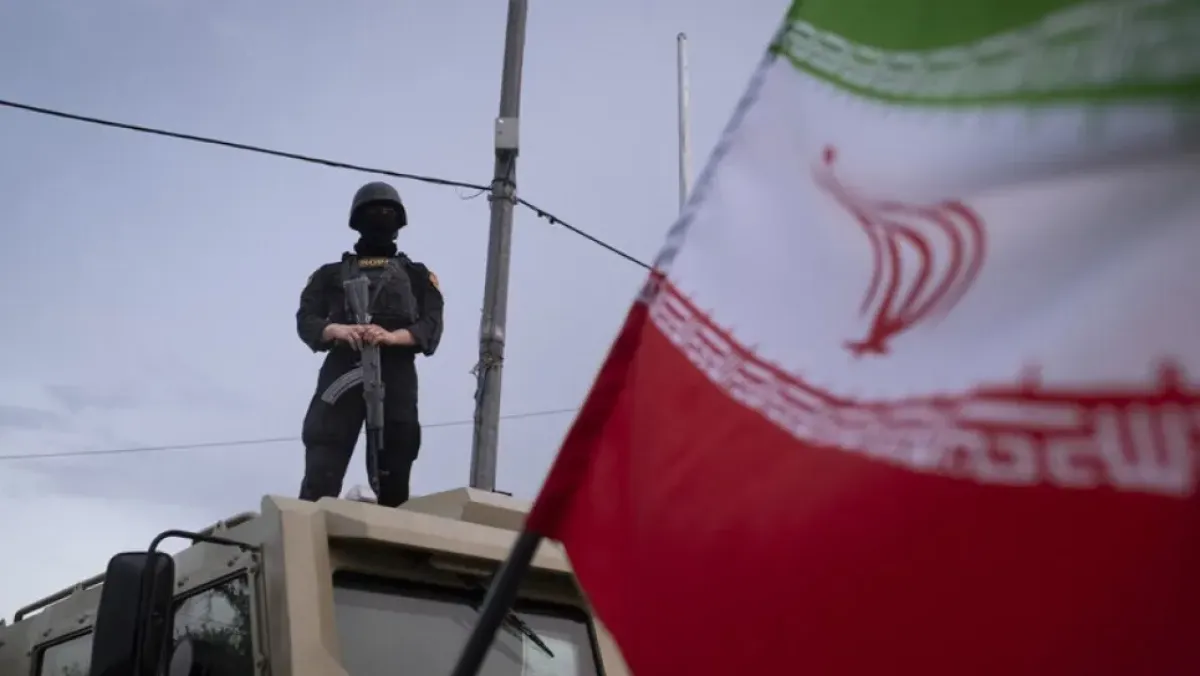
The US-Iranian negotiations have entered a new phase, amid increasing indications that an understanding is approaching that may put an end to the military escalation between the two parties, after statements by US President Donald Trump, in which he confirmed that the war with Iran had practically ended following its agreement not to possess a nuclear weapon, while Tehran was quick to deny that a final agreement had been reached, stressing that consultations are still ongoing and that what is being circulated regarding the prospective agreement does not mostly go beyond media leaks and speculation.
Iran agrees..!
In his latest statements, Trump said that the United States was able to achieve the main goal that it sought since the beginning of the crisis, which is to prevent Iran from possessing a nuclear weapon, considering that this item represents the vast majority of the content of the agreement being negotiated.
The US President explained, during an online event in support of the candidate for governor of Georgia, Bert Jones, that his country had reached a settlement that he described as fair with Iran, noting that the signing ceremony of the agreement may take place during the next few days in one of the European countries, in the presence of US Vice President, J.D. Vance, and officials from both sides.
Trump also stressed that the reopening of the Strait of Hormuz, one of the most important sea lanes for transporting oil and gas in the world, would be one of the first results of the official signing of the agreement, which would ease the tensions that the region has witnessed in recent months and reflect positively on the global trade movement and energy markets.
In the context of his talk about the diplomatic efforts being made, Trump revealed a series of contacts he had with a number of regional leaders, including the leaders of Qatar, the United Arab Emirates, the Kingdom of Saudi Arabia, Bahrain and Kuwait, in addition to the Israeli Prime Minister, Benjamin Netanyahu, stressing that these consultations fall within the efforts aimed at establishing regional stability and ending the crisis.
Terms of agreement
In conjunction with Trump’s statements, several international media outlets revealed preliminary details of a memorandum of understanding being prepared between Washington and Tehran, which includes a set of mutual commitments between the two parties.
The memorandum stipulates extending the ceasefire for a period of sixty days, including the tension fronts related to the conflict, with the initiation during this period of expanded negotiations on the Iranian nuclear file.
The draft also includes an Iranian commitment not to possess a nuclear weapon and to work to address the highly enriched uranium file within mechanisms to be agreed upon later, in exchange for a gradual easing of US economic sanctions and allowing Tehran to benefit from part of its funds frozen abroad.
The leaks also indicate that the proposed agreement also includes reopening the Strait of Hormuz to international navigation without additional fees, restoring maritime shipping traffic to normal levels, in addition to granting temporary exemptions allowing Iran to export oil for a specific period in preparation for a broader review of the economic sanctions imposed on it.
Some media reports, especially Axios, also leaked news about the possibility of gradually releasing the frozen Iranian funds and linking this to Tehran’s level of commitment to implementing the terms of the understanding, while some details are still under discussion between the two sides.
Tehran denies…
On the other hand, Iran reacted cautiously to the American statements, as Foreign Ministry spokesman Ismail Baghaei confirmed that talking about a final agreement was premature, indicating that negotiations were still continuing and that final decisions had not yet been taken.
Baqaei explained, in a statement to local media, that the discussions were affected during the recent period by field developments and what he described as a violation of the ceasefire, but at the same time he stressed that the mediators are still continuing their efforts to bring the viewpoints closer between the two parties.
He added that most of the items up for discussion were known from the beginning, but some issues are still subject to disagreement, pointing out that the United States has tried in recent days to present new files, while Iran has adhered to what it considers non-negotiable red lines.
Baqai also stressed that everything currently being circulated regarding the signing date, location, or final form of the agreement is nothing more than media speculation, stressing that the official announcement will not be made until all required procedures are completed.
Trump’s statements… are either lies or nonsense
The spokesman for the National Security and Foreign Policy Committee of the Iranian Shura Council, Ibrahim Rezaei, considered that what the American President announced cannot be treated as a fait accompli, describing his statements as either inaccurate or aimed at exerting political and media pressure.
Rezaei stressed that Iran will not abandon its basic conditions in any future understanding, stressing that the United States was unable to achieve its goals through military escalation, and therefore it will not be able to impose them at the negotiating table.
He also called for continuing what he described as a policy of deterrence and adherence to national constants, stressing that his country is ready to confront various possible scenarios.
The Zionist entity is waiting…
On the part of the occupying entity, the Zionists confirmed that Tel Aviv is not a party to the memorandum of understanding being prepared between the United States and Iran, but it is closely following developments. The entity expressed its hope that any final agreement would include clear guarantees that prevent Iran from developing a nuclear weapon and limit activities that it considers a threat to its security.
On the other hand, Zionist media reported that there were reservations within the security and political establishment about reaching a quick understanding between Washington and Tehran, as some circles believe that this may limit the margin of Zionist action against Iran and its allies in the region.
The Zionist Minister of Security, Yisrael Katz, also confirmed that the confrontation with Iran is not over yet, stressing that the army is ready to continue its operations if circumstances require it, or if an agreement is not reached that dispels Zionist security concerns.