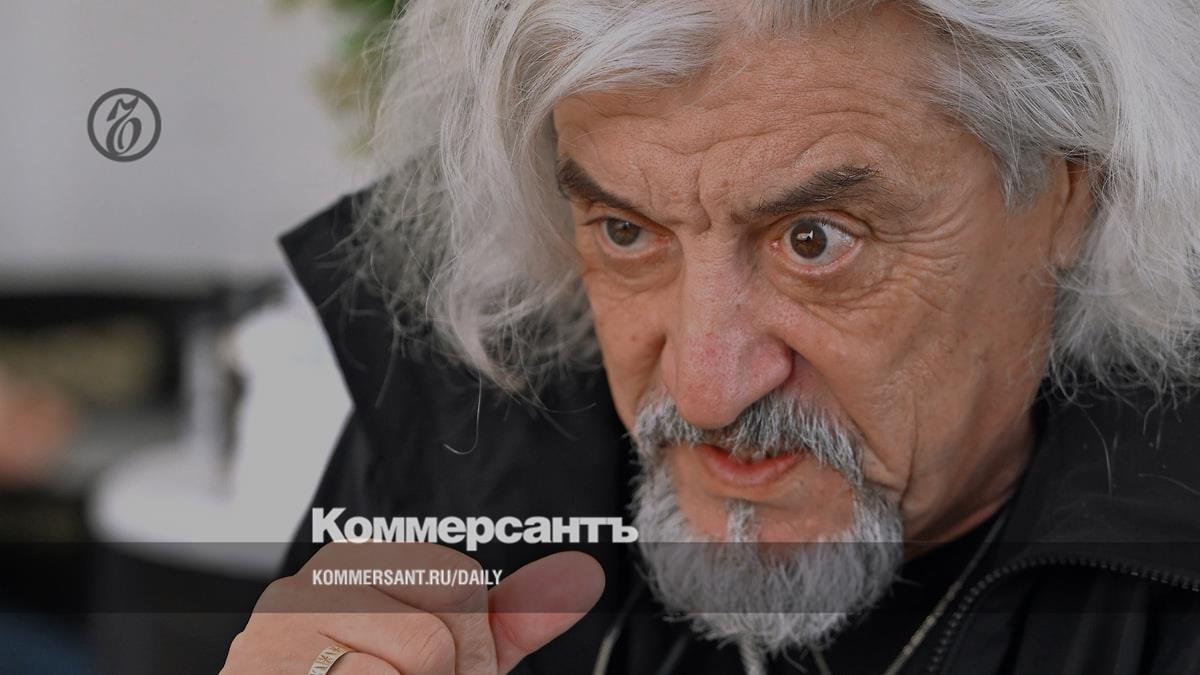
This summer the first biennial of contemporary art is due to start in the Arctic. The author of a large-scale project is an artist and a sailor Alexander Ponomarev — told Ksenia Vorotyntseva about how preparations for the show are going, about the special atmosphere of the polar zones and about how we treat installations.
— “Artist and Sailor” is your official title? How do you perceive it yourself?
— By first education, I am a sailor. He worked as a sailor for almost nine years: first on a submarine, then in the merchant fleet. And I always loved the sea. Unfortunately, I had to leave my profession for reasons beyond my control. Since childhood, I drew passionately, graduated from art school, and in difficult life circumstances, escaping from reality, I remembered this, which kept me on the surface. I began to swim in the ocean of creativity, and when my health allowed it again, in the World Ocean. However, to do this I had to take a risk and become a free artist. I never officially worked again.
— Was it scary?
– Certainly. Recently he headed the commission for the defense of diplomas at the Higher School of Economics. And one of the graduates asked: “Now I’ve received my diploma, what next?” Young people have many fears about the future. Although the path has already been trodden by our generation. When we started, institutions did not yet exist, but there was complete freedom and limitless opportunities. Now everything is different. Young artists grow up in greenhouse conditions. Infrastructure appeared – galleries, fairs, grants. But there is also more uncertainty in the world.
Alexander Ponomarev is an artist, sailor, curator, engineer, poet. Born in 1957 in Dnepropetrovsk. Over the past 30 years, he has organized more than 100 projects and exhibitions in different parts of the world, from Japan to Morocco. Many of his works are related to the sea element. Submarines painted by Ponomarev floated in the fountain of the Tuileries Garden opposite the Louvre, in the Grand Canal in Venice and in the Moscow River. In 2007, the artist represented Russia at the 52nd Venice Biennale of Contemporary Art. In 2021, his art object “Ouroboros” was installed in Giza at the foot of the pyramids. Author of the idea and organizer of the first Antarctic Biennial of Contemporary Art, held in 2017. Officer of the French Order of Arts and Letters. Academician of the Russian Academy of Arts. Lives and works in Moscow.
— In 2017, you held the first biennale of contemporary art in Antarctica. How did this idea come about?
— I have always dreamed of doing projects in the polar zones at the North and South Poles. This is a special place. Any sailor knows: where the meridians converge, time flows differently, almost freezes. And the space is perceived differently: it is not cluttered with details dating back to historical eras. This space of emptiness is sometimes very necessary for a person. The atmosphere there is particularly thin, which is why you can see the northern and southern lights – when the solar wind breaks through the planet’s magnetic field. It is also a space of “existential fearlessness.” You meet the abyss, look into its eyes and feel better what is human in yourself. And this is a space of risk. The human ecumene ends there. Take a step to the side and you will fall into the icy water. Or you’ll run into a bear. On Spitsbergen, for example, there are more bears than people.
— And how to organize actions in such conditions?
— I’ve been thinking about the structure of the biennale for ten years. In general, the biennale is a conventional name. After all, I participated in the Venice Biennale eight times. We ended up with a slightly different format, without the usual pavilions: it’s a chain of events following one after another. We boarded a ship, went beyond the Arctic Circle and organized expeditions with mobile objects and installations along the coast of Antarctica: we quickly built them, and then just as quickly dismantled them. It was necessary to act with lightning speed, like paratroopers. We collected, photographed, drank, and moved on. Because the weather in those parts is capricious, and transport is very expensive.
— Were there any adventures?
— Of course, there were a lot. For example, in Ushuaia, the southernmost city in the world, located on the island of Tierra del Fuego, we met familiar English girls. And they gave us the keys to the British station in Antarctica: by that time they themselves had moved out of there. I promised to build something artistic there as a return gesture. We set off on our flight and approached the station, but the weather turned bad, there was a strong wind, and we had to return. We never got there.
In general, movement in the vicinity of the North and South Poles is unpredictable. Now sanctions and a million restrictions have been added. In the Arctic, the situation is still different. This is our background: 70% of permafrost is in Russia. Therefore, the Arctic always requires our rethinking, rediscovery – scientific and symbolic.
— Who is participating in the Arctic Biennale?
— Artists Tatyana Badanina and Vladimir Nasedkin, Ekaterina Kovaleva – she was with me in Antarctica, Alexey Politov and Marina Belova, Sergey Katran, Marina Rin, young artists art group “Ryskayushchie”, Anna Lapshinova, Vladimir Chernyshov, Nikolai Polissky, Daria Konovalova-Infante, designer Sergey Serov and Ekaterina Terekhova. The architects are my old friend Alexey Kozyr, Totan Kuzembaev, Vladimir Kuzmin. Philosopher Alexander Sekatsky, with whom we are also friends. In the book “Turnkey Ethics,” he devoted one chapter to yours truly—for which I am sincerely grateful. And, of course, oceanologists: academician Alexey Sokov, Sergey Pisarev – one of Russia’s main experts on sea ice – and other wonderful creative people. In general, the team is big and good.
— Will there be foreign participants?
– We are trying to organize this. We agreed with the outstanding Chinese architect Gary Chang. He fits well into our artistic concept as the author of compact transformable spaces, because construction on permafrost has its own nuances. Chang agreed to participate, but to bring him, money is needed. All this is very difficult and expensive.
— An artist and a producer are completely different professions. Is it hard to find sponsors?
– There is no way out. I would gladly not do this. I remember how I was toying with the idea of the Antarctic Biennale and everyone said: “Sasha, you’re a good guy, a good artist, but this is too much.” When we finally did it, it was a huge success, the press was fantastic, and I thought that the money would now flow like a river. But nothing like that. And the pandemic ruined everything. Although, when they say: “You know what times are now,” I answer that I lived to a respectable age, and have not seen any other time. And I continue to move forward.
— At what stage are preparations for the Arctic Biennale?
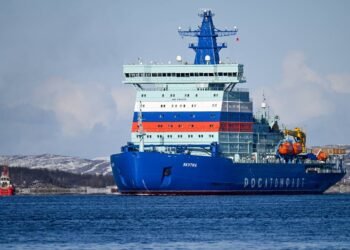
— We went on a preliminary flight to Spitsbergen to scout everything out. A small team – five people; About fifty will participate in the biennale itself. The route is defined by the Arctic Circle and resembles a pyramid: Murmansk, Spitsbergen, North Pole, Franz Josef Land, Novaya Zemlya.
— And when is the flight planned?
— Most likely, from August 25 to September 10. Everything will depend on the weather.
— Many of your objects, despite their scale, turn out to be temporary. Do you regret that their life is so fleeting?
– Of course, I regret it. We have taught many people the word “installation,” but sometimes in our country installation is understood as anything—even small architectural forms, like benches. Although this is a work of art with its own dramaturgy, conflict – visual and conceptual. Hence the somewhat dismissive attitude. In China, for example, there is a huge art market and many museums of contemporary art. The Shanghai Biennale, where I recently visited, takes place in a huge building – a converted power plant. The whole world comes to Hong Kong for the Art Basel fair. It’s good that recently we have collectors who have turned collecting into the meaning of life. But there is still little interest in the installations: they require special storage conditions. I have several properties in Japan, one of them is on the island of Honjima in the Inland Sea. It has been standing for almost ten years: it is treated with care, maintained, restored, also because we created it together with Japanese fishermen and it is connected with their identity.
In general, this is one of the main functions of art – to preserve our identity. We are talking near the Pokrovsky Gate, and as a contemporary of Mikhail Kozakov’s film, I can confirm: it is thanks to cinema that this place today has its own special identity. Therefore, art should not be brushed aside as if it were something unimportant. As well as trying to tightly regulate it. This is too subtle a matter that does not tolerate rough interventions.