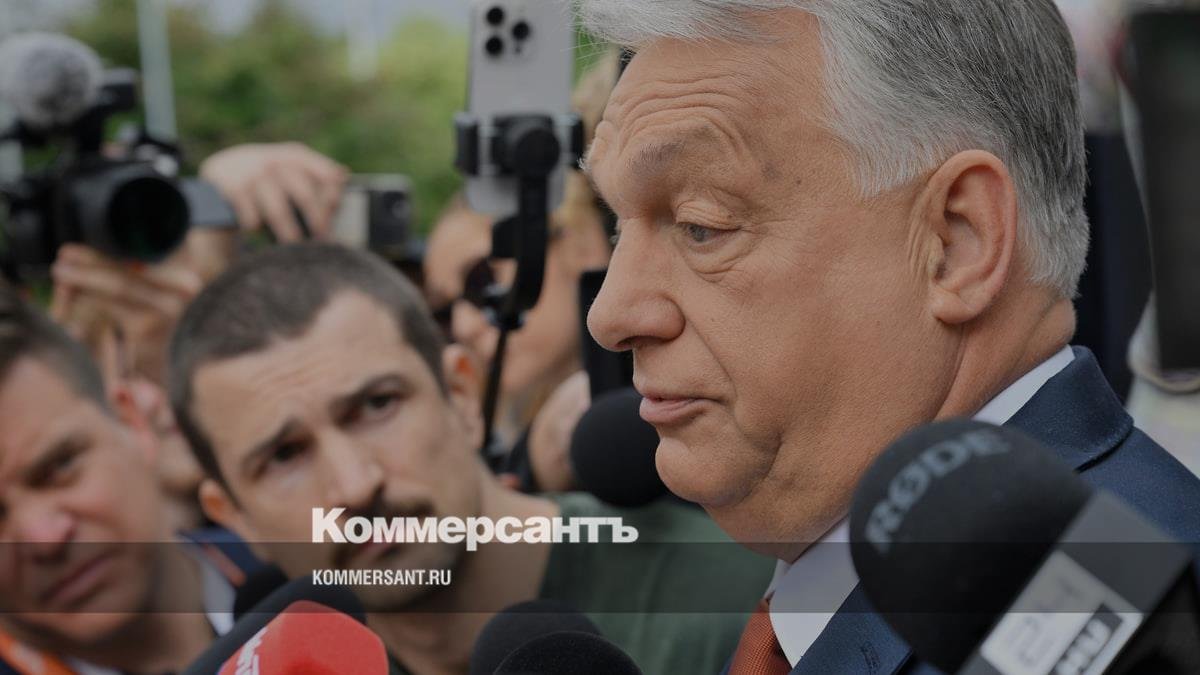
The Hungarian Parliament approved on June 15 an amendment to the constitution, according to which the country’s Prime Minister can only hold this post for two terms. It is expected that the amendment will have retroactive effect and will not allow Fidesz leader Viktor Orban to return to the prime minister’s chair. However, a number of experts doubt that this provision can be applied to those who previously held this post. One way or another, this change in the constitution must be approved by President Tamás Szujok, whose resignation is being sought by the current prime minister and leader of Tisza, Peter Magyar.
Limiting the power of the Hungarian Prime Minister was one of the election promises of Tisza leader Peter Magyar. Immediately after his party’s victory, he reaffirmed it. Now the prime minister is actually implementing what he had planned for a long time. The initiator of the amendment to the constitution was MP Marton Mellethei-Barna. He viewed his initiative as a step to restore the rule of law, which, as Tis said more than once, had seriously suffered during the years of rule of Viktor Orban and his Fidesz party. At a parliamentary meeting held on Monday, June 15, 135 deputies spoke in favor of limiting the prime minister’s tenure in office to two terms, or eight years, while 50 parliamentarians were against.
It is assumed that the law will have a retrospective effect and will not allow Viktor Orban to re-occupy the prime minister’s chair if his Fidesz party wins elections in the future. However, some experts doubt that the amendment will have legal force in relation to those who held this post before its adoption.
But in any case, it must still be approved by the country’s president, Tamas Szujok, who is considered an ally of Orban in Tisza. Magyar repeatedly called on him to resign and threatened him with impeachment, and at the ceremony of bringing in the government to the oath the new cabinet refused to take the traditional joint photo with him. Shuyok cannot significantly interfere with the adoption of an amendment to the constitution: he only has the power to return the bill for revision, after which it will be approved one way or another – any potential veto of the head of state, which has two-thirds of the seats in parliament, can be easily overcome by Tisza.
At the same time, the initiative hits not only Orban, but also Magyar himself and automatically deprives him of the opportunity to remain at the helm of the country for a long time, following the example of his predecessor.
However, for Tisza and for Magyar himself, cutting back on their own privileges is part of the political landscape that the party is building in contrast to the Orbán era. So, at the beginning of the month, parliamentarians had already cut their salaries by 40%, and Magyar refused to move to the residence allocated to him and even gave a tour of Orban’s former chambers.
Meanwhile, the Fidesz leader himself is also trying to reformat the political arena available to him, namely his own party. At the last Fidesz congress on June 13 in Budapest, Orban was almost unanimously re-elected as chairman of the country’s now main opposition force. 729 delegates voted in favor of it, and eight more abstained from voting. The ex-prime minister had no rivals.
In his speech, Orbán conducted an in-depth audit of Fidesz’s mistakes, which caused defeat of the party in the April parliamentary elections, and said that he does not intend to give up. To return to power, the politician plans to reorganize the party in the coming months. Orban did not reveal his cards, but reiterated that he wants to rejuvenate Fidesz by appointing four deputy chairmen from among relatively young politicians. Previously, he himself refused his seat in parliament, arguing that he wanted to concentrate on the reform of political power.
Speaking about the reasons for the defeat, Orban took full blame on himself. According to him, under his leadership the party and government were unable to fulfill their economic promises. He also noted that Tisza’s campaign campaign on social networks was stronger, and Fidesz’s pre-election calculations were inaccurate. He also admitted that the government was unable to adequately respond to accusations of corruption from the opposition. Finally, Orban indirectly blamed Brussels for his failure: it was the sanctions against Russia that affected the country’s economic growth and brought it to its current point.