Saturday, June 6, 2026 6:09 pm –
Jerusalem time
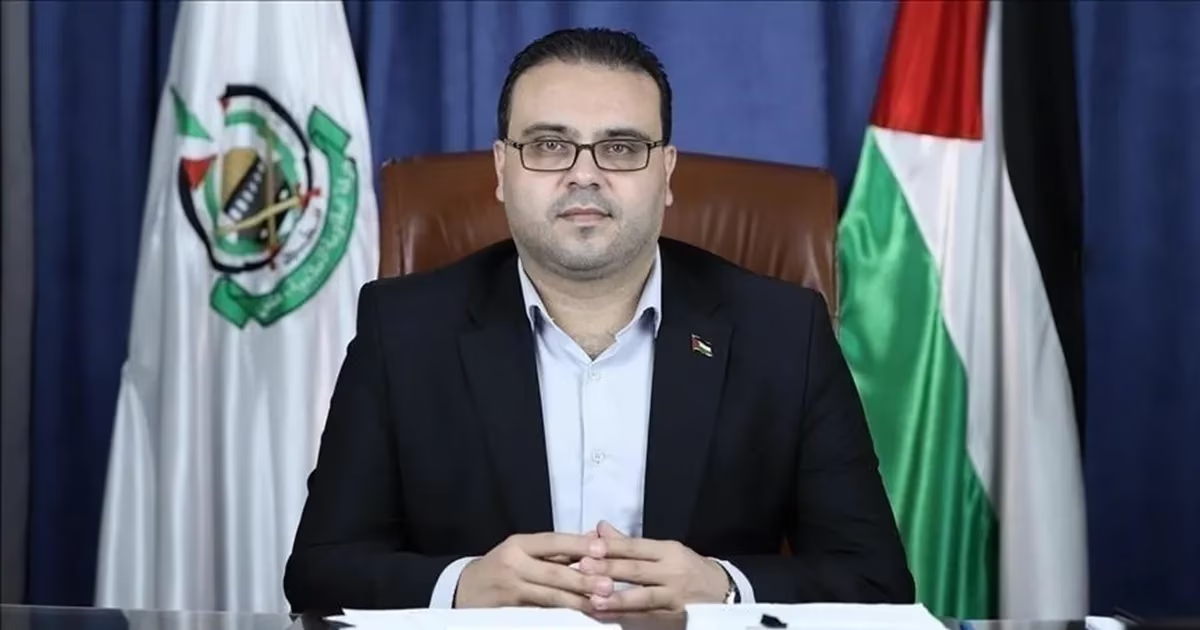
Hamas officially announced the launch of a series of intensive meetings in the Egyptian capital, Cairo, with the participation of mediators and representatives of Palestinian factions. These diplomatic moves come within the framework of an effort to complete the provisions of the first phase of the agreement to stop the ongoing Israeli war of genocide on the Gaza Strip, and to pave the way for the transition to the second phase understandings.
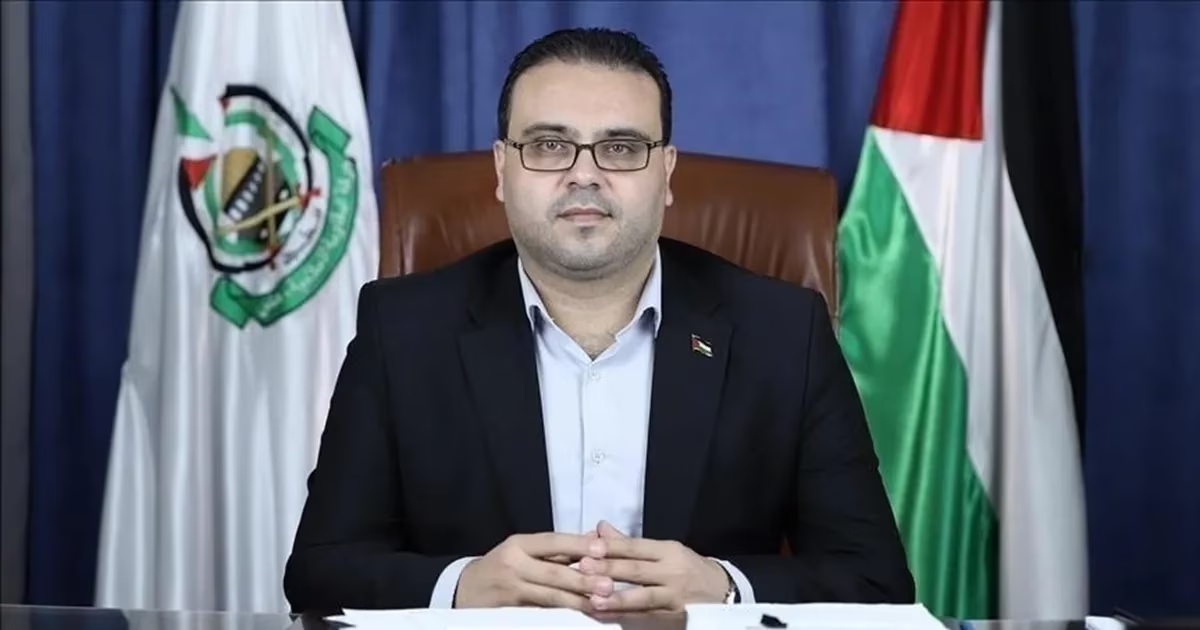
The movement’s spokesman, Hazem Qassem, explained in a video statement that the meetings aim to formulate unified national approaches that enjoy comprehensive Palestinian consensus. He stressed that the movement is seeking, with mediators, to establish real executive mechanisms that guarantee a permanent cessation of aggression and end the suffering of the besieged population in the Gaza Strip.
The agenda of the current meetings is focused on consolidating what was accomplished in the first phase, which previously included opening the crossings and the flow of humanitarian relief aid. The gathered parties also seek to overcome the obstacles placed by the occupation to the full implementation of internationally agreed upon humanitarian obligations.
The discussions include thorny issues related to the second phase, the most prominent of which are proposals to introduce international forces into the Gaza Strip or hand over tasks to a Palestinian national committee. These discussions aim to find formulas acceptable to all parties that guarantee the stability of the security and field conditions in the next stage.
Qassem pointed out that dealing with the issue of Palestinian weapons represents one of the topics up for discussion within a vision that aims to remove the pretexts of the occupation. He stressed that the highest priority remains protecting the interests of the Palestinian people and preventing Israel from renewing its military aggression under any flimsy justifications.
A high-level delegation from Hamas, headed by Khalil Al-Hayya, arrived in Cairo on Friday in preparation for this round of negotiations. This visit reflects the movement’s desire to complete the path that began with previous meetings, the last of which was last April with Egyptian officials.
It is noteworthy that the first phase of the agreement entered into force on October 10, 2025, and included an exchange of prisoners and a partial withdrawal of the occupation forces. However, the Palestinian parties accuse the Israeli side of continually evading its legal and humanitarian obligations stipulated in the document.
The meetings aim to complete what was stated in the first phase, stop the aggression, open the crossings, bring in humanitarian aid, and then enter into discussions regarding the second phase.
Field reports monitored widespread Israeli violations of the existing agreement, represented by continuous bombing and ground incursions into various areas of the Gaza Strip. These violations led to the death of about 947 martyrs and thousands of injuries since the supposed truce took effect, threatening the collapse of the entire political track.
Data indicate that the occupation army still controls vast areas exceeding 60% of the territory of the Gaza Strip, which violates the terms of the withdrawal. The Palestinian factions demand real international pressure to force the occupation to retreat to the pre-aggression lines and guarantee freedom of movement for the population.
The second phase of the agreement includes fundamental issues that go beyond the military aspect, most notably the formation of a temporary technocratic committee to manage civil affairs. This phase also includes launching a comprehensive reconstruction process of what was destroyed by the Israeli military machine over the course of two years of war.
In a related context, the establishment of the ‘Peace Council’ was announced and the formation of the technical committee, which began temporarily exercising its duties from Cairo. Intensive consultations are currently taking place on the formation of the international force that will supervise maintaining security and ensuring the implementation of the terms of the agreement on the ground.
The negotiations collide with complex files that are still under discussion, most notably the disarmament file and the timetable for the complete Israeli withdrawal from Gaza. The resistance adheres to a vision that ensures that the occupation will not return to control the aspects of life in the Strip after the end of military operations.
The United Nations estimates the cost of rebuilding what was destroyed by the war at about $70 billion, given the massive destruction that affected 90% of the infrastructure. This cost is considered a major challenge that requires concerted international efforts to ensure the return of normal life for millions of displaced Palestinians.
These political moves come two years after a genocidal war waged by Israel with broad American support since October 2023. The mediators in Cairo are now seeking to transform the fragile truce into a sustainable agreement that ends the longest and most violent round of conflict the Strip has witnessed in the modern era.