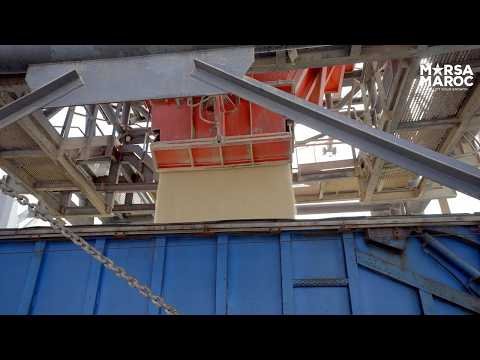
The ship in question is a 200 meter long sugar bulk carrier, chartered by the Cosumar group, carrying a cargo of nearly 55,000 tonnes of raw sugar. This unique stopover was made possible thanks to the new draft of 12 meters which the terminal now benefits from, following the rehabilitation and deepening work on its infrastructure.
For Marsa Maroc, this first constitutes a concrete demonstration of the benefits of the project to deepen the quays of the multipurpose terminal. “We are witnessing the opening of the port of Casablanca to a new range of calls for large-capacity bulk carrier ships,” underlined Khalid Mansour, director of the Bulk Business Unit at Marsa Maroc. According to him, the 230 linear meters of quay already rehabilitated and deepened to -12 meters now make it possible to accommodate ships with a capacity of around 60,000 tonnes.
The port operator’s ambition is even greater in the medium term. Marsa Maroc plans to increase this length to 530 meters by 2028, which will allow the multipurpose terminal to reach a total capacity of more than 8 million tonnes. A project which should further consolidate the role of the port of Casablanca as the Kingdom’s main logistics hub for the processing of bulk goods.
On the Cosumar side, this development is seen as a lever for competitiveness. Anas Jamal Eddine, Sales, Marketing and Supply Chain Director of the group, believes that the partnership between the sugar manufacturer and Marsa Maroc illustrates what a collaboration between a port operator and an industrial player should be. The deepening works, combined with operational improvement actions carried out jointly, allow the group to charter larger capacity vessels and generate significant port and logistics optimizations.
Beyond this first stopover, the reception of this bulk carrier of nearly 55,000 tonnes testifies to the rise in power of national port infrastructures and their capacity to support the growing needs of Moroccan industrialists in terms of competitiveness, logistical fluidity and integration into the major flows of international maritime trade.