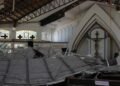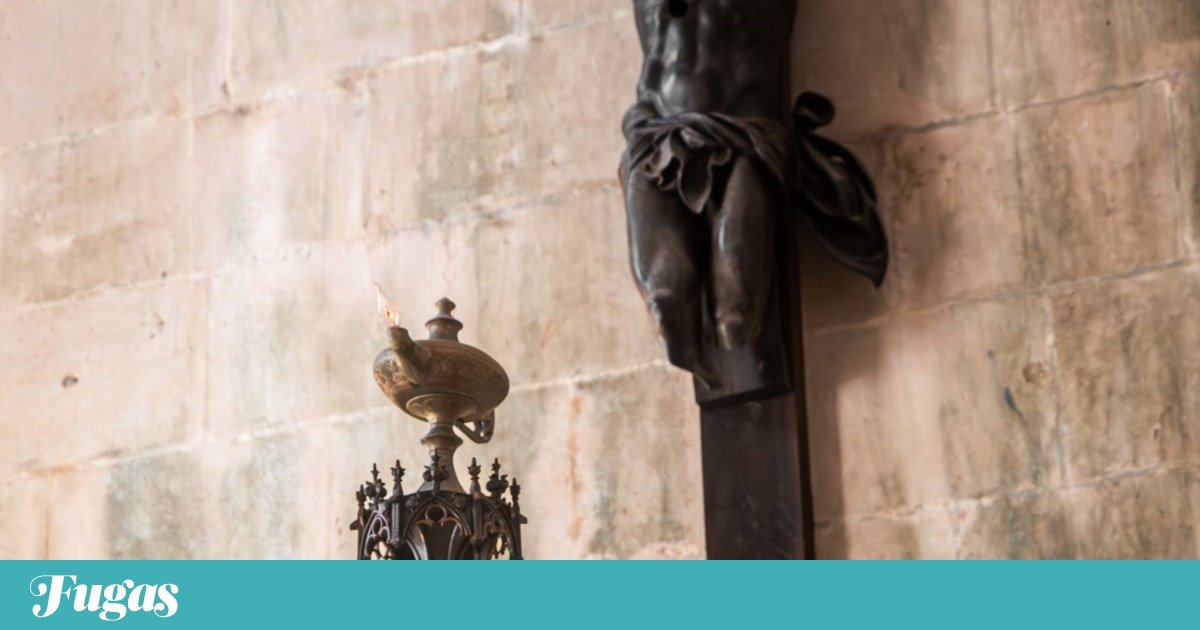
The Flame of the Fatherland is not a mere source of light. It is a living symbol of the national soul, of the memory of those who gave their lives for the Nation, of the historical continuity of a people. Its guard by military escort attests precisely to this sacred and solemn dimension. The flame lit as a symbol of the national soul and guarded by military escort is electric today. We have soldiers who escort a battery-powered soul flame, because there is a lack of oil. Where is the fire of a nation that is replaced by a micro electric flame? Where are our olive trees? The treasures of the national land? The rural world, the olive groves, the wine presses?
This replacement of the flame that holds us is very symbolic. Portugal’s problem is an olive oil problem.
I write as a nutritionist and defender of food identity, the relationship between food and culture, and this image of the electric flame in Batalha Monastery It haunts me as an involuntary metaphor for what we have done to our food heritage.
Portugal was, for centuries, an olive oil nation. The olive grove shaped the landscape of Alentejo, Trás-os-Montes and Beira Interior. The mill was a community institution, a place of work and meeting. Olive oil was not just culinary fat — it was light in lamps, it was religious anointing, it was currency of exchange, it was identity. The olive tree, with its longevity and resilience, was a living symbol of Portuguese permanence.
What do today’s numbers say? According to the most recent data from the National Statistics InstitutePortugal produced around 180 thousand tons of olive oil in the 2023/2024 campaign — a value that places us among the largest world producersit is true, but it hides a more complex reality. Much of this production is concentrated on intensive and super-intensive farms in the Alentejo, many of them owned by foreign capital, oriented almost exclusively towards export. The traditional olive grove, the one that shaped the interior slopes and supported rural communities, remains underutilized. It is estimated that around 40% of Portuguese olive groves are traditional, according to data from CEPAAL – Center for Studies and Promotion of Alentejo Olive Oil -, and at risk of abandonment.
However, the price of olive oil for Portuguese consumers remains high, as indicates the Agricultural Price Observatory, becoming a luxury product for many families. The paradox is glaring: we are producers, but olive oil has become inaccessible on the tables of those who should consume it daily.
From a nutritional point of view, extra virgin olive oil is one of the pillars of the Mediterranean diet — recognized by UNESCO as Intangible Heritage of Humanity and consistently associated by scientific evidence with reduced cardiovascular risk, longevity and metabolic health. Its phenolic compounds, such as oleocanthal and oleuropein, have anti-inflammatory properties documented. Replacing it with refined oils or lower quality fats is not just a gastronomic loss — it is a setback in public health.
Pedro Pedroso
The symbolic and the concrete
Return to the flame of Batalha Monastery. That electric light, powered by batteries, is a more economical and practical solution. But there is something deeply uncomfortable about seeing the symbol of the National Soul reduced to a convenience. The traditional flame, fed by olive oil, required continuous care — someone to watch it, to feed it, to guarantee its permanence. The fire depended on the producer, the symbol burned from the earth, the primary sector sustained it. It was a gesture of attention and commitment, gestures that mirror the very nature of duty and collective memory. Isn’t this precisely what is missing from our relationship with the earth? With the rural world? With the cultures that define us?
Traditional olive groves require time, labor and knowledge passed on between generations. It does not compete in efficiency with super-intensive plantations. But it produces olive oils of unique quality that sustain biodiversity, establish populations in the interior, and keep a landscape and a culture alive. Abandoning it is abandoning a part of Portugal. A part of us.
I do not propose a romantic return to the past. I propose that we look at olive oil — and the olive tree — as a national strategic issue. That public support for agriculture values traditional olive groves and not just intensive productivity. That mechanisms be created so that quality Portuguese olive oil reaches the Portuguese table at affordable prices. May food literacy restore the central place of olive oil in our kitchen. May community mills be preserved as living heritage.
The Flame of the Fatherland cannot be battery operated. And the solution is not technical — it is cultural, economic, political. A flame of high symbolic value fed by Portuguese olive oil, coming from national olive groves, in an articulation between historical memory, symbolic and sacred value, and the rural economy that so desperately needs support.
Portugal’s problem is an olive oil problem.
Let us plant olive trees.
Ana Helena Pinto is a nutritionist, founder of Nutrition for Happiness. The author writes according to the new Orthographic Agreement