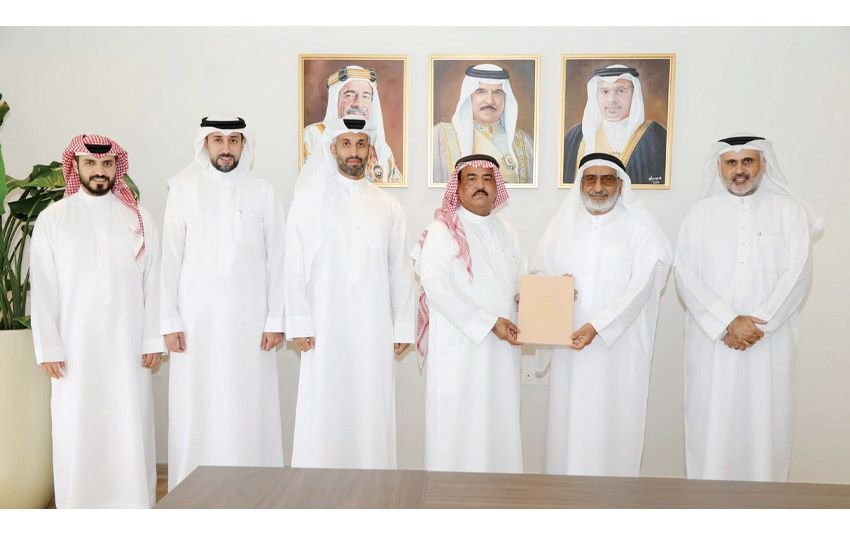
The Royal Humanitarian Foundation, the Nasser Scientific and Technical Center, and Al-Kooheji Charitable Foundation signed a cooperation agreement aimed at supporting and financing the project to develop, rehabilitate and equip the new branch of the Nasser Scientific and Technical Center in the Bahrain International Investment Zone in Muharraq Governorate, in a way that contributes to providing an advanced educational and training environment, and enhancing professional and technical programs with a sustainable impact, in addition to developing a specialized training program in the field of hospitality and hospitality.
On this occasion, Eng. Ibrahim Dalhan Al-Dosari, Acting Secretary-General of the Royal Humanitarian Foundation, praised the royal directives of His Majesty King Hamad bin Isa Al Khalifa, King of the country, and His Majesty’s continued interest in developing the educational process in the Kingdom of Bahrain, praising the support of His Highness Sheikh Nasser bin Hamad Al Khalifa, Representative of His Majesty the King for Humanitarian Work and Youth Affairs and Chairman of the Board of Trustees of the Royal Humanitarian Foundation, for the idea of the Nasser Scientific and Technical Center and his keenness to His Highness to develop his educational and training programs and projects.
Al-Dosari stressed that this agreement comes within the framework of the Royal Humanitarian Foundation’s keenness to support qualitative educational and training initiatives that contribute to preparing national cadres and qualifying them for effective participation in the comprehensive development process. He pointed out that the Nasser Scientific and Technical Center is one of the pioneering development projects launched by the Foundation in 2014, and that the signing of this agreement represents a new step in its expansion process through the establishment of a new branch in Muharraq Governorate, providing the opportunity for a larger number of students and youth to benefit from educational and training programs. specialized, and enhances its role in nurturing and developing promising national competencies.
He also expressed his deep thanks and appreciation to Al-Kooheji Charitable Foundation for its contribution in supporting this qualitative project, which reflects the importance of community partnership in supporting development and educational initiatives with a sustainable impact.
For his part, Dr. Abdullah bin Nasser Al Nuaimi, CEO of the Nasser Scientific and Technical Center, stressed that the new branch project represents a qualitative leap in the center’s journey towards expanding the scope of its educational and training services, and providing greater opportunities for young people to benefit from specialized programs that keep pace with the needs of the labor market and the requirements of national development.
He explained that the Center continues to develop its programs and initiatives in accordance with the latest educational and technical practices, noting that the new program in the field of hospitality and hospitality will constitute a qualitative addition to the training programs offered by the Center, and will contribute to the preparation of qualified national cadres who possess the professional and applied skills necessary for success in this vital sector.
In turn, Abdul Ghaffar Abdul Rahim Al-Kooheji, Chairman of the Board of Trustees of Al-Mabarrah Al-Kooheji Charitable Trust, expressed Al-Mabarrah’s pride in contributing to supporting this educational and development project, based on its belief in the importance of investing in people and enabling young people to acquire the knowledge and skills that qualify them for the future.
He stressed that Al-Mabarrah is keen to support qualitative initiatives that have a sustainable impact, especially educational and training projects that contribute to building national capabilities and preparing young people for the labor market, noting that the partnership with the Royal Humanitarian Foundation and the Nasser Scientific and Technical Center represents an effective model of community cooperation aimed at supporting sustainable development and enhancing educational and training opportunities for the people of the country.