Friday and Saturday 26/27 Dhu al-Hijjah 1447 AH – 12/13 June 2026 AD
Maintaining the growth path despite global fluctuations
Kingdom bet the future and the title of balance
A more diversified and flexible economy
At all times and in every position, the Kingdom of Saudi Arabia confirms, year after year, that true development is not measured only by the size of ambition, but by the state’s ability to continue to achieve amidst regional and international changes.
Between the fluctuations of the global economy, the challenges of supply chains, and the transformations of energy markets, the Kingdom is moving steadily towards building a more diversified and flexible economy, based on a clear vision, structural reforms, and major projects that have transformed from strategic ideas into workshops open to the future.
Official indicators showed that the Saudi economy continued to grow in 2025, supported by the expansion of non-oil activities, an increase in the private sector’s contribution, and continued investment spending in the sectors of tourism, entertainment, industry, logistics, and quality of life.
Major projects are no longer just development headlines, but have become economic engines that reshape the Kingdom’s investment geography, open new paths for employment, attract investment, and enhance local content.
In this context, the NEOM, Qiddiya, and Red Sea projects, as well as infrastructure and quality of life projects, stand out as practical evidence of the strength of Saudi continuity. The Kingdom does not deal with development as a temporary stage, but rather as a long national path, in which achievements accumulate and goals advance according to a strategic vision that believes that the future is created by those who have the ability to plan, implement and continue.
The infrastructure projects and the Quality of Life Program reflect the development transition from building facilities to building an integrated lifestyle, by improving cities, expanding entertainment, culture, sports and tourism options, and enhancing the Kingdom’s attractiveness to residents, visitors and investors.
“Resilient economy”
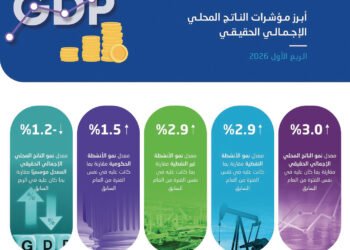
The Saudi economy has achieved real growth. According to the results of the real GDP statistics issued by the General Authority for Statistics for the year 2025 and the fourth quarter thereof, the real GDP of the Kingdom of Saudi Arabia achieved a growth of 4.5% during the year 2025 compared to the previous year 2024. This growth is due to the rise in all economic activities, as oil activities achieved a growth of 5.7% and non-oil activities increased by 4.9. % in addition to the growth of government activities by 0.9%
This is not just a passing economic figure, but rather a reflection of a long path of structural reforms and economic diversification that the Kingdom has adopted as part of the goals of Saudi Vision 2030.
These statistics reaffirm that it has become one of the main engines of the national economy and an important source of sustainable economic growth.
The importance of these results is that they were achieved in light of rapid international economic changes, including fluctuations in energy markets, rising global financing costs, and slowing growth in a number of major economies.
Despite this, the Kingdom was able to maintain the growth momentum thanks to the expanding contribution of non-oil sectors, which now represent more than half of the gross domestic product, driven by the expansion in the sectors of tourism, entertainment, logistics and technology services, industry, mining, and qualitative investments. Official data also showed that non-oil activities were the largest contributor to the growth of the Saudi economy during the year 2025, as they alone contributed about 2.8 percentage points of the total growth achieved, which is an indicator that reflects the success of economic policies in building a more diversified production base and the ability to confront global changes.
These indicators confirm that the Kingdom no longer depends on oil as the sole engine of growth, but rather has succeeded in building a more flexible and sustainable economic model, capable of continuing expansion and achieving development goals even in light of regional and international challenges. This enhances confidence in the path of the Saudi economy, and consolidates the Kingdom’s position as one of the fastest growing economies among the G20 countries, and capable of continuing the journey of economic transformation with stability and confidence towards the future.
“Crane of the future”
The Kingdom’s success in diversifying its economy is not limited to financial indicators only, but is clearly embodied in the continued progress of its mega projects, which have become one of the most prominent engines of national transformation.
For example, but not limited to, projects such as: NEOM project are at the forefront of these projects as it is an unprecedented global model for future development, as it extends over an area of approximately 26,500 square kilometers in the northwest of the Kingdom, and is considered one of the largest development projects in the world, and aims to redefine the concepts of living, investment, sustainability and innovation.
Since the launch of the project in 2017, the Kingdom has continued to implement the components of NEOM in accordance with a long-term strategic vision, as the project includes a number of qualitative destinations and regions that represent integrated economic pillars, the most prominent of which is (The Line), the cognitive city that redefines the concept of future cities, (Oxagon), which aims to become a global center for advanced industries and logistics services, (Trogena), the mountainous tourist destination, in addition to (Sindala), which represents NEOM’s first luxury marine tourism destination.
Official statements issued by the authorities concerned with the project confirm the continuation of development and construction work in various regions of NEOM, as basic projects proceed to establish infrastructure, economic and tourism sectors, and renewable energy according to clear interim targets.
The green hydrogen project in NEOM also represents one of the largest clean energy projects in the world, and reflects the Kingdom’s direction towards leading the global transformation in the fields of sustainability and future energy.
The importance of NEOM is highlighted in the fact that it is an integrated economic project that aims not only to create a new city, but also to build an economic system capable of attracting global investments, localizing advanced technologies, and creating quality job opportunities for future generations. NEOM also benefits from its strategic location that connects three continents and allows access to about 40% of the world’s population within four hours of flight, giving it exceptional competitive advantages as a global center for business, innovation, trade and tourism.
The continuation of work in NEOM despite global and regional economic challenges reflects the Kingdom’s confidence in its economic future and its ability to implement its long-term strategic projects.
The project is no longer just an ambitious vision, but has become a reality that is accelerating on the ground, and embodies the Kingdom’s approach based on investing in the future and building a more diversified and sustainable economy, thus consolidating its position as a global economic power and a major hub for development and innovation in the region and the world.
“Economy and entertainment”
Within the framework of major projects that lead the economic and social transformation in the Kingdom, the city of Qiddiya also continues to make rapid progress in its construction and implementation work, embodying one of the most prominent projects of Saudi Vision 2030 aimed at diversifying the national economy, raising the quality of life, and enhancing the Kingdom’s position as a global destination for entertainment, sports and culture.
Qiddiya, located southwest of Riyadh, is a strategic project that aims to build an integrated destination that provides quality experiences for citizens, residents and visitors, and contributes to creating broad economic and investment opportunities in promising and unconventional sectors.
During recent years, the project has witnessed remarkable progress in the implementation of its main facilities and infrastructure, as Qiddiya Investment Company announced the continuation of work on a number of qualitative projects that constitute the basic pillars of the future destination.
The most prominent of which is the water sports city (Aquarabia), which is described as the largest of its kind in the region, in addition to the car racing circuit (Speed Park), electronic sports areas, and various sports, cultural and entertainment facilities that aim to attract millions of visitors annually.
The Saudi News Agency (SPA) has confirmed on several occasions the continuation of development work according to the approved timetables, which reflects the Kingdom’s commitment to implementing the vision’s goals and transforming them into tangible projects on the ground.
The importance of Qiddiya is highlighted by the fact that it goes beyond the concept of traditional entertainment projects, as it represents an integrated economic system aimed at stimulating local and foreign investment, and supporting the growth of new sectors that contribute to increasing the contribution of non-oil activities to the gross domestic product.
It is also expected to provide tens of thousands of direct and indirect job opportunities, and to contribute to enhancing local content and empowering national competencies in the fields of entertainment, sports, culture, hospitality and support services.
These efforts are consistent with the objectives of the Quality of Life Program, one of the programs of Saudi Vision 2030, which aims to provide wider options for residents and visitors and enhance the attractiveness of Saudi cities for living, working and investing. The continued expansion of the Qiddiya project also reflects the Kingdom’s confidence in its economic future and its ability to continue implementing major projects despite global economic changes, based on a long-term development vision that focuses on investing in people, place and the economy. Official indicators confirm that Qiddiya today represents one of the most prominent practical models of the strength of Saudi continuity, as it is gradually transforming from an ambitious project into an integrated city that outlines the features of a new future for the entertainment, sports and culture sectors in the Kingdom, and supports the process of economic diversification and sustainable development that the country is witnessing in light of the Saudi Vision 2030.
“Sustainable tourism”
The Red Sea project also embodies one of the most prominent modern Saudi models in the sustainable tourism industry, as the Kingdom has succeeded in transforming its western coasts into a global destination that combines luxury and environmental sustainability, in line with the goals of Saudi Vision 2030 aimed at diversifying the national economy and enhancing the tourism sector’s contribution to the gross domestic product. Since welcoming the first guests at The St. Regis Red Sea Resort in 2023, the destination continues to open more resorts and tourist facilities according to a phased plan extending until 2030, which reflects the Kingdom’s continued implementation of its major strategic projects with confidence and consistency.
The Red Sea International Company continued to expand the operation of the tourist destination by opening a number of luxury international resorts, in addition to operating the Red Sea International Airport, which represents a main gateway to receive visitors from inside and outside the Kingdom.
These steps come within a comprehensive development plan that aims to operate 50 tourist resorts by the completion of the project, which includes about 8,000 hotel rooms and more than a thousand residential units distributed over a group of islands and distinct coastal locations.
The project’s vision is based on the concept of renewable tourism, which not only preserves the environment, but also contributes to improving and rehabilitating it. For this reason, the project relied on an integrated system of 100% renewable energy, making it one of the largest tourist destinations in the world that relies entirely on solar energy.
The development work also included programs to protect coral reefs, wildlife and marine ecosystems, ensuring the preservation of the natural features that characterize the region.
Reports published by the Saudi Press Agency indicated that the project has achieved great progress in afforestation and planting millions of local plants, in addition to implementing programs to preserve sea turtles, migratory birds and rare wildlife, in a step that reflects the Kingdom’s commitment to applying the highest global environmental standards in its development projects.
The importance of the Red Sea project is highlighted in that it is not limited to attracting tourists only, but rather represents a new economic tributary that provides thousands of job and investment opportunities, and supports the growth of the hospitality, transportation, services and eco-tourism sectors. It also contributes to consolidating the Kingdom’s position on the global tourism map as a destination that combines pristine nature, luxurious services, and quality experiences.
The continued opening of new resorts and facilities even after 2026 confirms that the Kingdom is moving steadily towards building a sustainable global tourism industry, capable of achieving a balance between economic development and environmental protection, and presenting a pioneering Saudi model in luxury and renewable tourism, which reflects the strength of continuing to implement major projects and achieving the goals of Saudi Vision 2030.