Friday and Saturday 26/27 Dhu al-Hijjah 1447 AH – 12/13 June 2026 AD
Continue growth and achieve interim targets at an accelerated pace
Comprehensive development and quality of life
Creating new job opportunities and increasing the attractiveness of the market to investors
Saudi Vision 2030 represents one of the most prominent contemporary development experiences in the world, not only because of the size of its ambitious goals, but also because of its ability to maintain the momentum of implementation and continue to achieve results despite the global economic and geopolitical changes witnessed in recent years.
A decade after the launch of the vision, official indicators confirm that the Kingdom has succeeded in building a more flexible and sustainable development model, based on diversifying sources of income, enhancing spending efficiency, empowering the private sector, and attracting quality investments, which has enhanced the ability of the national economy to continue growth and achieve interim goals at an accelerated pace.
The annual report of Vision 2030 revealed that the percentage of completed initiatives that are on track reached (85%), with (674) completed initiatives, and (596) on track out of a total of (1,502) active initiatives, and (93%) of the indicators of the Kingdom’s vision for national programs and strategies achieved, exceeded, or were close to achieving their interim targets.
Hundreds of development initiatives have also been completed in various economic, social and development sectors, which reflects the effectiveness of the governance, follow-up and implementation system that the Kingdom has adopted since the launch of the vision.
The success of the vision is highlighted in its ability to transform strategic plans into tangible results on the ground. Several targets were achieved years ahead of schedule, including targets related to the labor market, tourism, women’s empowerment, housing, and digital government services.
“Challenges and achievements”
Ten years after the launch of Saudi Vision 2030, the Kingdom’s experience stands out as a global model for continuity of implementation and transforming strategic plans into practical, measurable results.
While the world has faced accelerating economic and geopolitical challenges over the past years, from supply chain disruptions to global economic fluctuations, the Kingdom has continued to implement its development programs according to an institutional methodology that relies on governance, continuous measurement, and performance review.
The annual report of Saudi Vision 2030 confirms that the implementation system has succeeded in maintaining the momentum of achievement. The percentage of initiatives that are completed or on track reached 85% of the total active initiatives, with 674 completed initiatives and 596 initiatives proceeding according to the approved plan out of 1,502 initiatives.
Also, 93% of the indicators of national programs and strategies achieved, exceeded, or were close to achieving their interim targets.
This success is due to the Kingdom’s adoption of an integrated model for managing government performance, which is based on periodic follow-up and raising the level of coordination between government agencies and various vision programs, in addition to flexibility in dealing with global changes without prejudice to long-term strategic goals.
Decision-making support centers and performance measurement authorities also contributed to providing accurate data that helps address challenges on an ongoing basis, which was reflected in the acceleration of the pace of achievement in various sectors.
The importance of these results is that they were not only achieved during stable economic conditions, but rather came at a stage that witnessed successive global changes, which reflects the ability of the Saudi economy and its institutions to adapt and respond effectively to changes.
Official statements confirm that the vision has gone beyond the establishment stage to the stage of institutional maturity, where development initiatives have become part of a sustainable work system that does not depend on temporary reactions, but rather on long-term planning, clarity of goals, and continuous measurement of results.
Thus, maintaining the momentum of implementation over an entire decade represents one of the most prominent success stories recorded by Saudi Vision 2030, and confirms that the national transformation in the Kingdom is proceeding according to an institutional path capable of achieving its goals until 2030 and beyond.
“Sustainable growth”
Diversifying sources of income was one of the most important goals of Saudi Vision 2030, with the aim of building a more flexible economy capable of facing global fluctuations. After a decade of continuous work, official indicators show that the Kingdom has achieved great progress on this path, by enhancing the contribution of non-oil sectors and expanding the production and investment base.
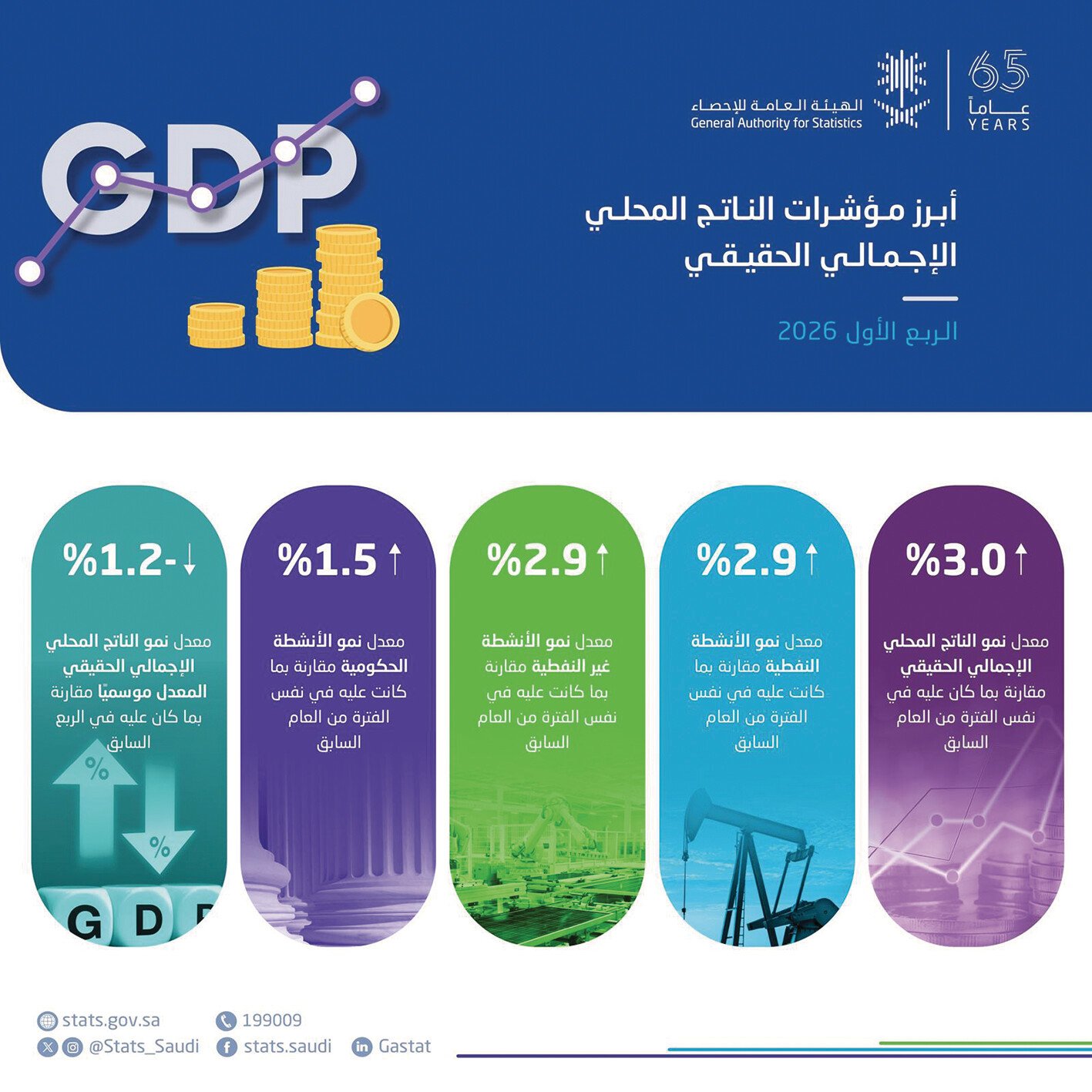
According to what official reports showed, the contribution of non-oil activities rose to historic levels, supported by accelerated growth in the industrial, tourism, technology, logistics, entertainment and mining sectors.
Non-oil exports also witnessed remarkable growth compared to the baseline from which the vision was launched, which reflects the success of economic policies in expanding the productive base of the national economy.
The impact of economic diversification was not limited to increasing revenues only, but also extended to creating new job opportunities and raising the attractiveness of the Saudi market to local and international investors.
The Kingdom has worked to develop regulations and legislation, improve the business environment, and facilitate procedures, which has strengthened investor confidence and contributed to attracting quality capital.
The Economic Vision programs also played a pivotal role in stimulating promising sectors, by providing incentives and launching major projects that have become engines of economic growth in various regions of the Kingdom.
Indicators indicate that the Saudi economy has become more capable of achieving sustainable growth away from traditional dependence on oil, which is one of the most important structural transformations that the national economy has witnessed during the past ten years.
This path confirms that Vision 2030 was not just a development plan, but rather an integrated economic project that succeeded in reshaping the structure of the Saudi economy and enhancing its global competitiveness, in line with the goals of sustainable development, raising the quality of life, and achieving prosperity for future generations.
Today, the Kingdom continues to build on these gains as the vision enters its advanced stages, benefiting from the legislative and institutional structure that was established over the past decade to achieve greater economic growth and diversification.
“Targets on time”
One of the most prominent features of the Saudi Vision 2030 experience is its success in achieving a number of goals years ahead of the deadlines set for them, which reflects the effectiveness of planning, the efficiency of implementation, and the clarity of the strategic vision.
Over the past years, the Kingdom has been able to record advanced achievements in a number of vital sectors, including the labor market, women’s empowerment, housing, tourism, digital transformation, and e-government services.
Some of these targets were achieved up to six years ahead of schedule, according to official reports.
In the labor market, national programs contributed to raising Emiratisation rates, providing job opportunities and developing skills, which led to improving employment indicators and increasing the participation of national competencies in various sectors.
As for the tourism sector, the Kingdom has exceeded a number of targets related to the number of visitors and the development of tourist destinations, driven by major projects, visa facilities, and modern infrastructure.
Regarding women’s empowerment, the Kingdom has witnessed qualitative transformations that have enhanced women’s participation in the labor market and various economic and social fields, making them an essential partner in the national development process.
Digital government has also achieved great leaps that have placed the Kingdom among the developed countries globally in providing electronic government services, which has been reflected in improving the experience of beneficiaries and raising the efficiency of government performance.
These achievements reflect the vision’s ability to transform strategic goals into a tangible reality that can be touched by citizens, residents, and investors, as the results are no longer just digital indicators, but have become part of daily life in the areas of work, housing, services, transportation, and investment.
This progress confirms that Saudi Vision 2030 was able to build an effective implementation model that focuses on results and measures impact on an ongoing basis, which contributed to accelerating the achievement of the goals and exceeding many of them before their specified date.
“Governance and Transformation”
The governance and follow-up system is at the forefront of the factors that contributed to the success of Saudi Vision 2030 and the achievement of its goals over the past years. Since the launch of the vision, the Kingdom has adopted an institutional model based on clarity of responsibilities, setting targets, and measuring performance on a regular and systematic basis.
The results of the vision’s annual report showed that this model has proven its effectiveness through high completion rates and the majority of performance indicators achieving their interim targets. Continuous follow-up mechanisms also helped address challenges, enhance implementation efficiency, and raise the level of coordination between various government agencies.
Governance in the vision depends on clear and measurable performance indicators, which allow knowing the level of progress in each program and initiative, and provide an accurate database for decision makers that enables them to intervene quickly when needed.
Transparency in publishing results and periodic reports also contributed to enhancing trust and accountability, as achievements and challenges became public according to clear indicators that can be followed and measured.
This methodology increased the efficiency of government spending and ensured that resources were directed towards national priorities that had the greatest impact on economic and social development.
The presence of specialized executive programs under the umbrella of the vision contributed to unifying efforts and integrating roles between various sectors, which reflected positively on the speed of achievement and quality of outputs.
The Saudi experience indicates that success in implementing development plans does not depend only on the size of resources, but rather on the presence of an effective governance system capable of continuous monitoring, evaluation and development.
This is why governance has become one of the most prominent pillars that enabled Saudi Vision 2030 to maintain the momentum of achievement, achieve advanced results in various fields, and transform the national transformation into a sustainable institutional project whose impact will extend for decades to come.
«Future model»
After ten years of continuous work, Saudi Vision 2030 has become a development model that attracts the attention of economic and development institutions around the world, due to the tangible results it has achieved in a record period of time.
The vision was not limited to implementing development projects or launching sectoral initiatives, but rather succeeded in reformulating the concept of comprehensive development by linking the economy, society, quality of life, sustainability and innovation.
Official indicators confirm that the majority of the goals of national programs and strategies are on track, while other goals have been achieved prematurely, which reflects the maturity of the Saudi experience and its ability to achieve a balance between ambition and realism.
The vision also contributed to enhancing the Kingdom’s position regionally and globally by developing infrastructure, improving the business environment, attracting investments, empowering national competencies, and expanding the role of the private sector in development.
The aspect of sustainability stands out as one of the most important features of the new Saudi model, as development plans are linked to raising the efficiency of resource use, improving the quality of life, and achieving a balance between economic growth and social and environmental dimensions.
The achieved successes indicate that the Kingdom has entered a more advanced stage of national transformation, based on building on previous achievements and accelerating the pace of work towards the 2030 goals.
As the vision moves to its final stages, attention is turning to what the Kingdom can achieve in the coming years, especially in light of the continuation of major projects and ongoing economic and social reforms.
The Saudi experience confirms that clarity of vision, effective leadership, good governance, and investment in people represent essential elements for creating a more prosperous and sustainable future, which has made Saudi Vision 2030 one of the most prominent stories of national transformation in the contemporary world.