Dear students,
I don’t know if I mentioned to you that my favorite student work unit is “A Student in Every Village”.
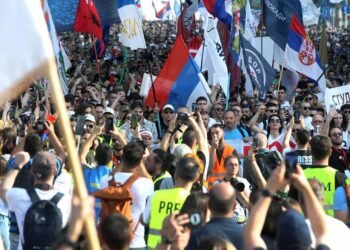
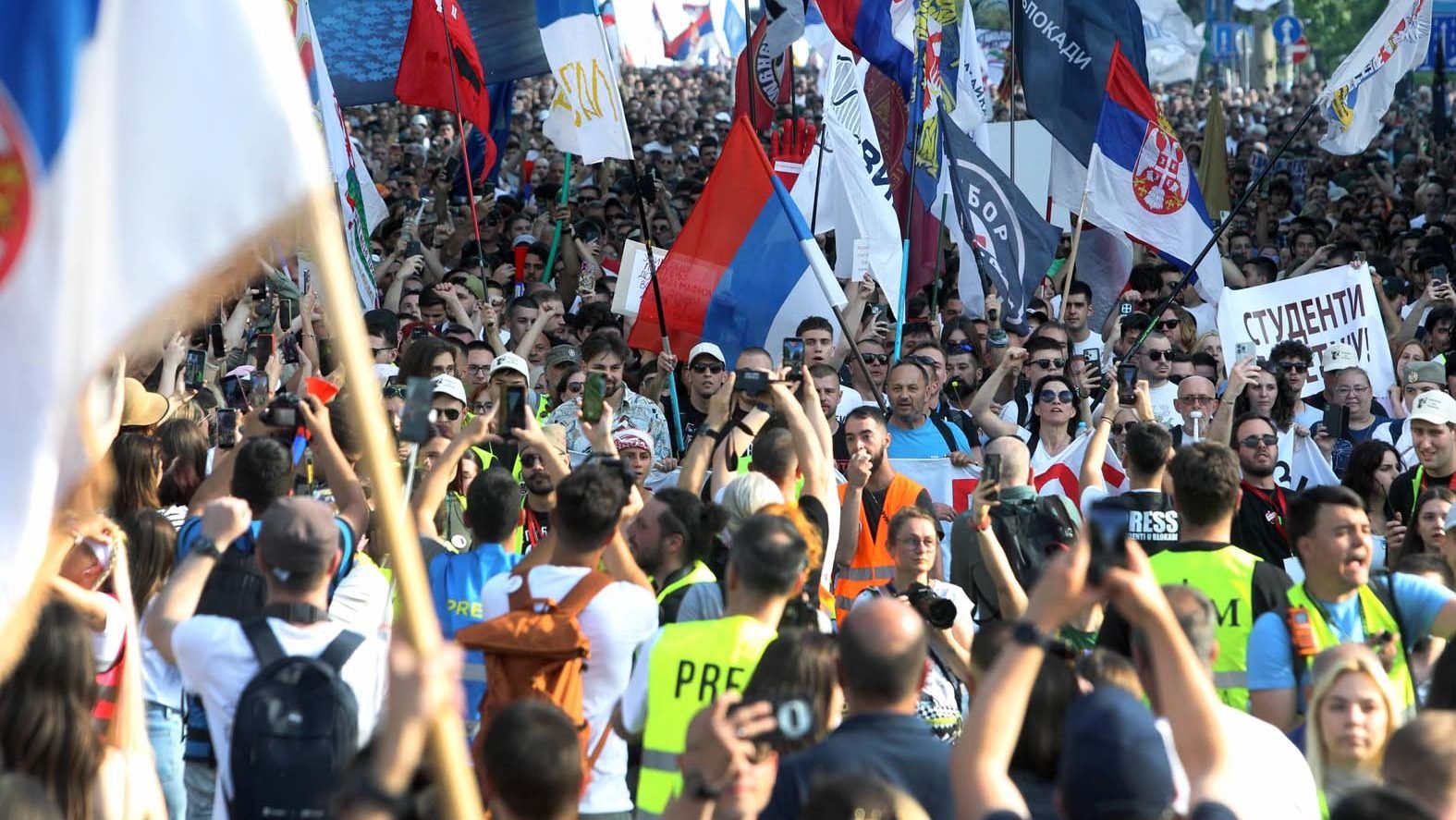
Through it, you visited over 1,000 villages and towns, knocked on more than 30,000 doors and had many more conversations with citizens at stands (“Talk to a student”, “Ask a student”, etc.). This worthy action, which lit a light in a country covered in media darkness, deserves a book to be written about it, which would probably be the truest picture of Serbia today.
Last week “Student in every village” published a short Instagram report from the trip to “Kosovo and Metohija”. In quotation marks because you are too young to know that “Metohija” was removed from the name of the then Serbian province in 1968, and the return of Metohija to the name of Kosovo in 1990 was undemocratic because no one asked the citizens of Kosovo what they wanted their province to be called. The province was forcibly stripped of its autonomy by the Milošević regime and this sparked peaceful protests in the first half of the 1990s under the leadership of Kosovo Gandhi Ibrahim Rugova. His protests failed, part of the Albanians radicalized into the KLA and it escalated into a war in which Kosovo was eventually lost (together with Metohija).
But let’s go back to the report “Students in every village” from Kosovo. It says that this work unit visited the villages in the south of Kosovo, Gotovuša and Shtrpce, and they also spoke with citizens from other places: “Serbs from Prizren, Kosovska Mitrovica, Gračanica, Shtrpce and other places spoke about the challenges of everyday life, the feeling of insecurity, but also the determination to stay on their land.” If the Albanians were a source of insecurity, it would certainly be written in the report, but their main source of insecurity is SNS’s “Serbian List” and nationalist (and terrorist) attacks on Kosovo from Serbia.
Instead of the mainstream narrative about the danger of the Serbian people from the evil “Shiptars”, “Students in every village” also met Albanians. The report states: “Meetings with Albanians additionally showed the complexity of life in Kosovo and Metohija and the paradoxes of everyday life, often differently than it was shown through political divisions.” In other words, the report mentions Albanians as people with whom Serbs live in Kosovo, and whom the student’s Memorandum on Kosovo is silent about because it was written by those who were not in Kosovo.
But I always said that you learn from your mistakes.
The publication of the report from Kosovo was accompanied by the beautiful song “My Dove” arranged by jazz bassist Nenad Vasilić and guitarist Armenda Xhaferi. As short as it is, for me this report of yours is a real student memorandum on Kosovo, and you only visited two villages. I invite you to visit the rest of Kosovo, including Pristina.
Connect with Kosovo students as well. Believe that their main enemy is Nepomeniko’s regime in Serbia. If the citizens of Serbia had not been poisoned by nationalism in the 1990s and had joined forces with the Albanians against the Milosevic regime, today Kosovo would be part of Serbia.
Several student accounts of the blockaded faculty recently expressed solidarity with the protesting citizens of Bolivia. All solidarity is nice, but there is one country that is much closer, where more and more Serbs are going on vacation, and where the citizens are protesting en masse for the same reasons as you protested against the demolition of the General Staff.
The same investor, Trump’s son-in-law Jared Kushner, who was given a culturally protected plot of the General Staff in order to build a hotel there, is now receiving an ecologically protected plot on the Adriatic island of Sazana as a gift in order to build a large hotel complex there. Hundreds of thousands of Albanians took to the streets to protest and deserve support.
History repeats itself, but what must not be repeated are historical mistakes.
Another example is the misuse of relics. Just as Milošević spoofed the Kosovo relics of Prince Lazar in 1989 as a central Yugoslav event in order to consolidate his power, so did Nepomenik for “buying” the belt of the Virgin from Hilandar in order to use “opium for the people” to nullify the effect of your great rally in Slavia.
By the way, Hilandar is not in Serbia, and neither is Jerusalem. And the narrative about Kosovo as a holy Serbian land is undermined by those who lost Kosovo irretrievably.
The only way to erase the border with Kosovo (and Hilandar) is European integration. Despite Nepomenik’s cordial meeting with high-ranking European officials in Tivat, which was overshadowed by an unprecedented diplomatic scandal in which almost 90 loyalists were returned from Montenegro as members of his security, Serbia is never further from joining the EU. While Montenegro will be the next new member of the EU, a report on Serbia in the European Parliament says that Serbia’s progress towards EU membership has been halted.
The document strongly criticizes the state of democracy, media freedoms, pressures on voters during elections, as well as controversial judicial laws that threaten the independence of the judiciary. MEPs particularly problematize the lack of progress in the investigation into the fall of the canopy in Novi Sad, the introduction of a system for digital surveillance of citizens and the very low compliance of Belgrade with the foreign policy of Brussels.
In the field of regional stability, the prosecution of those responsible for the attack in Banjska and the implementation of binding agreements with Kosovo while rejecting the concept of a “Serbian world” are demanded. Due to all of the above, the text calls for the immediate suspension of financial aid that goes through the Government of Serbia, which the deputies will finally vote on at the plenary session in July.
Therefore, it is not a dilemma of Kosovo or the EU. The dilemma is whether we want peaceful normalization of relations with Kosovo and joint membership in the European Union, or whether we want dictatorship, violence, corruption, isolation, recession, and perhaps war.
I will end this letter with a quote from the report “Students in every village” in which you began to dispel the myth about Kosovo: “When policies are conducted in a non-transparent manner, the media is used exclusively for propaganda purposes, and people remain marginalized in a corrupt atmosphere where there is no accountability, the only way to see the true picture of reality, and to approach solving problems in solidarity and effectively, is to have a direct conversation with everyone who lives that reality together. All those honest conversations provided a realistic picture of life and left a deep mark on everyone us.” If you don’t believe it, go to Kosovo and see for yourself. Historical mistakes are easily repeated, but opportunities to correct them are rare.
The views of the authors in the Dialog column do not necessarily reflect the editorial policy of Danas.
Follow us on our Facebook and Instagram page, but also on X account. Subscribe to PDF edition of Danas newspaper.