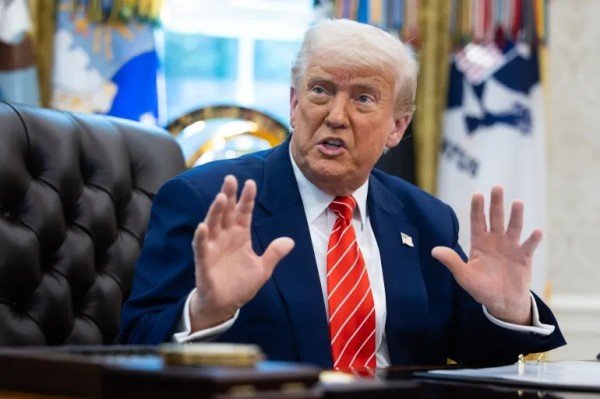
US President Donald Trump confirmed Thursday that a “wonderful settlement” had been reached with Iran, and the possibility of signing a memorandum of understanding as of the end of this week in Europe, a dramatic turnaround just hours after the threat of new strikes on the Islamic Republic.
“We just reached a great settlement to end the war with Iran,” he said at the White House, “and as soon as the documents are prepared, which should be done in the next few days, they will likely be signed, perhaps in Europe.”
He added that he will not attend the signing ceremony, which will take place in the presence of his deputy, Guy DeVance.
The Republican president will host a mixed martial arts (MMA) tournament at the White House on Sunday, his 80th birthday.
Trump also indicated that he believes that Iranian Leader Ayatollah Mojtaba Khamenei personally approved an agreement to end the war in the Middle East.
“As I understand it, the answer is yes,” he told reporters in the Oval Office in response to a question about whether Khamenei approved the framework agreement between Washington and Tehran, adding that the agreement in question is a “very solid memorandum of understanding.”
There was no immediate official comment from Iran on what Trump made, noting that this is not the first time he has spoken about the imminent conclusion of an agreement with the Islamic Republic.
However, Fars Agency quoted an informed source close to the Iranian negotiating team as saying that no text of a preliminary memorandum of understanding with Washington had been approved.
For his part, Israeli Prime Minister Benjamin Netanyahu’s office said Thursday that Donald Trump pledged that any agreement between Iran and the United States would include commitments to remove enriched nuclear materials from Tehran.
The office reported on X after a phone call between Netanyahu and Trump, “The Prime Minister expressed his appreciation for President Trump’s commitment that the final agreement at the conclusion of negotiations include the removal of enriched nuclear materials, dismantling enrichment infrastructure, placing restrictions on missile production, and stopping Iran’s support for its terrorist proxies in the region.”
Prior to that, the US President announced that he had withdrawn from launching threatened strikes on Iran on Thursday evening, indicating that high-level talks had been held and “final points” had been agreed upon with several countries.
“Based on the fact that discussions with the Islamic Republic of Iran have been submitted to and approved by the highest level of Iranian leadership…strikes and bombings on Iran have been canceled this evening,” he wrote on his social platform, Truth Social.
He added, “All concerned parties agreed to the discussions and final points in principle and in the greatest detail,” mentioning Israel, Saudi Arabia, the UAE, Qatar, Turkey, Pakistan, Bahrain, Kuwait, Jordan, and Egypt.
He pointed out that the US naval blockade on Iranian ports will remain in place until then.
After declaring a ceasefire in the war on April 8, the United States imposed a blockade on Iranian ports, in connection with Tehran’s closure of the Strait of Hormuz, which is vital for global oil and gas supplies.
– ‘An endless stalemate’ –
Trump’s threat came after Tehran considered on Thursday that the ceasefire agreement had become “practically meaningless” following a night of American bombing, to which it responded by striking targets in the Gulf states and Jordan.
The United States said that overnight it targeted Iranian military surveillance facilities, communications systems, and air defense sites. The strikes were closer to the capital than the strikes of the previous day, in which the bombing was limited to southern Iran.
The Jordanian army confirmed the interception of 20 missiles launched by Iran, while the Ministry of Defense in Kuwait reported Thursday that it had dealt with 24 “enemy drones” during the past forty-eight hours, noting that Thursday’s attacks caused serious damage to its airport’s radar.
After Trump’s threats, the Iranian armed forces warned of a “broader” war in the Middle East.
Ali Abdullah, commander of the Khatam al-Anbia headquarters, the central operations room of the Iranian forces, said in a statement, “We warn that if the United States again seeks to carry out attacks against heroic Iran, it will receive a harsher response than before, and the flames of war will spread, in addition to provoking a state of insecurity in the region, to become broader and more widespread.”
He added, “In light of the recent American threats against Iran’s oil infrastructure, we stress that exporting oil and gas will either be available to everyone, or it will not be possible for anyone.”
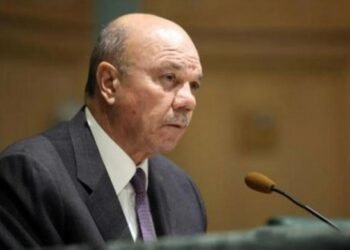
Muhammad Baqir Qalibaf, Speaker of the Shura Council and Iran’s chief negotiator, also warned of an “endless impasse.”
He wrote on
Trump’s withdrawal from the threat to bomb Iran came after it seemed that matters were once again heading towards escalation, three months after the start of the war, and about two months of a ceasefire, the violations of which had increased in recent days.
Qatari negotiators were in Tehran until Thursday morning to hold talks with Iranian officials, in coordination with Washington, according to American sources.
– “Hormuz will remain closed” –
Since the announcement of the truce, the United States continues to blockade Iranian ports, while the Islamic Republic continues to tighten its grip on the Strait of Hormuz.
With the escalation in recent days, Iran announced the complete closure of the Strait of Hormuz.
The Persian Gulf Strait Authority, which was established by Iran, said, “Due to the tensions resulting from the aggression of American forces in the region… the Strait of Hormuz will remain closed until further notice.”
The commander of the Revolutionary Guards’ aerospace force, Majid Mousavi, wrote on X: “You are making the sacred Strait of Hormuz unsafe?! We will make the region hell for you.”
Iranian television and Mehr Agency reported that the naval forces of the Revolutionary Guards had targeted “two illegal ships that were trying to cross the Strait of Hormuz illegally.”
The Khatam al-Anbia headquarters announced in a statement that “any transit movement will be targeted.”
However, the American Centcom denied this and confirmed that “commercial ships continue to cross to and from the Strait of Hormuz tonight.”
Trump said on Wednesday that the US military helped remove 100 million barrels of oil from Hormuz in a “secret mission.”
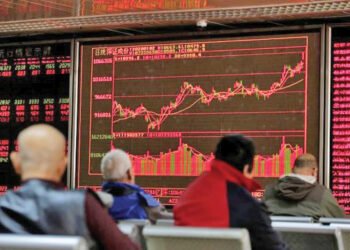
With the US President announcing the cancellation of the strikes, oil prices fell while stocks rose on the Wall Street Stock Exchange.
At approximately 17:50 GMT, major oil futures contracts fell by more than 3%, while major US stock prices rose.