Looking for a nuclear agreement
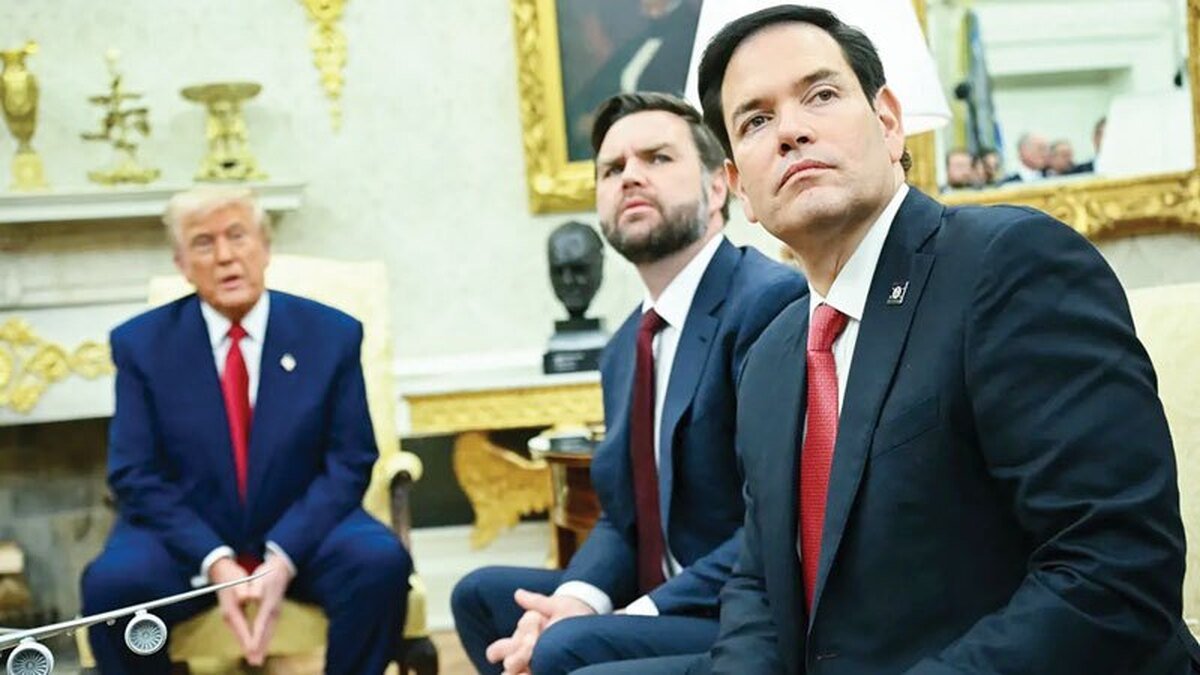
As Trump’s vice president, J.D. Vance was known as an opponent of “endless wars” and had serious doubts about a full-scale conflict with Iran. In private meetings, he had warned against the start or expansion of military operations against Iran and believed that America should not get involved in a long Middle East war. Vance emphasized America first and tried to prevent escalation of conflicts, although he publicly supported Trump’s decisions. This approach pitted him against more aggressive factions, including some officials aligned with the Zionist regime. With a cease-fire established after the fighting of Operation Epic Rage, Vance was tasked with taking a leading role in diplomatic efforts to contain the war. During the talks in Islamabad, he talked with Dr. Mohammad Baqer Qalibaf, Speaker of the Islamic Council for more than 21 hours. Another important point is that a report from the Jerusalem Post accused Vance of leaking information about Mossad’s plan to use Kurdish forces of the Autonomous Region against Iran to Erdogan, which led to Turkey’s intervention and the suspension of the said operation. Vance has also expressed skepticism about the Pentagon’s optimistic assessments of weapons readiness led by Pete Hegst. In a recent interview with Fox News, Vance clearly stated that the interests of the United States and the Zionist regime differ in some cases, and that Washington’s priority is to prevent Iran’s nuclearization through a long-term and verifiable agreement. He emphasized that recent developments have created a space for agreement and Iran does not want war, and Tehran has put serious issues on the table. Vance defends the diplomatic path as the way home for America, an unprecedented position from the second-in-command of American politics that has distinguished him as a voice against foreign adventurism.
Maximum pressure supporter
Contrasted with the vice president, who is less inclined to the view of the Zionist regime in West Asia; As the Secretary of State, Marco Rubio adopted a pro-Israel approach and emphasized the need for maximum pressure on Iran to prevent it from acquiring nuclear weapons and limiting missiles. He was against any agreement similar to the JCPOA and considered the past policies of Obama and Biden to be the cause of strengthening Iran in the region. Rubio always presents Israel as a key ally of America in the region and tries to keep Washington’s foreign policy completely aligned with Tel Aviv’s security. This position puts him against the isolationist faction. Rubio played a key role in persuading Trump to give the green light to the Israeli military to attack Iran. According to the Israel Hume report, Rubio’s support and close coordination in security and diplomatic meetings convinced Trump that not reacting to Iran’s missile response to Israel would benefit Tehran and weaken America’s negotiating position. He argued that a country that does not respond to an attack is a fool and strongly supported Netanyahu. These actions of Rubio ensured the full coordination of the US-Israel.
Rubio continues to insist on the need for a decisive military response and to maintain pressure on Iran and acts as the main contact of the Zionist regime in Washington. He advocates diplomacy, but sees any agreement as conditional on Iran’s extensive nuclear disarmament, and opposes any concessions without firm guarantees. Rubio is trying to steer Trump’s policy towards the long-term goals of the Zionist regime and has adopted a position closer to Tel Aviv than Vance’s cautious approach.
Seesaw decision making
In the second Trump administration, the conflict between the isolationist faction led by JD Vance and the neocon faction led by Marco Rubio over the final policy towards Iran has become one of the most serious internal divisions. Emphasizing “America first” and the initial opposition to the expansion of the war, Vance focuses on the need for a long-term and verifiable diplomatic agreement to prevent Iran’s nuclearization, and believes that the continuation of conflicts is detrimental to the direct economic and security interests of the United States. On the other hand, Rubio has adopted a stricter approach and insists on maximum military-diplomatic pressure to weaken Iran’s nuclear and missile programs. This difference has put Trump in the position of choosing between two realistic and ideological views. The dispute between JD Vance and Marco Rubio over Iran policy has directly cast a shadow on the prospect of the 2028 elections. Vance has tried to maintain loyalty to MAGA’s anti-war base by emphasizing an America-first approach and skepticism about war expansion, but that caution has led Trump to privately express doubts about his ability to lead the movement. On the other hand, by supporting military action against Iran, Rubio has presented himself as a figure aligned with the Zionist regime’s lobby in foreign policy and has attracted the support of parts of financial sponsors and traditional Republicans. While Rubio may gain credit as Trump’s aide in foreign crises; Reports indicate that the outcome of military operations and negotiations will significantly change the chances of each; Diplomatic success bolsters Vance, and increasing success propels Rubio’s military tools forward. Now Trump is going back and forth between the two heavyweights of the White House depending on the situation, and his intentions, especially which faction he is close to in relation to the Iran case, are still not clear to the observers.