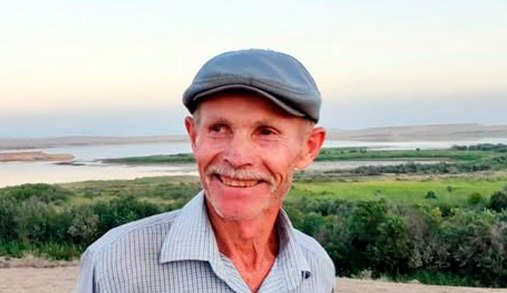
The situation with Alexander Fedin – a resident of the Surkhandarya region of Uzbekistan, who created a man-made forest with an area of 101 hectares and was awarded state awards, and then found himself homeless and in a psychiatric hospital – has moved forward after a wave of publications on social networks, Fergana reports.
According to information from sources who leads on his Facebook page resident of Tashkent, social activist and creator of the Human House Gallery Lola Saifi, the issue was taken under control by the Administration of the President of Uzbekistan and the National Committee on Ecology and Climate Change, and the khokimiyat of the Surkhandarya region was also involved in solving the problem.
As previously reported, Fedin was born in 1959 in Tajikistan and lived in the Surkhandarya region from infancy. In 1989, he received from the state four hectares of abandoned land near the Aktepa reservoir in the Dzharkurgan region and began planting trees.
Later he was allocated another 84 hectares. Together with members of the regional society of hunters and fishermen, Fedin created a forest with a total area of 101 hectares with hunting and fishing facilities. In 2023, the state awarded him the “Defender of Nature” badge, and in 2025 – the “Dustlik” Order.
However, in October 2025, Fedin lost his job. Journalist Fozil Farkhod, who arrived at the site on May 29, 2026, found a barrier at the entrance to the forest: according to his information, the territory was taken over by the military, and they rented it out to a private person who charged visitors 250 thousand soums (about $21).
Fedin himself by that time ended up in the Surkhandarya regional branch of the Republican Specialized Scientific and Practical Medical Center for Mental Health – an institution that is popularly called the “dovecote”. Due to family problems, he had nowhere to go.
According to Lola Saifi’s sources, Fedin is now receiving the necessary medical care and has already been discharged from a psychiatric hospital.
Work is underway to provide him with housing and the possibility of employment in the system of the National Committee on Ecology and Climate Change is being considered.
In addition to the fate of Fedin himself, the issue of the status of the park is also being resolved. According to available information, a decision is being prepared to transfer the territory under the management of the National Committee on Ecology and Climate Change and to open it to free visits.
In the future, it is planned to create a “Dendrological Park named after Fedin” – in recognition of his contribution to the greening of the region.
A journalist commented on the situation around Fedin on Facebook Anastasia Pavlenkoasking a number of fundamental questions: why the person whom the state had just awarded the order was not protected by any social system; whether an independent psychiatric examination was carried out; and won’t this story become a signal for everyone who is thinking about private environmental initiatives:
“Why plant, look after, save, if years later what you created can simply be passed on to others in one fell swoop, a barrier can be erected, and you yourself can be left outside the gates of the world you created?”
Private initiatives for forest restoration in Uzbekistan are rare, including because the country’s legislation still does not provide for the concept of “private forestry”, as previously told Fergana another forestry enthusiast, Otabek Nuritdinov from the Andijan region. Fedin’s story exposed the legal vulnerability of such initiatives and raised questions about how the state intends to protect them in the future.