online economy; Arman the artist- “I have a liver problem and every 2 months I have to inject an expensive injection. Pharmacies and even my doctor say that if you want this medicine, you have to pay dollars. Today, I have come to get a thousand dollars of essential currency from the bank so that the cost of my treatment may be a little less.”
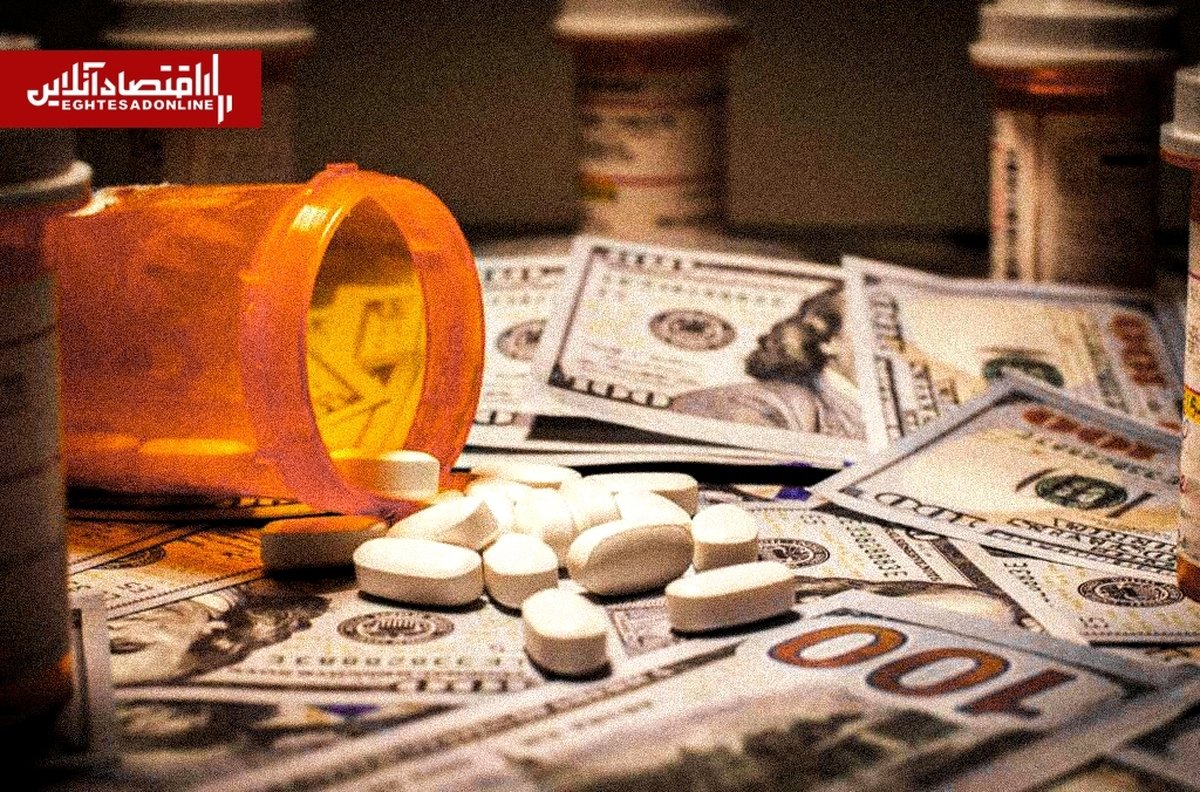
This is just one of the many complaints that have been received by the online economy in recent days about the demand for dollars and euros to buy certain medicines. Reports that seem strange at first glance, but field follow-ups show that the story is more complicated than imagined.
When rials are not enough to buy medicine
Surveys show that the increase in the price of foreign medicines, the decrease in the supply of some imported items, the concern of possible shortages in the coming months and the continuous decrease in the value of Rial against various currencies have created a situation where some pharmacies ask patients for foreign currency instead of Rial.
One of the officials of these pharmacies explained the reason for making such a demand from the clients to Ekhtazonline: “I have to do something like this. The person who supplies me with these drugs is not willing to deal with Rials and only wants physical dollars. Before the war, the situation was not like this, but now I have to either stop selling these drugs altogether or give the currency received from the patient to the drug supplier.”
He continued: “If I want to receive Rials from the patient and then seek to convert it into currency in the market, I will face financial, tax and even legal risks. Finally, these conditions make the actors of the supply chain unintentionally go towards methods that basically should not exist.
When suppliers do not accept the risk of Rial
The manager of a pharmacy in the 12th district of Tehran also told Ekhtaz Online: “Some special medicines are no longer supplied like before. We are faced with suppliers who set the price based on dollars and are not willing to accept the risk of devaluation of the national currency.
According to the pharmacist, “the patient thinks the pharmacy is to blame, while the main pressure comes from the supply chain side. “When the drug becomes scarce, the behavior of the entire market changes.”
Narration of a pharmacy in Babolsar
Follow-ups of online economy in some cities also indicate the continuation of this trend in a number of pharmacies. The official of a pharmacy in Babolsar said: “In recent months, the concern of patients about the lack of medicine has increased significantly. “Many patients try to get several courses at the same time, and this issue puts more pressure on the market.”
According to this pharmacy operator, “when the supply is limited and the demand is increasing, some suppliers prefer to do transactions in currency, and the same issue is ultimately transferred to the pharmacy and the patient.”
The main source of volatility in the drug market
A pharmacist in Azimieh Karaj also confirmed this and said: “The main problem is instability.” “No one knows at what price and from what route a particular medicine will be supplied next month.”
He continued: “Until the drug supply chain is stabilized, there will be a possibility of such behavior in the market.” Meanwhile, the greatest pressure is placed on the patient who is dependent on his medicine and cannot stop the treatment.
The reaction of the Food and Drug Organization to the claim of receiving foreign currency in pharmacies
To check the validity of this issue, Ekhztanonline went to the Food and Drug Organization. Saeed Mehrzadi, Director General of the Office of Inspection, Performance Evaluation and Response to Complaints of the Food and Drug Organization, said in an interview with Economy Online: “We have not yet received an official report in this regard. We ask people to report the issue through the 190 system if they see such cases.”
In response to the question of what action will be taken if such a violation is confirmed, he said: “If the violation is proven, the issue can go as far as canceling the pharmacy’s activity license.”
How serious are the dimensions of the problem?
The discussion of the increase in treatment costs and out-of-regulation receipts in the health sector had already attracted the attention of some MPs. Hossein Ali Haji Deligani, the vice-chairman of the 90th Committee of the Parliament, had previously said in this regard: “Receipts outside the rules in some medical departments, as well as the increase in the cost of medicine, are issues that must be carefully examined and dealt with so as not to put more pressure on the people.”
However, the main question still remains; Can dealing with pharmacies solve the root of the problem or is the problem somewhere else?
Dealing with the effect or solving the cause?
A significant part of the activists in the field of medicine believe that if the main source of this incident lies in the chain of supply, import and distribution of medicine, dealing with pharmacies alone cannot be the final solution. In such a situation, this question is raised: Shouldn’t the conditions of drug import be modified in such a way that even without relying on the preferred currency, there is a possibility of stable supply of drugs for the market?
This question is important because many of the drugs whose names are mentioned in popular reports are included in the list of drugs subject to foreign exchange support, but the patient ends up getting them at a much higher cost than expected.
Finally, no matter which part of the drug supply chain is to blame for this situation, it is an undeniable fact; A patient who needs a special drug to continue his treatment is neither involved in currency policies nor knows the complex relations of the drug market. He only wants to get the medicine he needs at an affordable price and through a legal route; A demand that seems to be becoming more and more difficult for some patients.