In addition to choosing the dress and making the guest list, sport entered the brides’ itinerary before the wedding. marriage. This is because bachelorette parties began to take place in street races, crossfit, yoga, beach tennis and spinning classes.
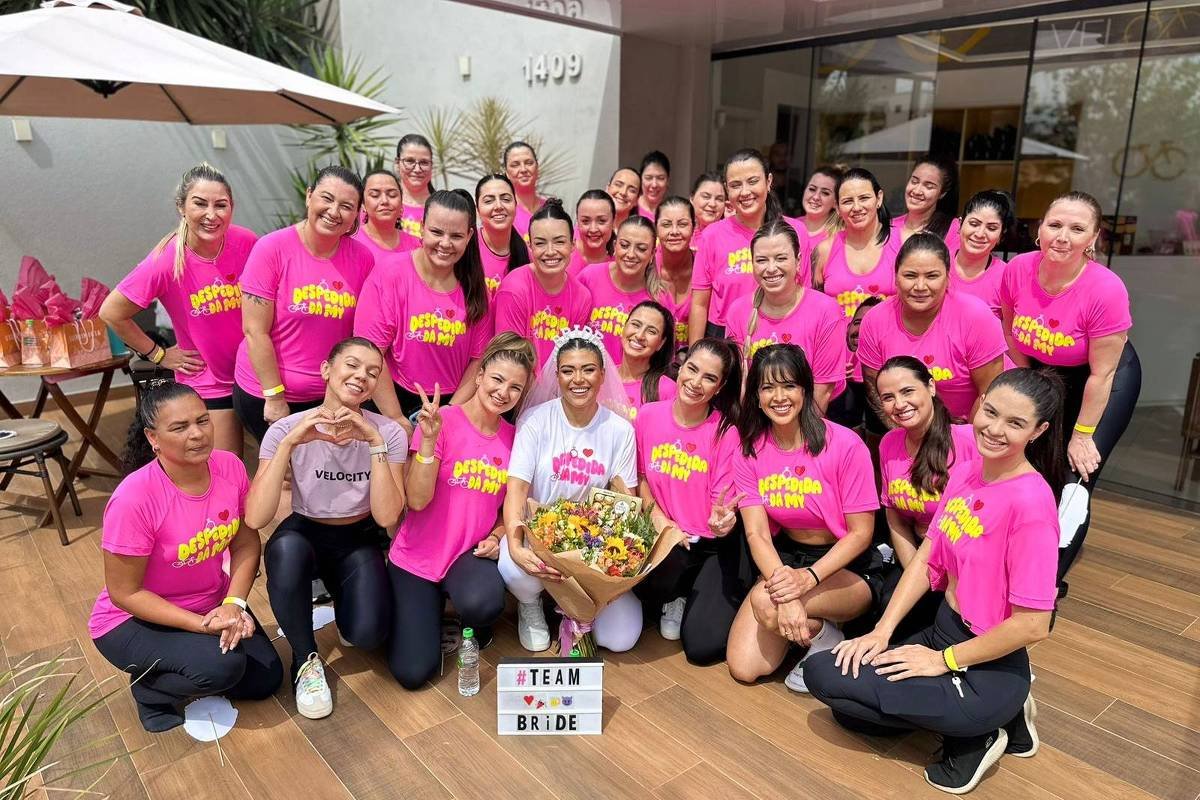
Businesswoman Mylena Pereira, 34, learned of birthdays that were celebrated in cycling classes on an exercise bike — called spinning. She liked the idea and decided to have her bachelorette party in the same style.
She combined two goals: to keep going to the gym during the wedding preparations and to promote meetings with friends.
Cycling at the gym is usually fun. The class environment is filled with music, lights, simple choreography and shouts of encouragement. “Drinking and those traditional games have lost their appeal,” says Mylena. “Today, my style is to take people spinning.”
The profile of the guests was diverse. There were those who already practiced sports, those who were more sedentary, two pregnant women and a former cancer patient who needed authorization from the doctor. “A lot of people continued cycling after that”, he says.
Part of this trend of putting exercise in place of celebrations is explained by people’s changing habits. Recent Datafolha shows that practicing sports is part of everyday life 53% of the population aged 16 or over. On the other hand, more than half (53%) of those who drank alcoholic beverages in 2024 say that the consumption decreased.
According to psychoanalyst Carla Almeida, the change, in addition to being behavioral, is symbolic. “The bachelorette party was seen as a moment in which women could get a little out of control,” he says. “Excess was exchanged for control and management of one’s own image.”
Videos on TikTok and Instagram inspire this new way of celebrating. Maria Fernanda Tuan, 33, owner of an English school, looked for ideas on social media so that the party could keep her in her routine. “The algorithm suggested doing a workout, something that was already part of my life,” he says.
Maria Fernanda invited 15 friends for functional training, which mixes squats, jumping, weight lifting and balance. The event took place at a farm in Ubatuba (on the north coast of São Paulo) and lasted throughout the weekend. “The whole celebration was fitness with gluten-free bread, juices, eggs, fruits”, he says.
Coexistence is another factor that drives this type of party. Daniela Lopes dos Santos, professor at the physical education center at UFSM (Federal University of Santa Maria), states that gyms and clubs have come to be seen as safe environments to create friendship networks. “Sport has become part of women’s identity,” she says.
The risk, however, is to alienate beginners. Therefore, it is preferable to carry out activities that can be adapted to people of varying physical fitness, according to the teacher.
Ingrid Oreques, 31, interior designer, celebrated her bachelorette party with a run at Parque Una, in Pelotas (RS). She has been playing sports for about three years.
On the morning of Good Friday, 27 women participated in a race of around 800 meters in honor of the bride.
The intensity of the training was light, after all, only Oreques and four other guests had a routine more linked to physical activity. “The rest of the people followed suit,” he says. “The idea was to make something accessible for everyone.”