The 1994 Cuban migration explosion, known as the rafter crisis, so alarmed the United States that it led President Bill Clinton to seek an agreement with Fidel Castro. There followed one of the periods of détente that have alternated with stages of worsening of the bilateral conflict.
One result of this easing of tensions was the beginning of contacts between the head of the US naval base in Guantánamo, at the eastern end of Cuba, and an equivalent Cuban officer.
Meetings are rarely made public, so it is not possible to know whether they have been held on a regular basis. But every so often there are signs that communication remains despite the gales of politics.
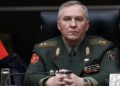
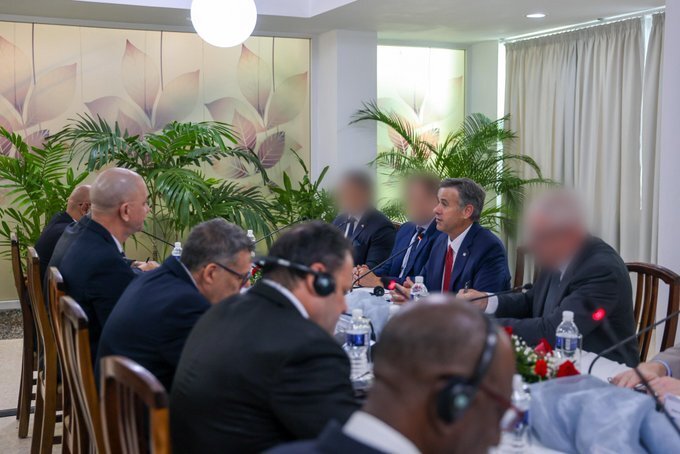
On Friday, May 29, under the worst escalation of tensions in decades, the meeting went up a notch. At the border line, the head of the United States Southern Command, General Francis L. Donovan, and the First Deputy Minister and Chief of the General Staff of the Revolutionary Armed Forces (FAR) of Cuba, General Roberto Legrá Sotolongo, greeted each other.
According to the FAR, the meeting addressed “security around the dividing perimeter of the military enclave,” an unusual euphemism in official Cuban language, which usually refers to the US base as an illegal occupation of territory.
The Southern Command said that Donovan discussed “operational security matters” with the Cubans and, in addition, evaluated the conditions of the area and its personnel at the base.
Along with photos published by the Southern Command, the tone of the stories avoids allusions to the ongoing tension or to versions of threats of a military attack on the island.
This is the fourth confirmed meeting between representatives of both governments this year. In this incipient dialogue the trend is bilaterality, not the search for solutions outside the Cuban hierarchical order.
After the visit to Havana of the director of the Central Intelligence Agency (CIA), John Ratcliffe, on May 14, this is the second meeting in which the topic is common security.
Bilaterality as a form and security as a substance coincide with the Cuban response of last February 1 to President Donald Trump’s Executive Order, which declared an energy fence until Cuba shows that it aligns with Washington’s security requirements.
In the meeting in Guantánamo there is also a high dose of pragmatism. It follows a direct offensive by the United States against the Cuban military: sanctions on the Business Administration Group (GAESA), the economic corporation of the FAR; the arrest of relatives of two generals and the criminal accusation against Raúl Castro, among others.
Furthermore: Legrá has been sanctioned since 2021 with the freezing of his assets in the United States (if he had them), for his role in the repression of protesters on July 11 and 12 of that year. He was then vice chief of the General Staff and director of Operations of the FAR.
Another notable pragmatic edge is the one that put the heads of the CIA and the Southern Command in front of two members of the Political Bureau (executive) of the Communist Party, from generations after the historical one, from the latest promotions in the African wars and with trajectories that place them in the antechamber of leadership.
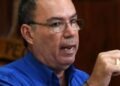
The Minister of the Interior Lázaro Alberto Álvarez Casas (1963), a veteran of military counterintelligence, was promoted a year ago to general of the Army Corps, the highest rank in the ranks. Raúl Castro then praised, in addition to his military services, his loyalty to the system, his personal skills and his “firmness, serenity and equanimity to face and act in different situations”, an oblique reference to the 2021 repression.
With studies in the former Soviet Union, Legrá (1945) served in infantry commands. Due to the position he has, he could be the next minister of the FAR, in the event of the retirement of the current owner, Álvaro López Miera.
*This article was originally published in Reform.