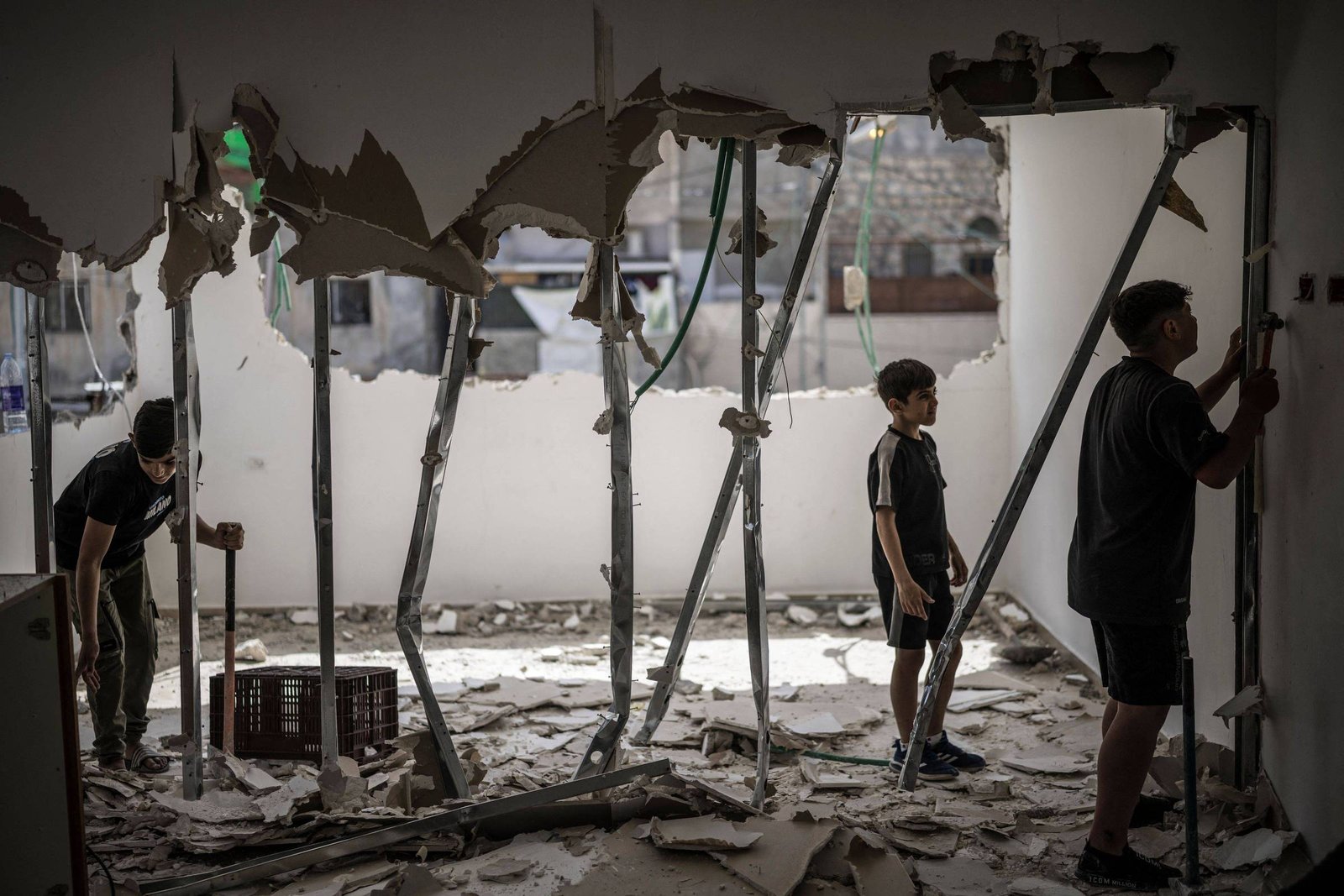
In June last year, Qutaibah Odeh, 32, watched the demolition of his brother’s house in Jerusalem Eastern. The city later passed the bill to him. They charged, he says, the equivalent of around R$80,000 for the tractors and employees who destroyed one of the family’s homes, residents of the place for generations.
In July this year, the Court will decide whether to demolish Odeh’s house as well. He will then have to pay the fee, like his brother. Unless he chooses to give up city hall services and destroy the building himself.
In recent months, other families have experienced this dilemma. Cases have increased since the beginning of war against the terrorist group Hamasin October 2023. “All the focus is on Gaza and Iran. Nobody pays attention, and they do what they want,” says Odeh, who leads a residents’ association against the demolitions.
“How do you want us to feel?” he asks. “It’s not just stones. We have memories, dreams. Our past is here.”
The situation particularly affects Palestinian neighborhoods close to the Old City of Jerusalem, such as al-Bustan, where the Odeh family lives. According to press reports, Israel has demolished nearly 60 homes there in the past two years. The plan is to build a biblical theme park on the site.
Israel justifies the demolition orders by stating that these families built their homes without proper authorization from the city hall. He also says that the park would fill the lack of green and leisure areas in al-Bustan.
However, Palestinians face legal challenges in building their homes. “The number of Palestinians who can obtain a permit is quite limited,” says Israeli architect Haim Yacobi, an urban planning expert who teaches at University College London. “Bureaucracy works against them.”
According to the professor, Israel has been trying, over the last two decades, to increase the number of Israeli Jews and reduce the number of Palestinians in East Jerusalem, a territory it occupied in 1967 after the Six-Day War. Both Israel and the Palestine claim the city as capital, which constitutes one of the main obstacles to peace negotiations.
One way to do this is to treat Jerusalem as a historically Jewish area, privileging excavations that confirm the nationalist ideology of the current government. It is based on biblical accounts, after all, that the city hall plans the new park in al-Bustan. “Israel uses archeology as a weapon to dispossess Palestinians,” says Yacobi.
Although this process has a long history, the professor says it has accelerated dramatically in recent years. If before there were protests, including by Israelis, today the demolitions barely appear in the news, he says. In addition to the focus shifting to Gaza, there was return of Donald Trump to the Presidency of the United States, accompanied by greater support for the Prime Minister’s policies Binyamin Netanyahu.
Yacobi says that, in addition to economic reasons, some Palestinian families prefer to demolish their own homes because that way they can better control the process. They can also save part of the material to build their new homes. “For many of them, there’s nothing worse than someone demolishing their house,” he says. “Or actually there is: let someone else do it instead of them.”
The architect says that, despite being on the rise, these demolitions still face obstacles in the country. Legal processes are slow and complex and face resistance from Palestinian residents. But the actions function as a symbolic factor, creating a sense of fear and instability among Palestinians. “For Israel, it’s a way of showing who holds power.”
Odeh compares al-Bustan’s situation to “a Hollywood movie.” “First, we are fined because we built without authorization. Then, they demolish our house and send us the bill, making us even pay for the soldiers’ meals,” he says.
He says he has no hope of winning his case in court in July. But he says in advance that, “as a matter of principle”, he will not demolish his house. “Let them take it down.”