The Ministry of Internal Affairs announces that it has concluded contracts and framework agreements in the framework of the SAFE program with a total value of over 973 million euros.
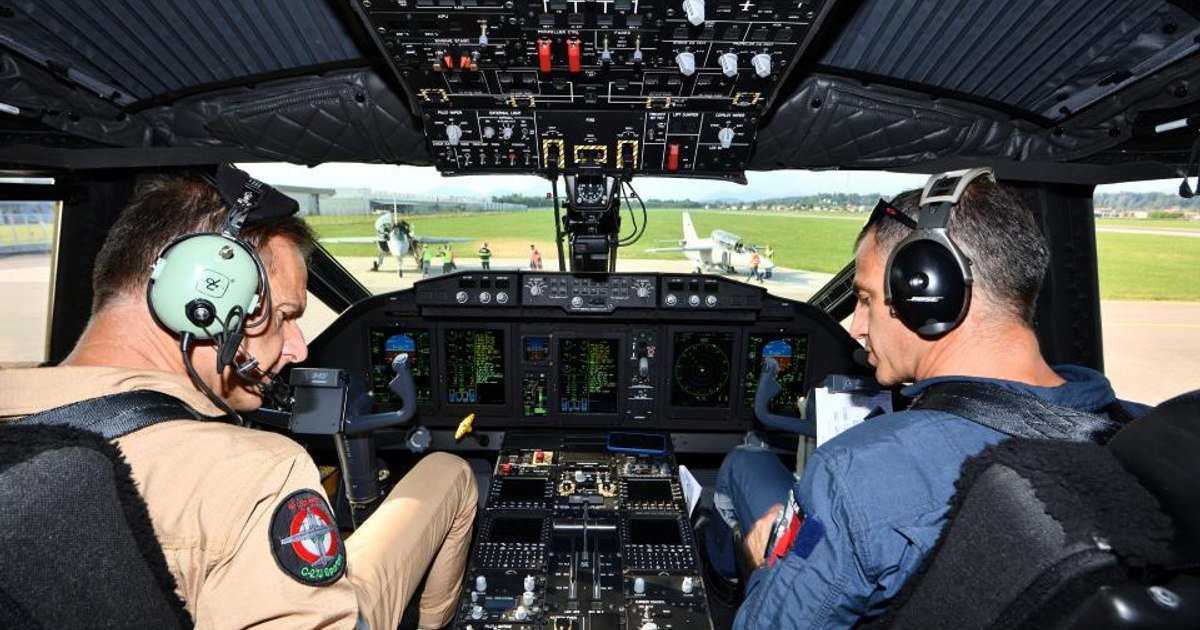
Leonardo C-27J Spartan NG tactical aircraft PHOTO: X
UPDATE: How was the procurement procedure for NATO-type infantry Individual Weapon Systems and Ammunition done
The Ministry of Internal Affairs came up with clarifications on the procurement procedure of NATO-type Infantry Individual Weapon Systems and Ammunition (SAI) through the SAFE program.
For this acquisition, a Contracting Authorities Association Agreement was concluded between the Ministry of Internal Affairs, the Ministry of National Defense, the Romanian Intelligence Service, the Foreign Intelligence Service, the Protection and Guard Service, the Special Telecommunications Service and the National Penitentiary Administration. The activities related to the procedure were carried out under the coordination of the Ministry of National Defense until May 13, after which the coordination was transferred to the Ministry of Internal Affairs.
“The evaluation committee’s decisions are based on the technical, legal and operational evaluations of all the representatives of the member institutions of the Association Agreement. The contract for the purchase of NATO-type Individual Infantry Weapon Systems and Ammunition has not yet been concluded, the procedure continuing according to the work procedures and rules of the European Commission issued for the application of the SAFE Regulation (EU) no. 2025/1106. During the rounds of discussions and analyzes carried out in the meetings of the evaluation committee on 30.05.2026, the representatives of the Association formulated a series of additional requests for clarification regarding the data and results of the technical compliance reports submitted by the supplier. These elements are analyzed by the representatives of the institutions of the National Defense System, Public Order and National Security, in order to continue the procedure under conditions of legality, technical rigor and institutional responsibility. At the same time, on 30.05.2026, the Industrial Cooperation Agreement was concluded, whereby the supplier and MEDAT agreed on the conditions for locating the production of the benchmarks that are the subject of the contract in a proportion of over 65% in Romania, within the CN Romarm subsidiaries. For the 5.56 mm assault weapon, the 9 mm pistol, the 9 mm semi-automatic pistol and the 40 mm grenade launcher, the localization of production will be 100% in Romania. The objective of the institutions within the National Defense, Public Order and National Security System remains the completion of the procedure in accordance with the applicable national and European rules, respecting the technical, legal and operational requirements related to a purchase of strategic importance”, announces MAI.
The contracts target major investment projects aimed at increasing the operational capacity of MAI structures in areas essential for national security, population protection and response to emergency situations: military mobility, multiple casualty management, CBRNe protection, mass evacuation, air and naval intervention, critical communications and IT resilience.
The individual procurement procedures, carried out within the SAFE projects, were carried out with suppliers approved by the Supreme Council of National Defense.
The contracts concluded by MAI amount to 973,113,125 euros, as follows:
-SAFE_RO_CAT1_S_26 – Military Mobility 10,921,000 euros;
-SAFE_RO_CAT1_C_26.5 – Operational emergency vehicles 115,925,000 euros;
-SAFE_RO_CAT2_S_27 – Management of multiple victims and CBRNe protection 431,861,000 euros;
-SAFE_RO_CAT2_S_29 – Management of the uncontrolled movement of the population / mass evacuation 292,886,125 euros;
-SAFE_RO_CAT2_S_030 – Critical communications, command-control and civil defense systems 121,520,000 euros.
“Through these investments, Romania strengthens its intervention capacity in complex scenarios, including natural disasters, collective accidents, CBRNe incidents, multiple medical evacuations, search and rescue operations, air and naval interventions, transport of personnel and essential materials, as well as ensuring critical communications in exceptional situations”announces MAI.
MApN announces that it is pursuing “balanced and advantageous” contracts through the SAFE program
An important component of the program is intended Department for Emergency Situations, through investments in aviation, civil protection and operative intervention. Two Leonardo C-27J Spartan NG multirole tactical aircraft, 12 Airbus H145 and H160 helicopters, an integrated flight simulation center, special vehicles for the transport of multiple victims and emergency situations, ambulances for the transport of highly contagious patients, mobile teams for the management of mass casualties, Search and Rescue lifeboats and an intervention train for the transport of multiple victims and interventions in emergency situations are envisaged.
The two multirole tactical aircraft will enable complex missions to be carried out, from air support for monitoring and coordinating interventions in major emergency situations, to multiple medical evacuations, transport of specialized teams, transport of intervention materials and support for the population.
The integrated flight simulation center for the Airbus H135 and Sikorsky S-70M Black Hawk will contribute to increasing aviation safety, training crews in near-real conditions and reducing actual flight training costs.
The Airbus H145 and H160 helicopters (3x H 160 for public order, 4x H 160 for civil protection multi-role missions and 5x H 145 for SMURD and mountain rescue missions) will strengthen the national air intervention, civil protection and emergency management capacity, including for SMURD missions, mountain rescue, search and rescue, operational transport, logistical support and interventions in hard-to-reach areas.
Special vehicles for transporting multiple victims and interventions in emergency situations, ambulances for highly contagious transport and mobile teams for mass fatality management will increase the response capacity of MAI structures in the case of events with a large number of victims, biological risk situations and complex intervention scenarios.
The Search and Rescue barges and maritime intervention barges will strengthen the ability to act on water, including for the rescue of persons in danger, interventions on board ships, extinguishing fires and supporting operations carried out in port, river or maritime areas.
At the same time, investments in critical communications and IT resilience will contribute to protecting the operational infrastructures of the MAI, to the continuity of essential services and to increasing the coordination capacity between operative structures in crisis situations.