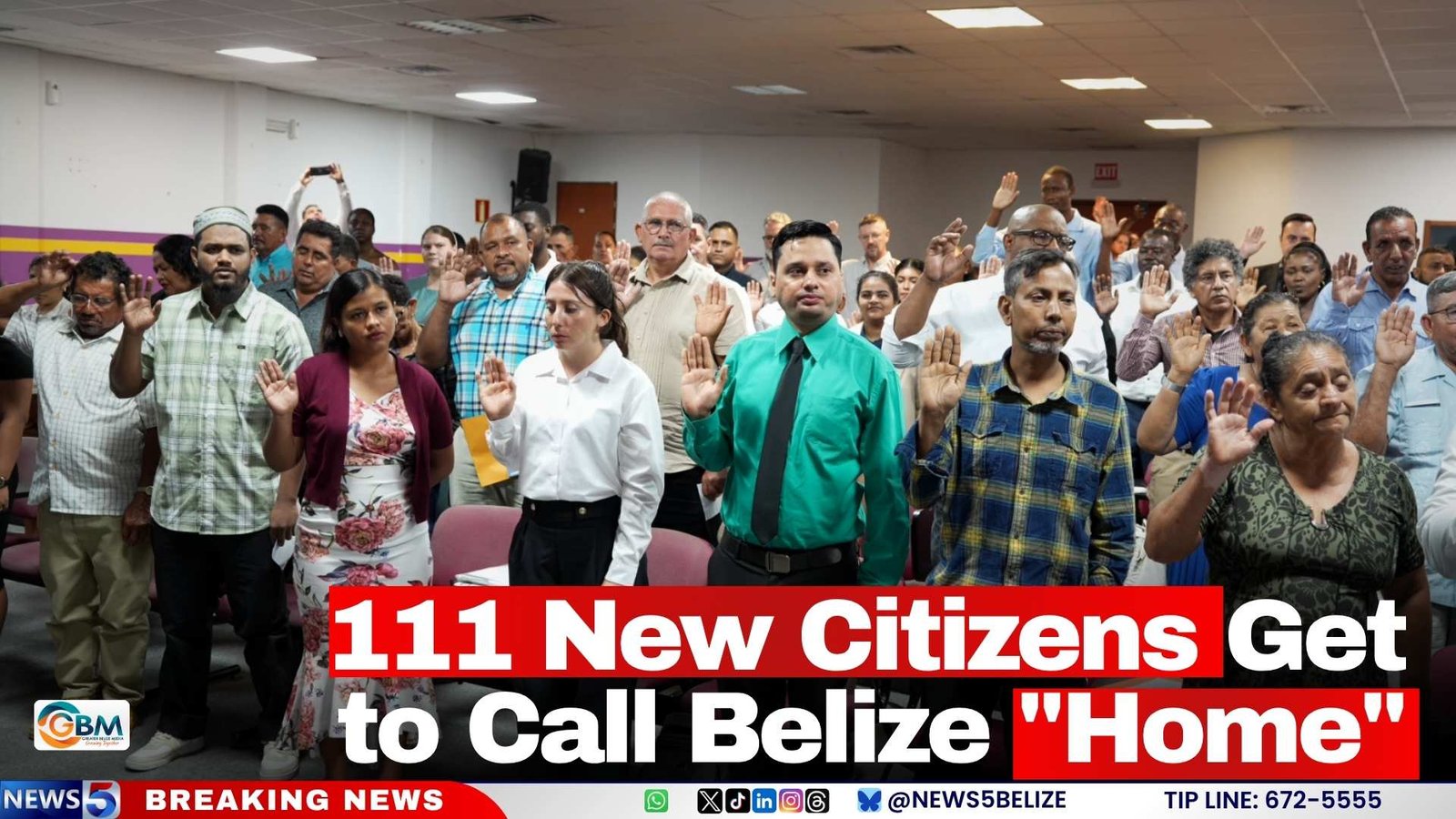
One hundred and eleven people from 22 countries raised their hands on Thursday and pledged allegiance to Belize in a nationality ceremony that the Ministry of Immigration says reflects the country’s identity as a nation built on diversity.
The new citizens hail from across the Americas, Asia, Africa, and Europe, with Honduras accounting for the largest group at 32, followed by El Salvador at 28.
Becoming a Belizean, however, is a privilege that requires commitment, according to Minister of Immigration Kareem Musa.
“Some people don’t understand and appreciate the responsibility and honor it is to be Belizean,” Musa said. “A pathway to citizenship is not easy, but it has opened us up to skills, careers, and work that we don’t want to do, or even to professions that did not exist before in Belize. It has kept us youthful, dynamic, and entrepreneurial.”
Musa also addressed the deep community ties many of the new citizens have already built, saying, “Many of you have resided in Belize for a considerable period. You diligently work, some often in challenging and low-paying jobs, while simultaneously supporting your families. Their aspirations and dreams and patriotism are remarkably similar to ours,” he said.
Officials said nationality backlogs have been cleared, processing times have dropped from years to months, digital archives are replacing fragile paper records, and overseas service hubs have resolved thousands of pending nationality cases.
Meanwhile, the Refugees Act, in place since 1991 with minimal changes, is currently under review. UNHCR Officer-in-Charge Mariya Voloshkevich welcomed the progress. She said that addressing existing gaps “would improve access to asylum and make the Belize asylum system stronger.”