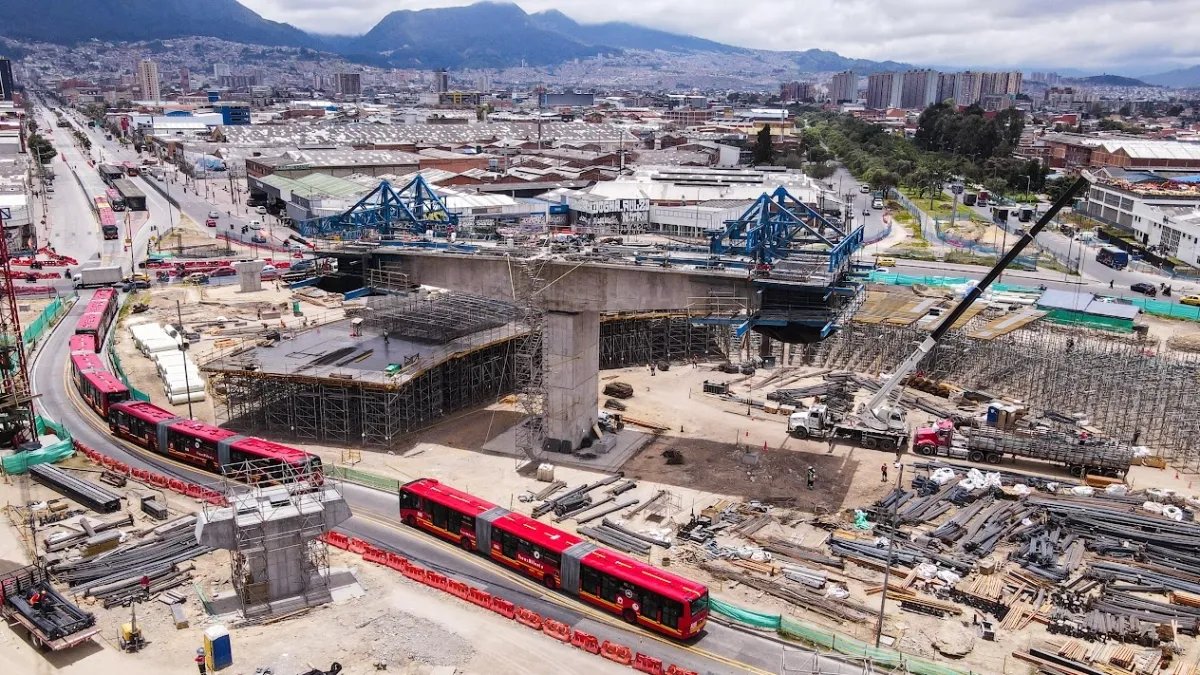
The 13th Street trunk became a cause of confrontation between Chamber representative Daniel Briceño and the director of the Urban Development Institute (IDU), Orlando Molano. At the center of the discussion are the delay of the Carrera 50 interchange, the continuity of the other sections and the decision to postpone resources to complete the corridor to the west of Bogotá.
Briceño has questioned the planning and execution of the project. Their objections point to a three-level structure that could come into operation before the planned connections on 13th Street are built. It has also pointed out delays and a possible waste of resources, while the IDU maintains that the interchange will be useful even without the simultaneous termination of the entire trunk.
The complete intervention includes 11.62 kilometers, from Carrera 50 to the Bogotá River, as Molano explained in an interview and added that the project is divided into four lots. The first two were hired during the Claudia López administration; Lots three and four, which extend from Boyacá Avenue, at Carrera 69, to the Bogotá River, were left unallocated.
The IDU director stated that the tenders for those last two lots were declared void three times in 2023. This situation left a part of the expansion projected towards the western edge of the capital without contractors. The pending contracting is one of the points that fuel the questioning about the immediate usefulness of the Carrera 50 interchange.
The question posed to Molano was whether this structure will end up leading to a traffic jam due to not having the other sections of 13th Street. The question also included the delay in delivery, initially scheduled for June. In the controversy exposed about the project, it is pointed out that the road distributor has accumulated at least a year of delay and that the work had to be rescheduled.
New 13th Street Bridge reaches 50 percent completion Photo:IDU
Molano responded that the infrastructure does not depend exclusively on the extension of 13th Street to enter service. His explanation focused on the connection with Avenida de Las Américas, a road that already works and that, as he indicated, will allow part of the interchange to be used while the other components of the project advance.
According to the official, the two third level bridges will connect Las Américas and will facilitate the passage of private vehicles and mixed traffic. He assured that these structures have already exceeded 50% progress. The interchange also includes a second level for TransMilenio, with branches to Las Américas and 13th Street.
The connection for buses, he explained, will take advantage of the TransMilenio infrastructure that already exists on Las Américas and will allow for integration with the future continuation of the 13th Street corridor. That is the reason why the IDU defends the construction of the interchange before all the remaining sections have been awarded and executed.
The discussion is not limited to whether the bridges can be used. Briceño questions that resources are invested in a large work without the continuity of the corridor being resolved. In the statements collected about their criticisms, there are indications of lack of planning, inefficiency, delays and what the representative has called “chambonería” in the management of the project.
Regarding physical progress, the background information surrounding the controversy places the exchanger at 51%. They also point out that the interventions required rescheduling and the implosion of two vehicular bridges. That same count indicates that the third level and the roundabout are scheduled to come into operation during the second half of 2027.
New 13th Street Bridge reaches 50 percent completion Photo:IDU
Another point is in the second batch, hired during the previous administration. According to the explanation given about that section, the contractor filed a lawsuit because the work was not profitable. The IDU requested the return of the 18,000 million pesos delivered and now hopes to open a new tender.
This episode adds to the three failed tenders for lots three and four. Between a contract that must be re-tendered and two other sectors not awarded, the continuity of the trunk remains linked to new contracting processes. This sequence is part of the criticism about the timing and execution of the investment planned for 13th Street.
Regarding the money allocated to the work, Molano rejected that the resources had been lost or that the Nation had taken them from Bogotá. “The resources are guaranteed, they simply moved two years,” he stated at the end of the interview. The director related this adjustment to the need to modify the project’s bidding schedules.
To explain why the interventions are not all executed at the same time, the director compared 13th Street with other corridors divided into groups. He mentioned the nine fronts of 68th Avenue and the three groups of Carrera Séptima. According to him, the distribution by stages also responds to the mobility conditions that prevent an entire corridor from intervening simultaneously.
representative to the Chamber Daniel Briceño. Photo:House of Representatives.
Molano recognized, however, the difficulty of managing so many open works. He stated that Bogotá has more than 1,000 work fronts and that, at the beginning of the current administration, the IDU received more than 76 overdue projects. As a balance, he reported 27 projects delivered and maintained that the district government’s goal is to exceed 50 deliveries.
The dispute leaves two identifiable positions. Briceño focuses his objections on delays, contracting and the risk that the infrastructure will not solve the corridor’s circulation problems. Molano defends the immediate connection with Las Americas, the execution in stages and the guarantee of resources. The entry into service of the interchange and the new tenders will be the next milestones of the project.
CAROL MALAVER
DEPUTY EDITOR BOGOTÁ
Write to us at carmal@eltiempo.com