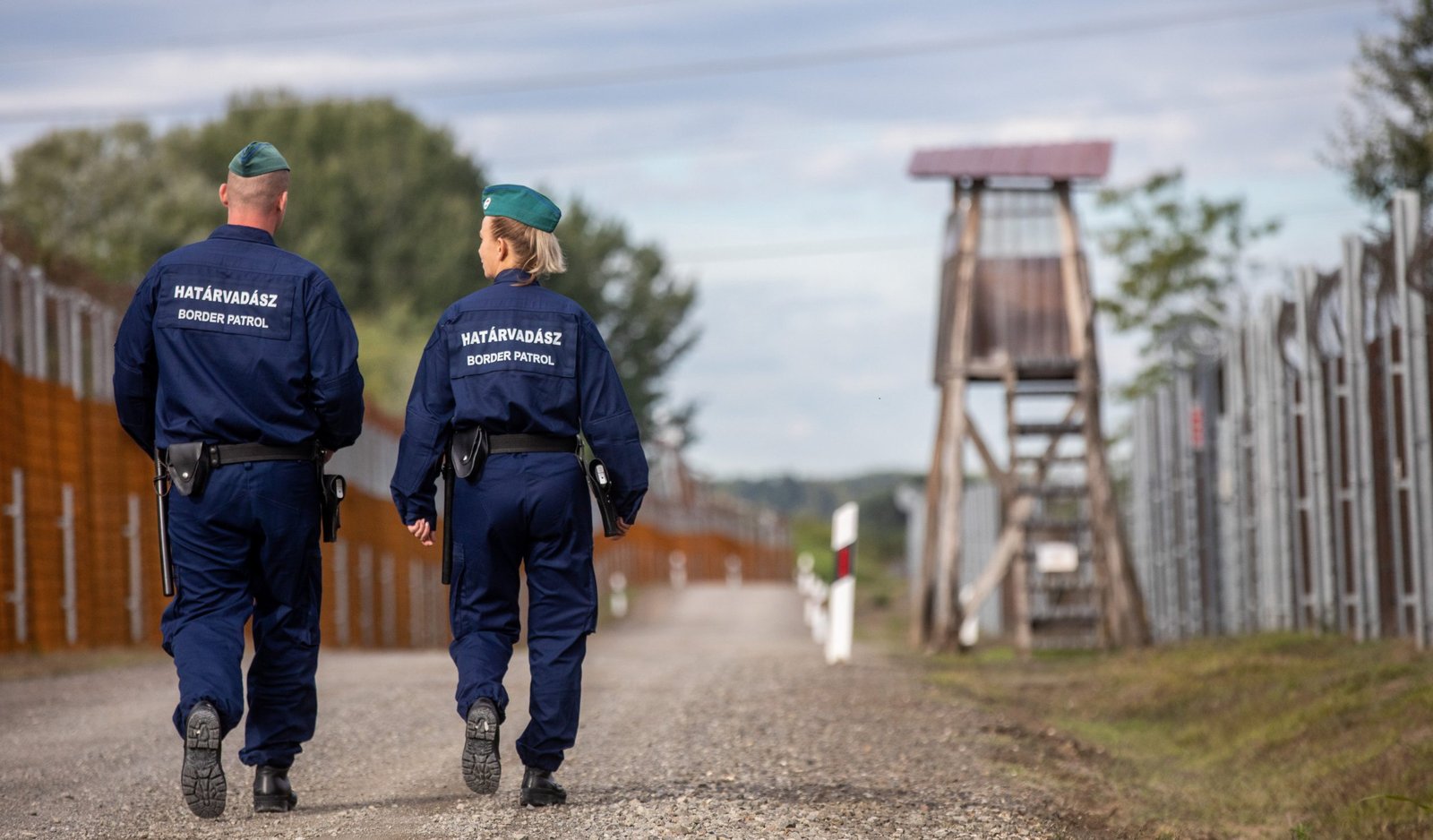
Despite his promises, it seems increasingly likely that once in power, Péter Magyar will cross the Rubicon in politics and open Hungary’s borders to mass migration. His appointment of a pro-migration, pro-multiculturalist radical left-wing personality as minister of the interior leaves little room for any other explanation.
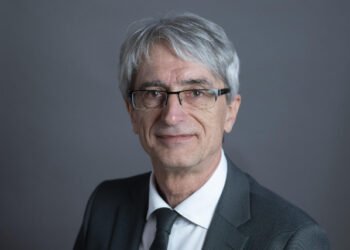
The primary job of a minister of the interior is to keep citizens safe, secure the country’s borders, and ensure that the country’s internal institutional and legal defenses are in place to uphold the rule of law. Péter Magyar’s appointment of Gábor Pósfai to lead the Ministry of the Interior, which oversees law enforcement, sends an unequivocal signal as to which direction the coming Tisza government wants to take in shaping Hungarian society’s future.
Pósfai is best known as the managing director of Decathlon Hungary until 2018. Politically, just like his boss Péter Magyar, he has publically identified as a Christian right-winger and former Fidesz voter. However, his actions suggest otherwise. He has long been regarded as a supporter of Tamás Wittinghoff, the former liberal mayor of Budaörs (a town near Budapest), who came from the legacy post-communist left-wing Alliance of Free Democrats (SZDSZ), a party long associated with progressive, globalist, and multiculturalist policies. Pósfai is also known to have signed a petition in support of U.S. billionaire George Soros’ left-leaning educational institution, the Central European University (CEU).
With this ideological profile, the coming interior minister is not out of line with Magyar’s other government appointees, who without exception come from a left-liberal political background. What sends alarm signals among the Hungarian conservative and sovereigntist sphere, though, are Pósfai’s views on migration, given his future key role in protecting the country’s borders.
🇦🇹 Vienna Schools See 41% Muslim Pupils…pic.twitter.com/0T3rL0ZRpZ
— U.S.A.I. 🇺🇸 (@researchUSAI) April 27, 2026
In an interview for the left-wing news portal 24.hu conducted in 2018, he enthusiastically championed the Austrian capital, Vienna, as a model for a successful multi-ethnic society. When asked whether he is worried about the Islamization of Budapest the way it happened in the Austrian capital, he replied with a “no.” In his view, Vienna is one of the world’s most livable cities, and although it is more ethnically diverse than Budapest, “there is absolutely no reason to be afraid.”
I mostly see the benefits of having so many different nationalities in the city,”
he added.
In Austria, foreigners account for almost half of all crimes and as much as sixty percent of all new prison intake. This statistics does not take into account the migration background of naturalized Austrian citizens who commit crimes. Romanians are in the top spot, followed by Germans (explained by their large numbers in Austria), then Syrians.

Graph: bundeskriminalamt.at
The appointment of Pósfai will come as a surprise to many of Magyar’s voters, who made it an explicit election promise that he will not allow mass migration into Hungary. On the contrary, he pledged to reinforce the fence on the country’s southern borders. Yet elevating a former sports department store manager with pro-multiculturalist and pro-migration views into the very role where the country’s internal protection and migration policies are enforced will no doubt raise concerns among the vast majority of the population, who regard migration as a security threat.
Ausländerkriminalität über 50%. Die “Erfolgsbilanz” des Roten Wien. #idgroup pic.twitter.com/uixlP3dkpY
— Harald Vilimsky (@vilimsky) January 12, 2023

Featured Image: MTI/Rosta Tibor