The declassification of documents regarding the first elections after 1989, the mining events, and other important events in Romania’s history will contribute to clarifying the concrete mechanisms by which the Romanian state operated during that period. Radu Carp, analyst of the political and legal system in Romania and the EU and professor at the Faculty of Political Sciences of the University of Bucharest, explained to “Adevărul” that the declassification of these documents could reveal extremely interesting and important issues for Romanians.

Over 5,000 files will be declassified. Photo by Inquam Photos
“They should have been declassified a long time ago. The Archives Act says such documents can be kept secret for 30 years. Some of them had to be declassified after the 1996 elections.
Certainly this declassification is a political decision and it has certainly been discussed for the past 6 months. And that’s because the law says that from the day after declassification, researchers can go to consult them, and for that physical spaces must be created or the possibility of being consulted online”the expert declared for “Adevărul”.
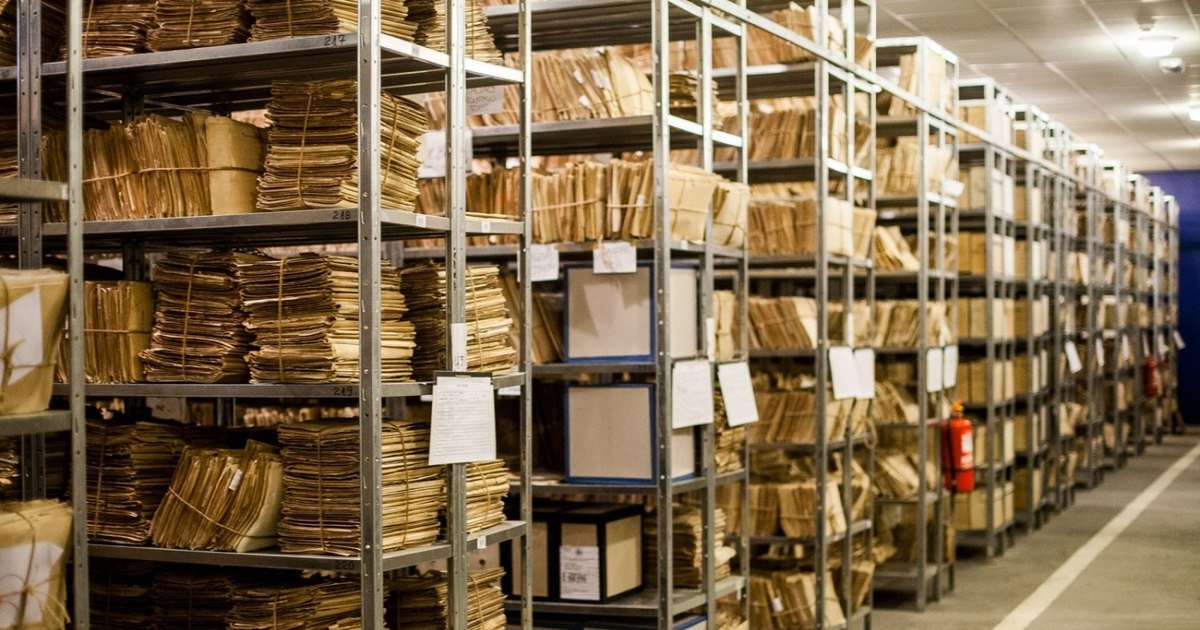
Minister Oana Țoiu announced on April 30 that 5,376 files, organized in hundreds of folders and occupying approximately 100 linear meters of the archive, are removed from the restricted circuit.
From Carp’s perspective, the value of these documents does not necessarily lie in revealing “great conspiracies”, but in clarifying the concrete mechanisms by which the Romanian state operated in that period. He suggests that some of the most interesting information may concern how internal events were perceived and reported to the outside world. For example, relevant details could appear about the Inter-Ethnic Conflict in Târgu Mureș in March 1990 or about external reactions to the 1989 Revolution, including how these events were interpreted in Moscow.
“There will be interesting things to find out, even if we are not talking about SIE documents.
And I’ll give you some examples. It would be interesting to find out what happened on March 15, 1990 (the interethnic conflict at Târgu Mureș in March 1990 – n. ed.) and how the USSR saw those events, whether it intervened or not, how the Revolution of 1989 was reflected. There are many unknowns and we hope to find answers. Of course, we will not find answers to the big questions such as the reaction of the USSR to the independence of the Republic of Moldova or to the Revolution of 1989, but we will find out how reporting was done back then”the expert declared for “Adevărul”.
Oana Țoiu: Romanians have the right to know what happened
The Minister of Foreign Affairs, Oana Țoiu, said on Friday that the declassification will also reveal Romania’s access to financing since then.
“And now the public has access to pre-1989 information that is already declassified. Digitization of documents that are no longer declassified, for reasons difficult to understand these documents are not completely digitized. First of all, it is the right of the Romanian people to have access to this information. Access is now being opened for researchers and journalists“, said the minister.
5,376 files will be declassified
The Minister of Foreign Affairs, Oana Țoiu, announced on Thursday, April 30, the declassification of a large series of diplomatic documents from the MAE archives, which cover the first years of Romania’s transition.
It is about more than 5,000 files that include information about the elections of May 1990, mining, the visit of King Mihai I of Romania, but also the correspondence with the former Soviet Union.
According to the minister, the documents no longer had state secret status for more than a decade, but they were not accessible to the public until now.
“We are declassifying more than 5,000 diplomatic files from the first years of transition from the archives of the Ministry of Foreign Affairs. The elections of May 1990, the mining events, the visit of King Michael, the correspondence with the USSR – all these are coming out of the drawers where they have been for over 30 years and will be public. (…) We are talking about 5,376 files, kept in 768 archive folders, occupying approximately 100 linear meters of shelf space. It is the most substantial batch of declassified diplomatic documents since pre-1989 and covers a turning point in our recent history.
Some file titles:
* “Reactions in the USSR to the Revolution of December 22, 1989”
* «Reunification of Germany (1990)»
* “Bilateral relations in connection with ex-King Mihai”
* «”Treaty of collaboration, good neighborliness and friendship with the USSR”.
These documents no longer have the status of state secret for over a decade. They were, however, kept away from the public as service secrets. We change this year by year and will continue the process, including future digitization and publishing steps.
A mature democracy is not afraid of its own history. They publish it for citizens to consult and study it.
The draft Government Decision is in decision-making transparency on the MFA website“, transmitted Oana Ţoiu.