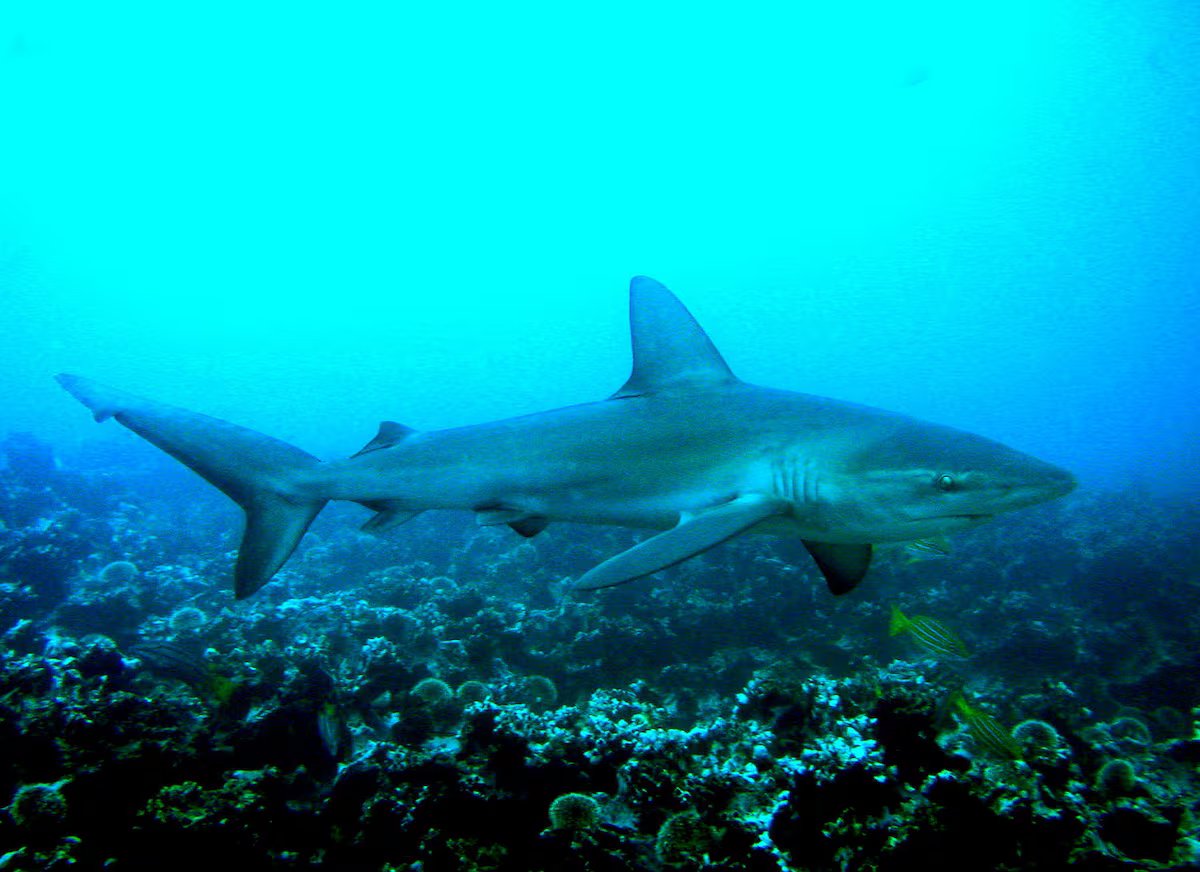
Research warns that large oceanic fish, such as tuna or white sharks, are at risk from the impact of warming seas, mesothermic animals that suffer a high energy demand to adapt to increasingly warmer water.
The research work, which has just been published by the magazine Sciencewarns that large mesothermic fish such as tunas, basking sharks or white sharks face a high energy demand and a growing risk of overheating due to rising ocean temperatures.
The results of the work made it possible to anticipate which species will be most vulnerable to ocean warming, which is essential for designing conservation strategies based on physiological mechanisms to reduce risks of population collapse in the face of global warming.
The study – with the participation of the University of Granada, in Spain – analyzed how body size, the thermal strategy of each species and global warming determine their current distribution and future vulnerability.
The work, which provided new clues about the extinction of past species, differentiated between two large groups of fish according to their ability to regulate body heat.
On the one hand, strict ectotherms, whose body temperature depends directly on that of the water; and on the other, mesotherms, which generate and retain part of their internal heat.
The latter, which include some of the best-known and largest species, require much more energy than ectotherms of similar size and also dissipate heat with great difficulty.
The team responsible for the research developed and validated an innovative technique to estimate the metabolic demand of a wide variety of bony and cartilaginous fish based on their body size and thermal strategy.
This advance was especially relevant because it allows us to study species whose metabolic rate was practically impossible to measure directly in the laboratory.
Thanks to these estimates, the authors were able to determine that, as mesothermic fish increase in size, they generate heat faster than they can lose it, a metabolic imbalance that causes an increasing risk of overheating.
This phenomenon explains why, in today’s oceans, many of these species are concentrated in cold waters, high latitudes or deep areas, to compensate for their high energy demand.
The study also proposed a new explanation for the extinctions of species that occurred millions of years ago, since its authors suggest that giants like the megalodon could have become extinct when they were trapped in a lethal combination: a very high need for energy, a poor capacity to dissipate heat and change in ocean conditions.