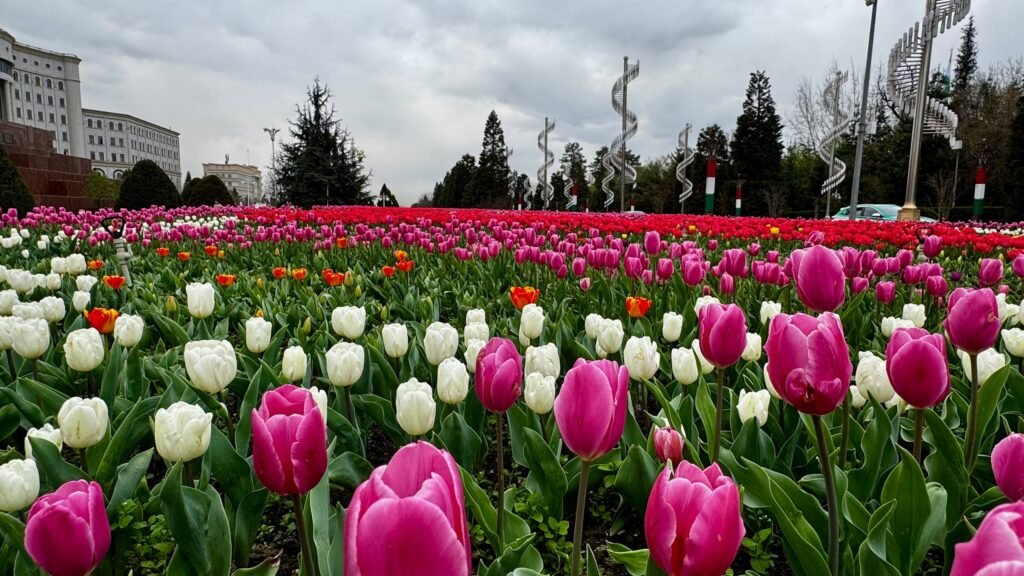
Millions of buds, strict geometry of ornaments and the magic of the “Sairi Guli Lola” holiday. This spring, the capital of Tajikistan has once again turned into a living canvas, where classic Dutch varieties of tulips meet wild “kings of the mountains”, and behind each flowerbed there is a titanic work of people who know the character of each petal.
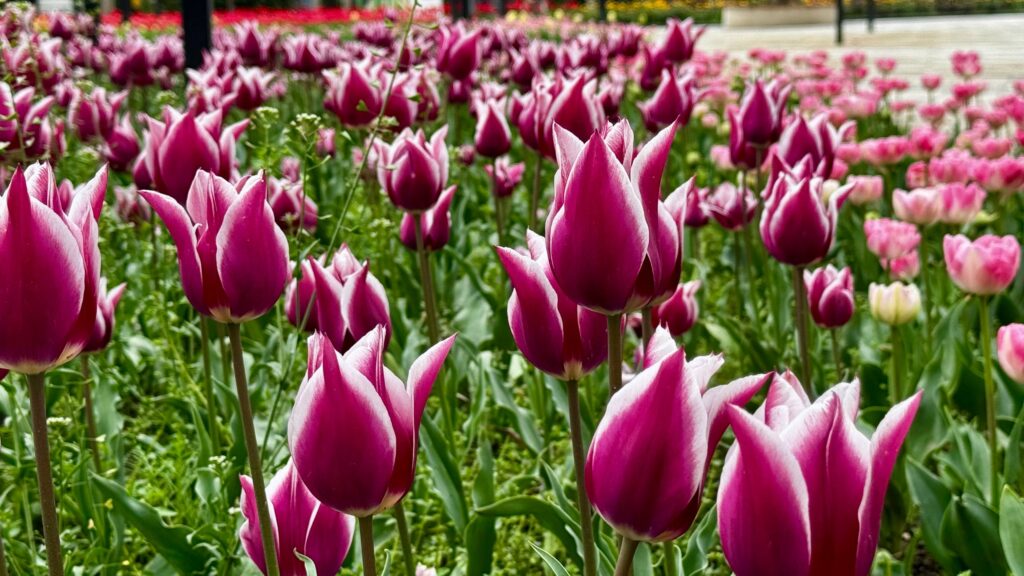
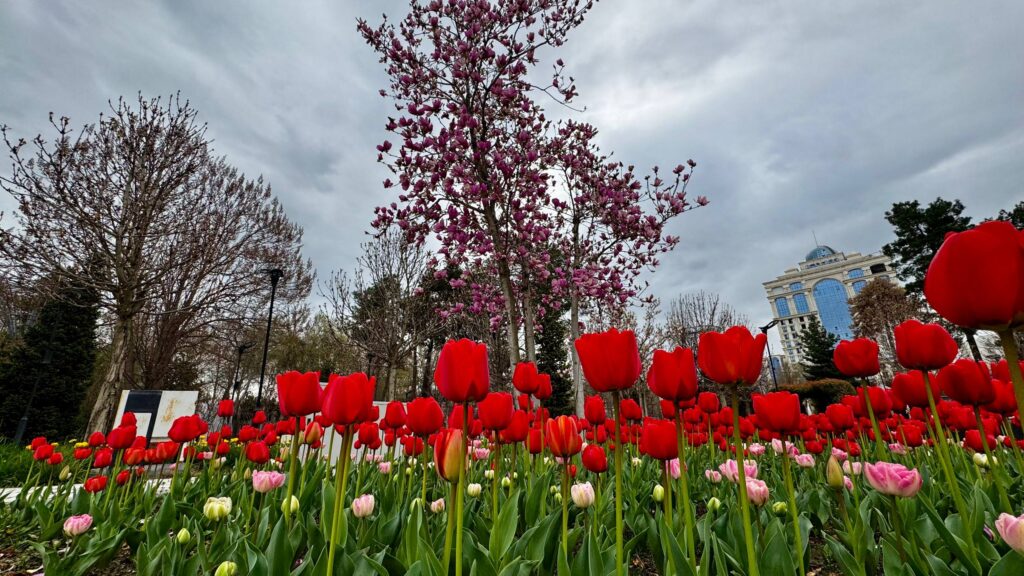
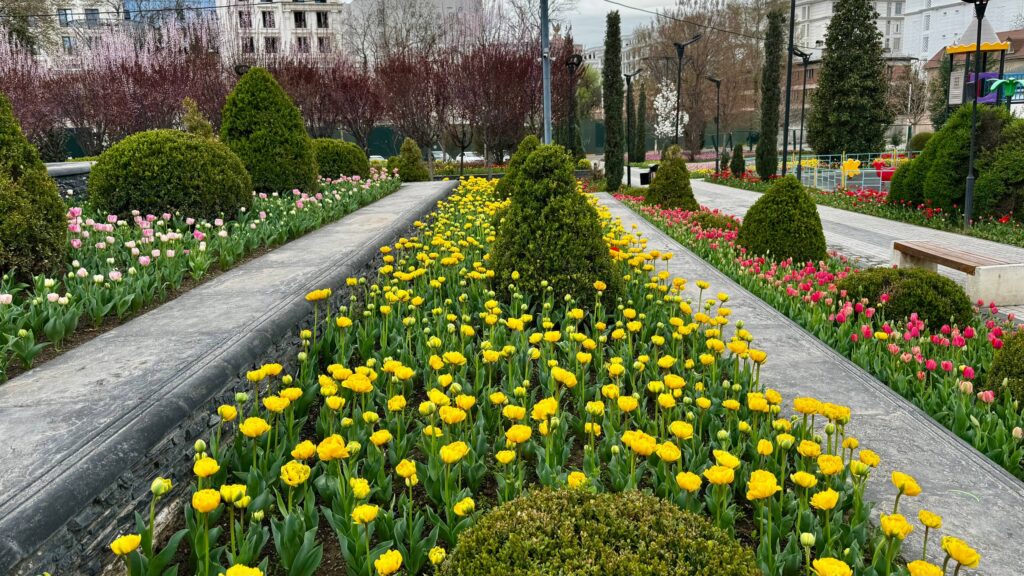
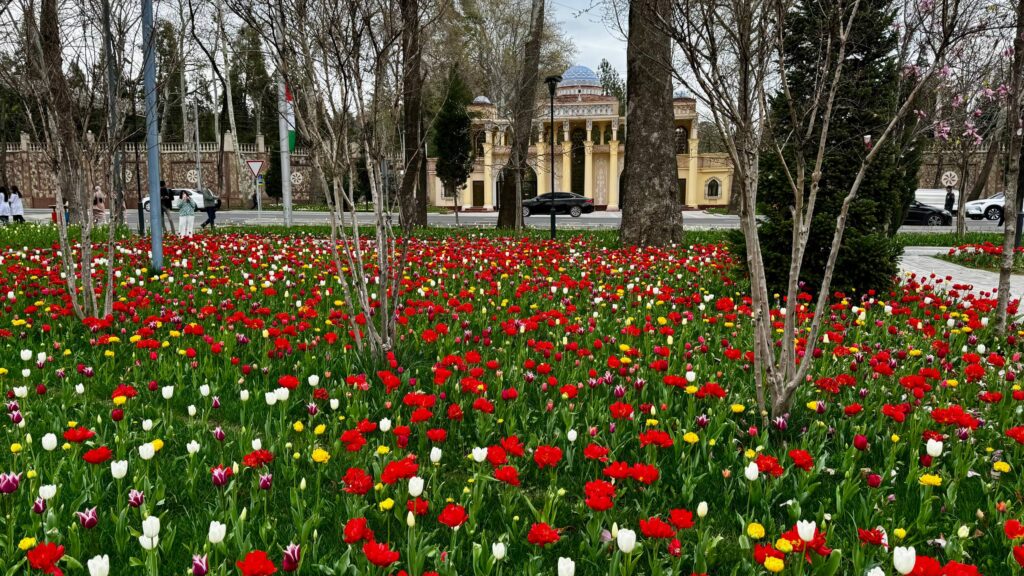
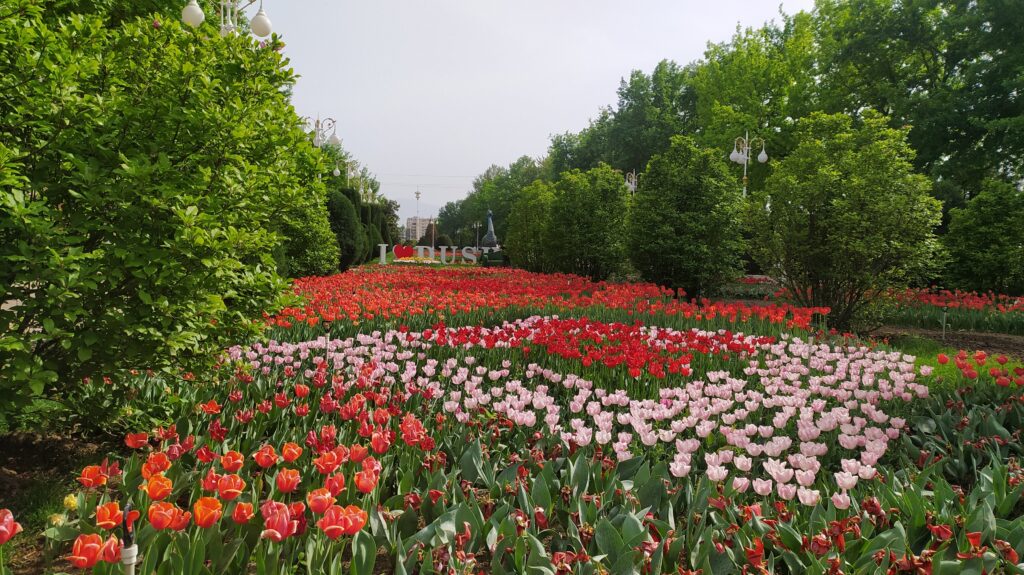
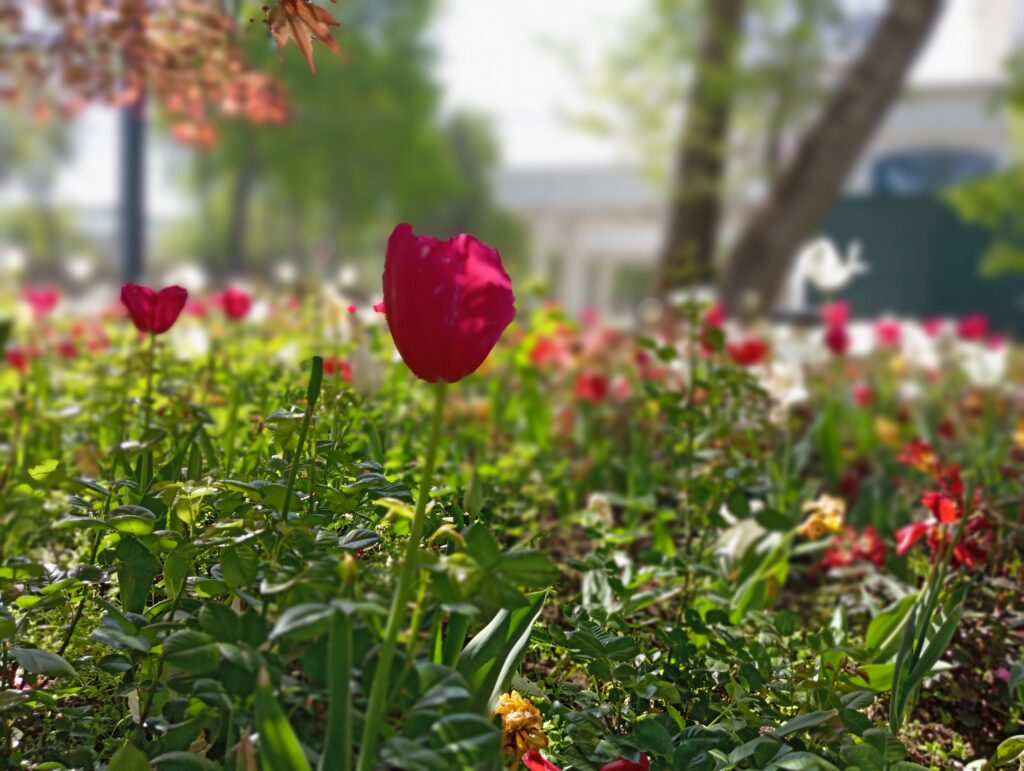
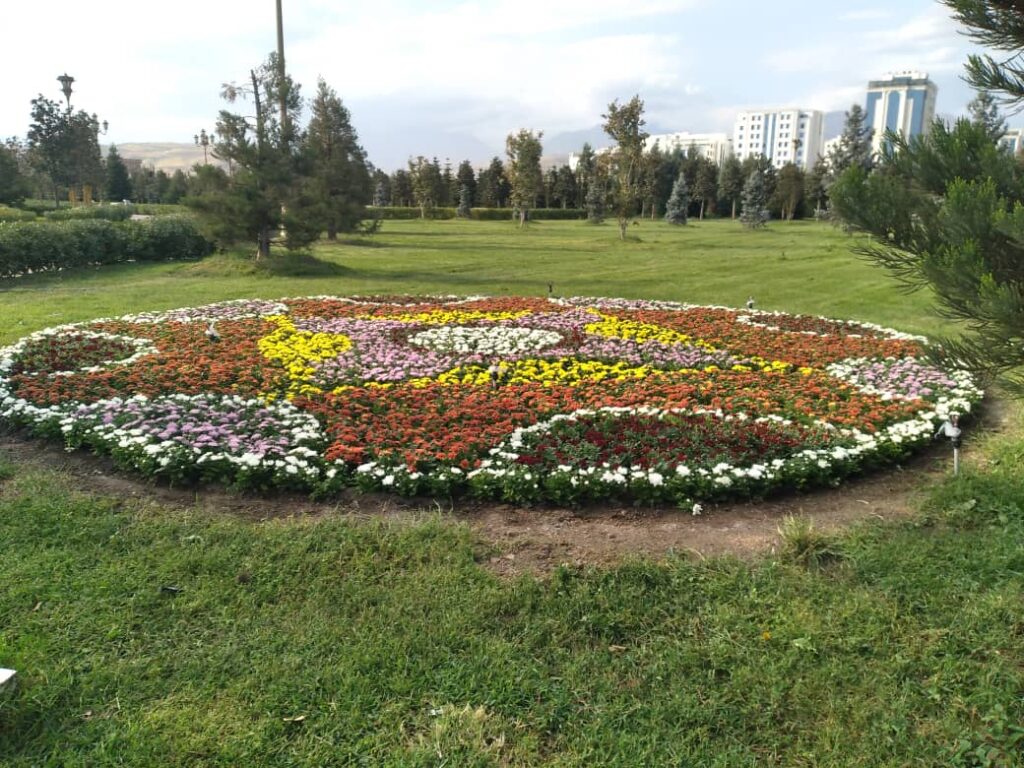
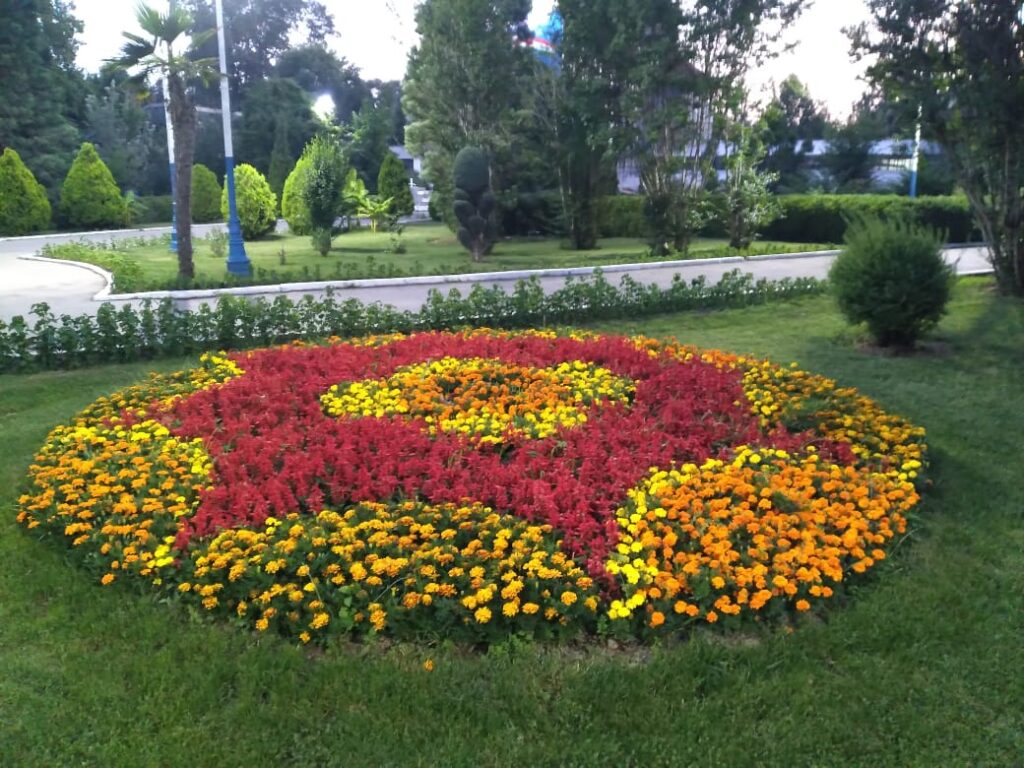
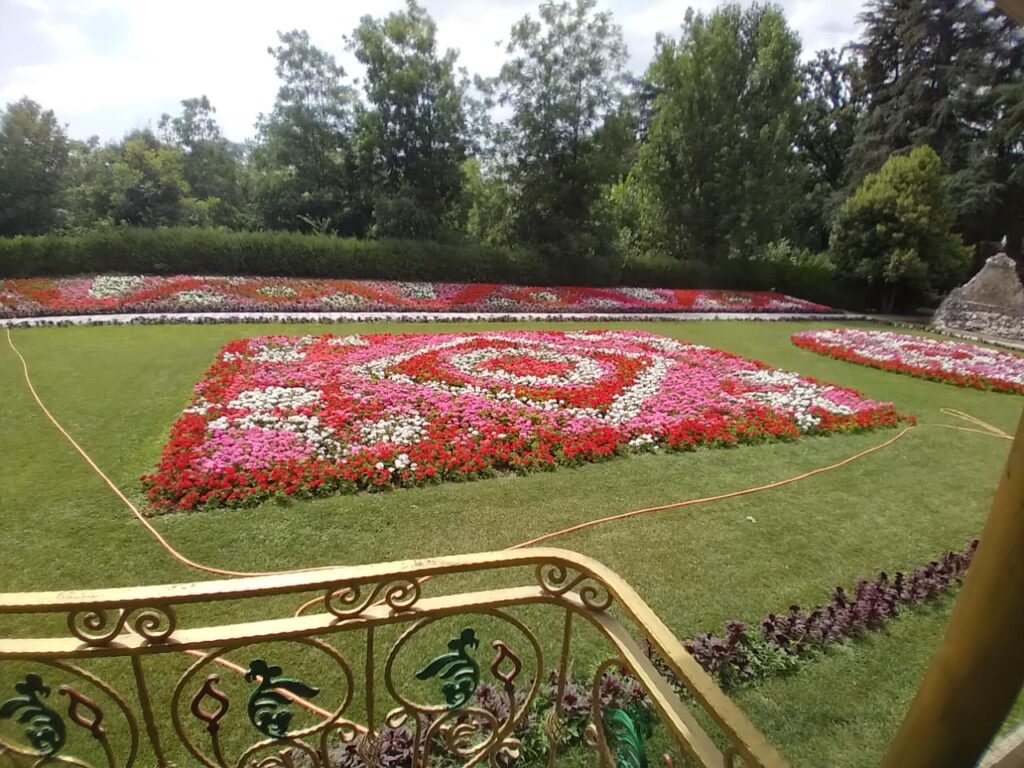
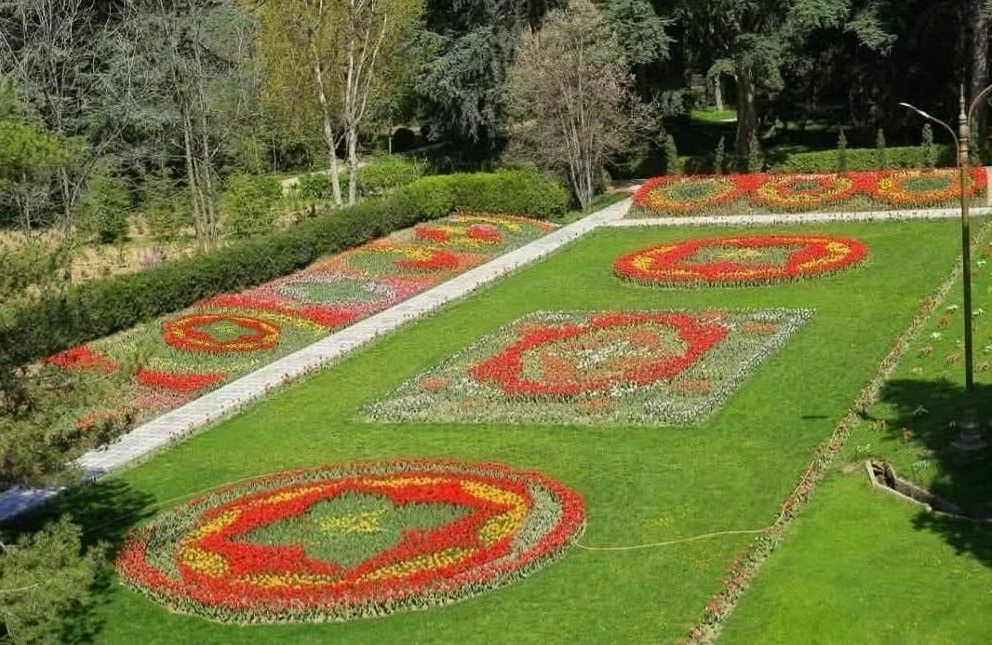
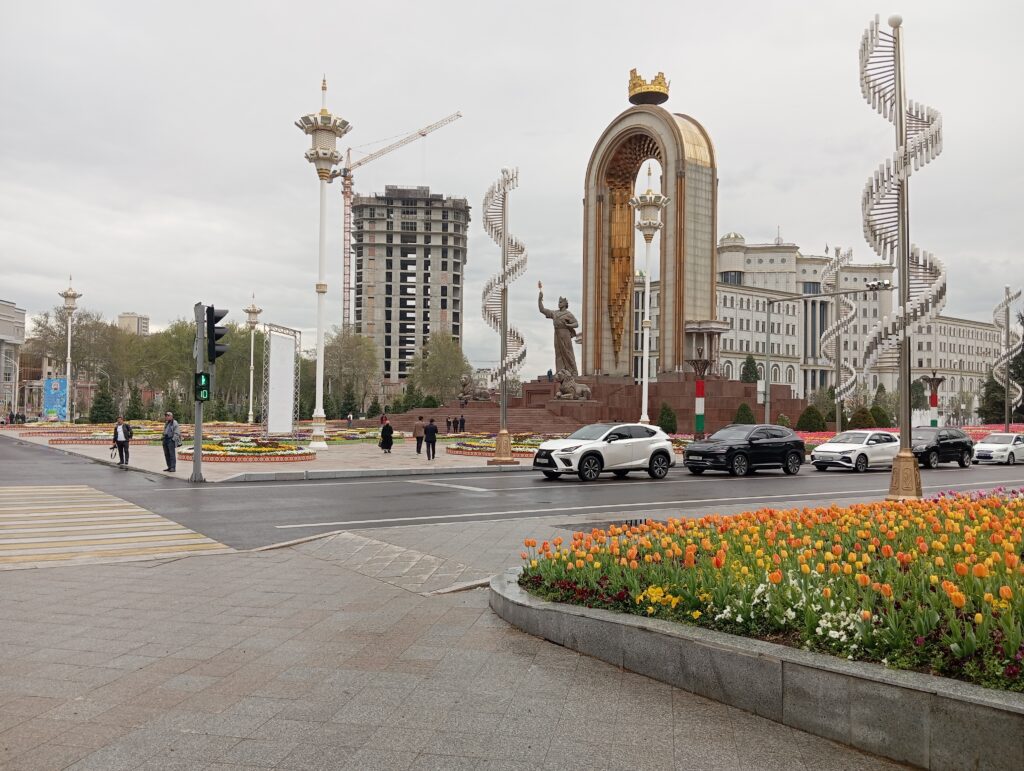
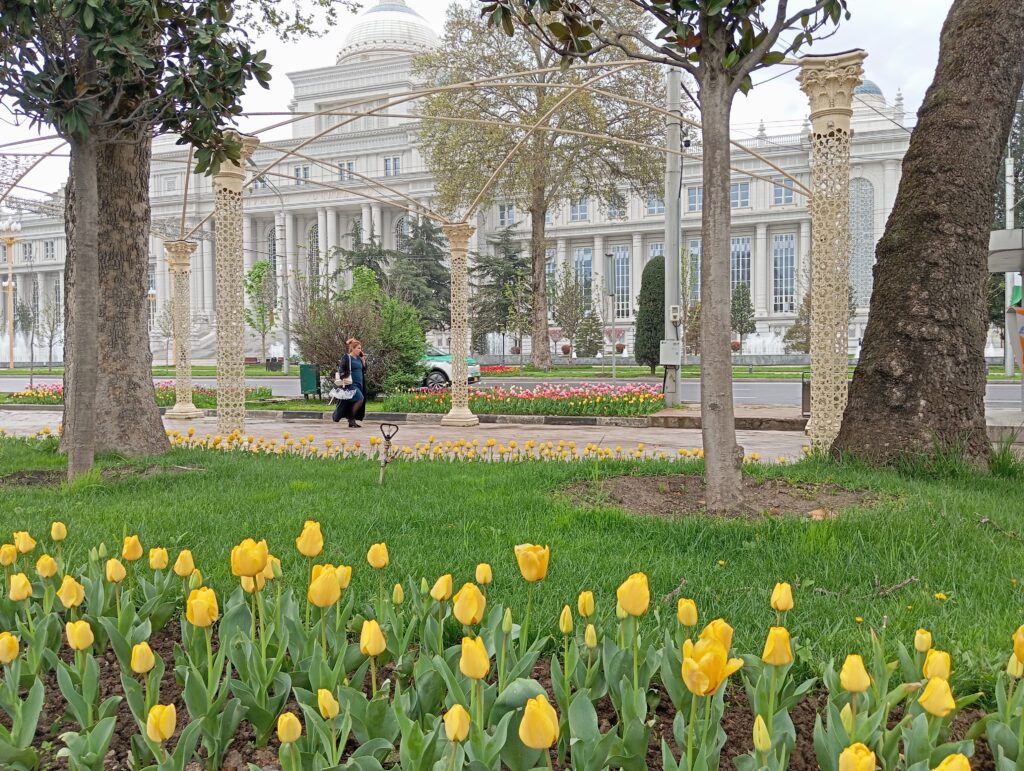
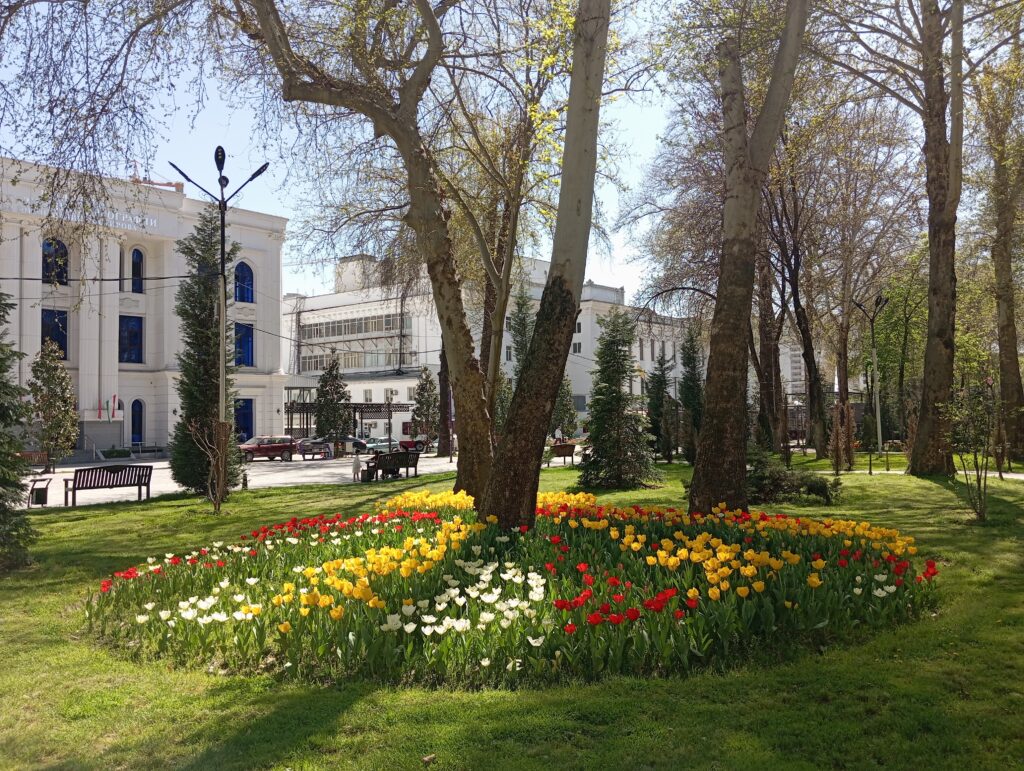
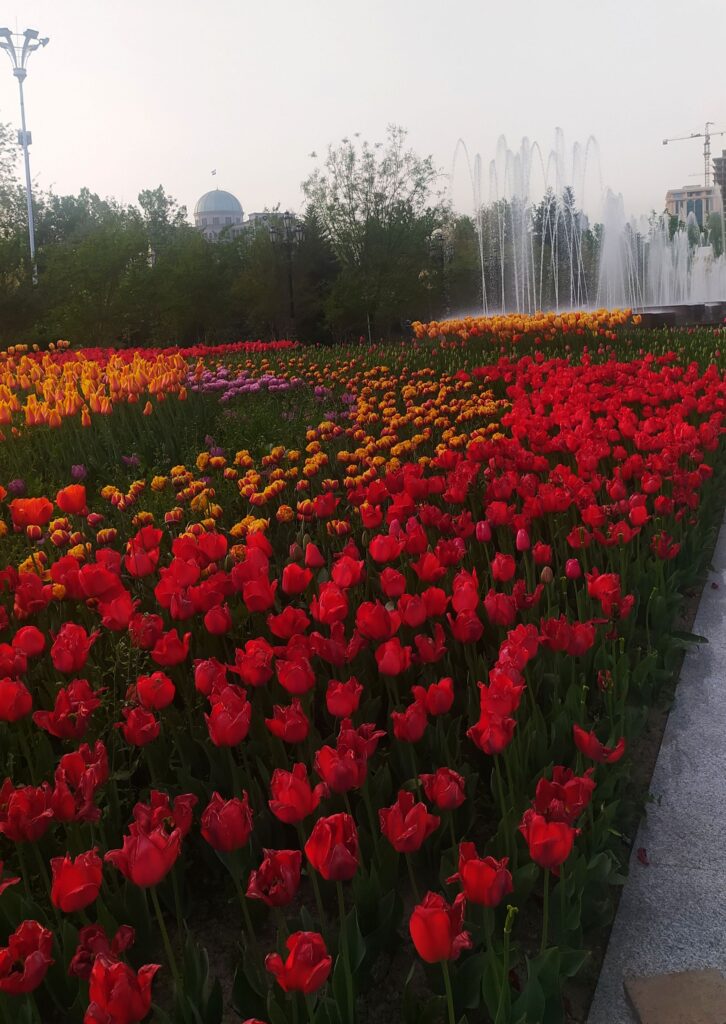
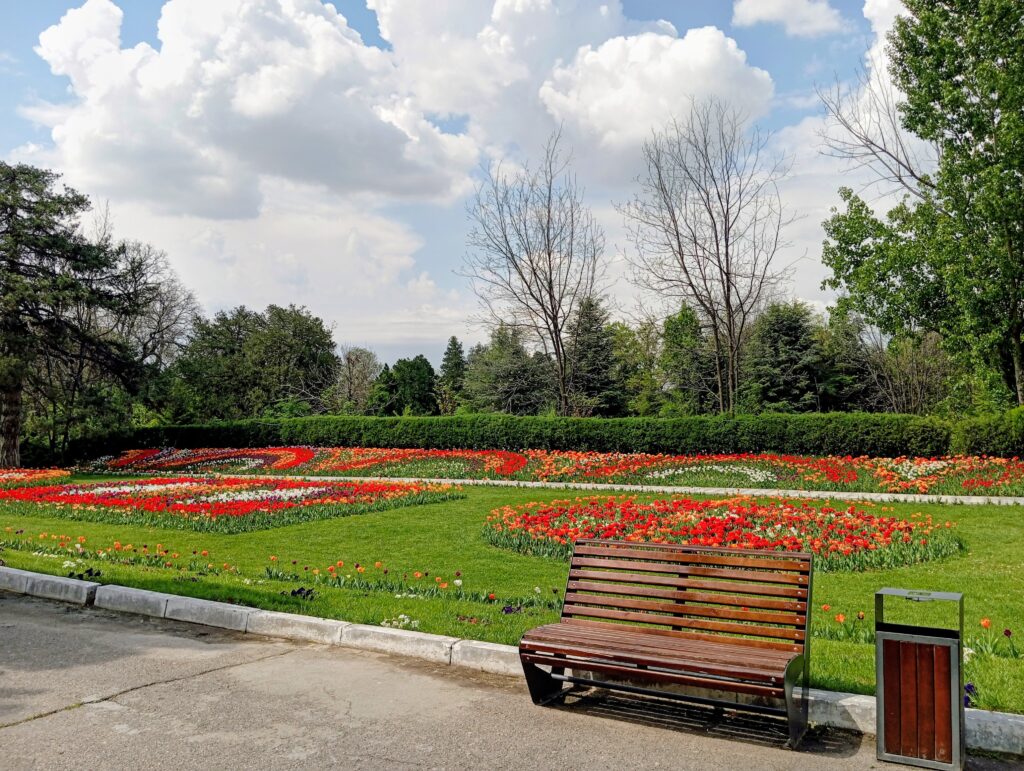
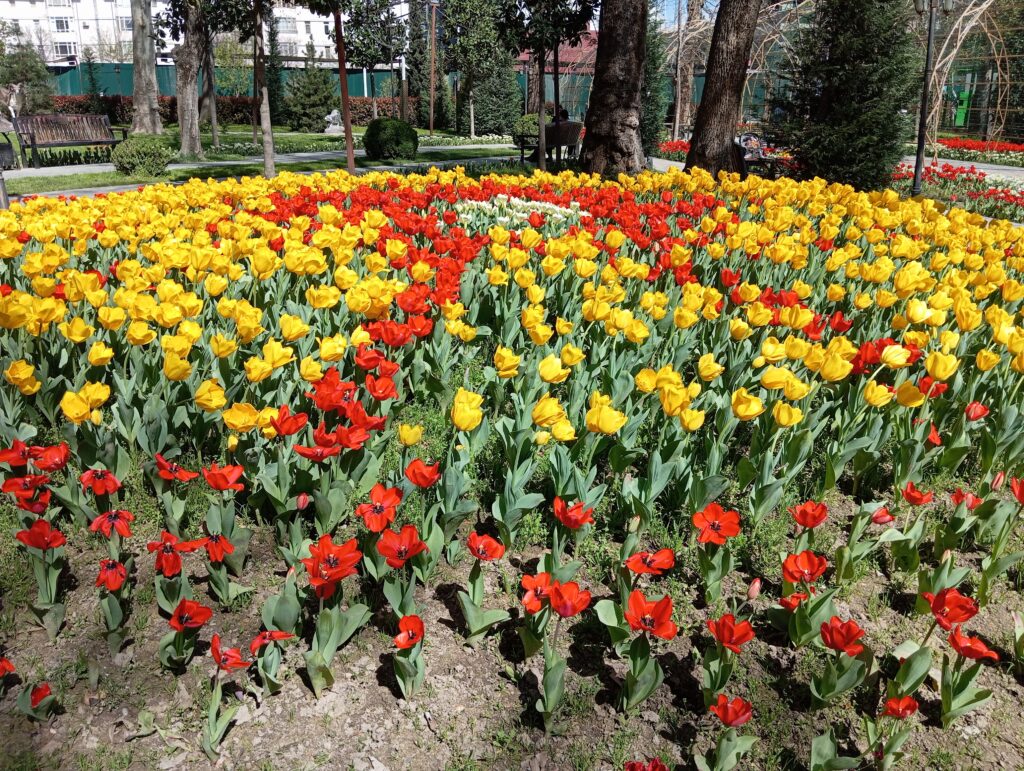
This is not the first year that Dushanbe has been decorated with tulips, the beauty and diversity of which are literally eye-opening. Bright, whimsical tulip patterns spread across central avenues, squares and parks. It seems that the city landscaping services of the four districts and the florists of the Botanical Garden are no longer competing with each other, but with nature itself.
But this was not always the case – before the approval of the Sairi Guli Lola festival in 2019 on the initiative of Emomali Rahmon, flowers in the city were planted in the usual rows, without a riot of colors.
Secrets of the “flower kitchen”
To understand how this beauty is born, the Asia-Plus correspondent went to the Gods of Iram Botanical Garden to see a man who knows everything about flowers. Firuza Zoirova, Candidate of Biological Sciences and “Best Florist of the Year 2023”, has been working here for 40 years.
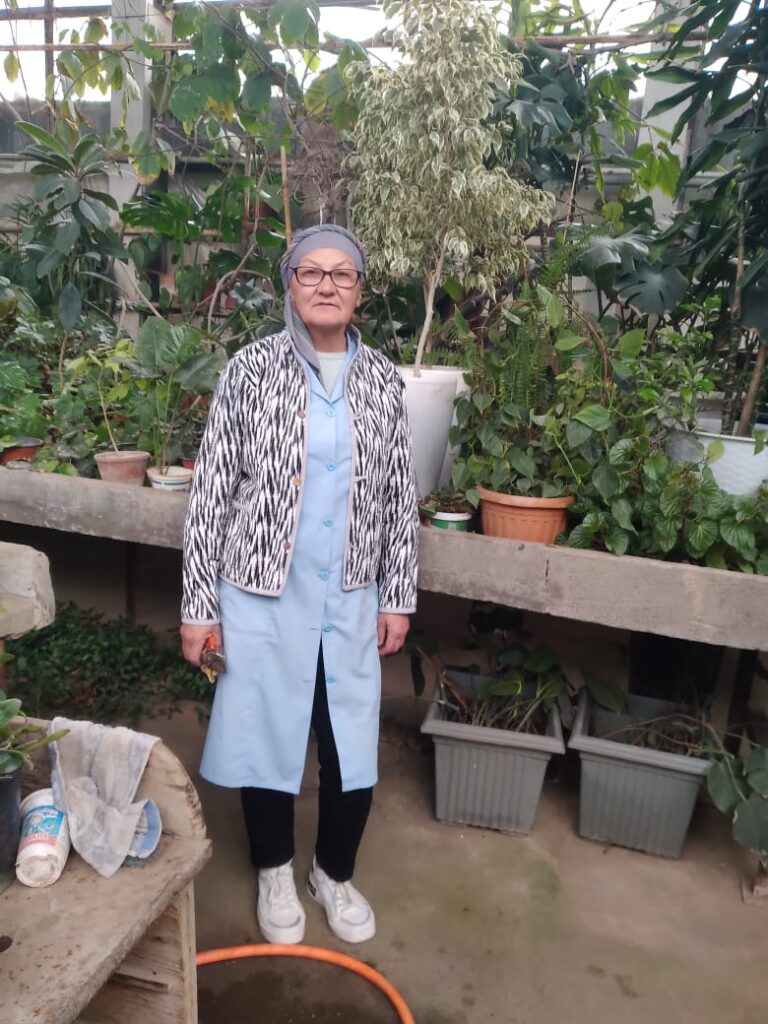
“The homeland of tulips is our mountains, they’ve just been cultivated a little in Holland,” Firuza smiles. — If earlier we simply planted them in a row, now we create complex national ornaments. This is a piece of jewelry: you need to select varieties of the same “caliber” so that they bloom at the same time. We must not allow the middle of the pattern to already crumble and the edges to not yet open.”
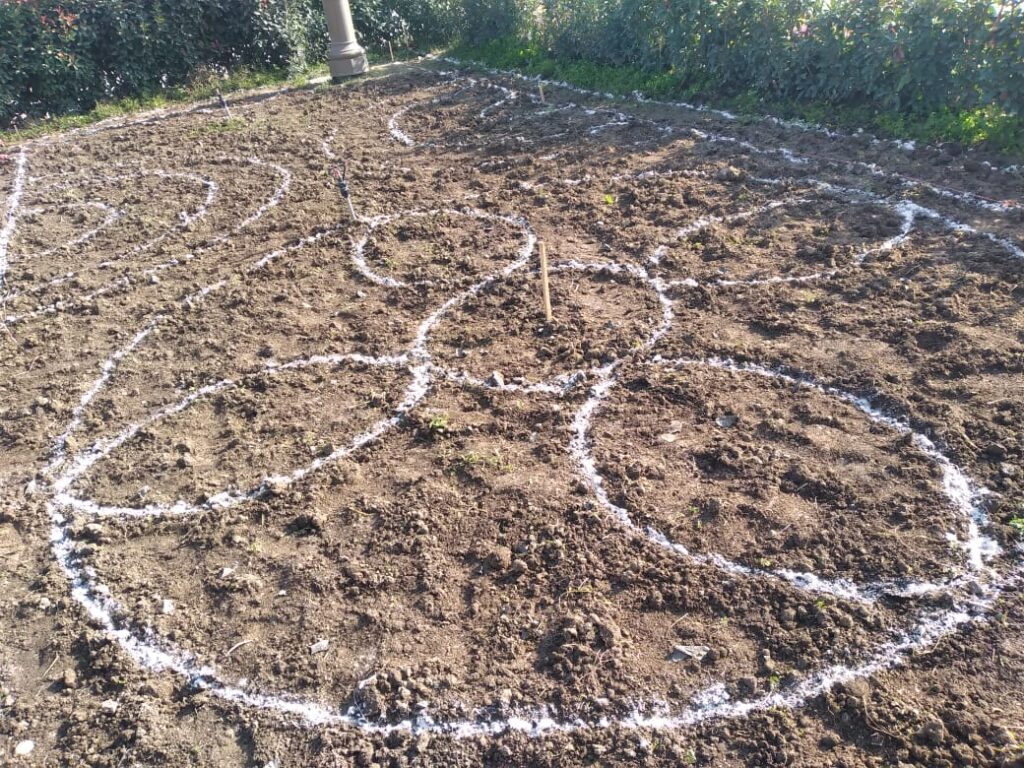
She comes up with designs for future flower installations and draws them first on paper, then on the area prepared for planting. For this, a garden knife and alabaster or sawdust are used to ensure clarity and preservation of the design.
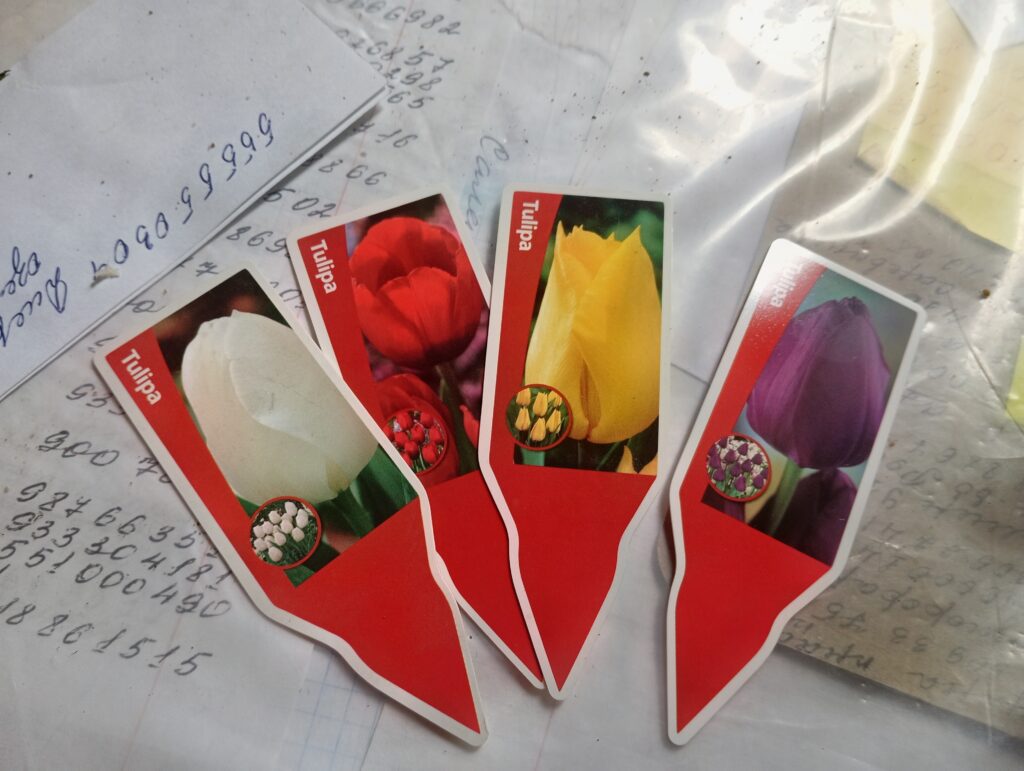
Each section of the ornament is marked with special “tabs” made of cardboard, with a photograph and data of the flower. This way, gardeners can’t make mistakes and plant the right tulips of the same size.

Growing technology in Dushanbe is a mixture of agronomy and art. After flowering, the bulbs are not thrown away. They are dug up, sorted by “generations,” dried and stored in a cool room until November-December in lattice boxes, like regular onions.
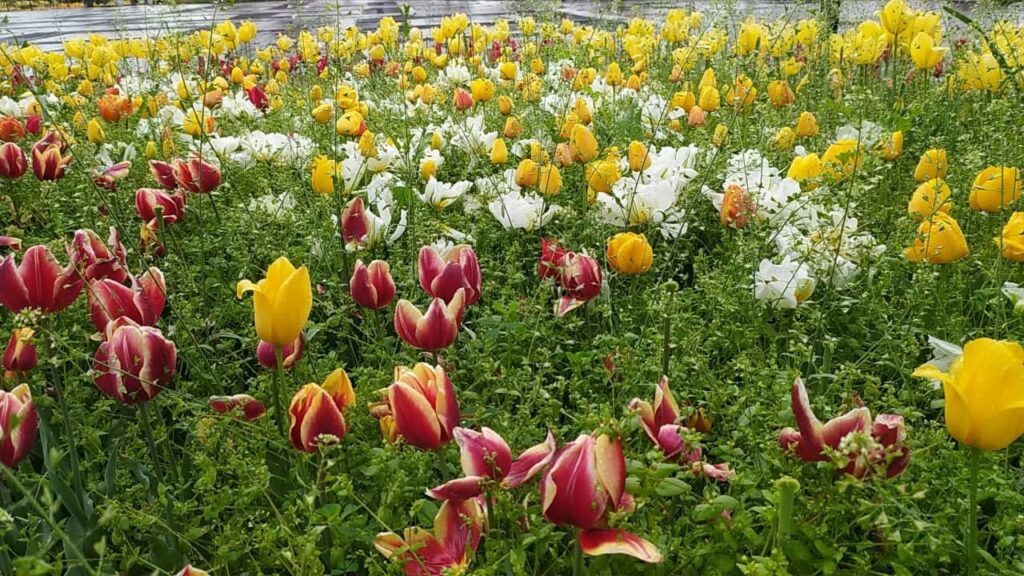
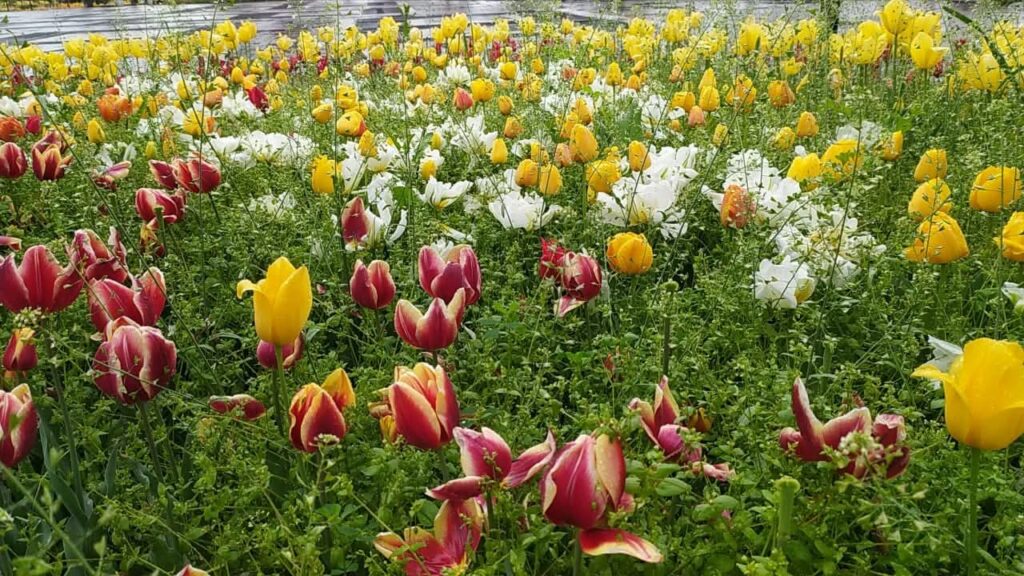
For a tulip to bloom, it needs “temperature stress” – from cold to warm. That is why they are planted closer to winter, and cold-resistant pansies and daisies are sown between them so that the land does not become empty.
“The most capricious ones are terry ones; they are afraid of rain and break after it. And the most persistent are Greig’s tulips. It’s interesting that under our Tajik sun, “foreigners” behave differently – their color becomes thicker and more saturated, although they bloom faster than in cool Europe,” the expert shares his secrets.
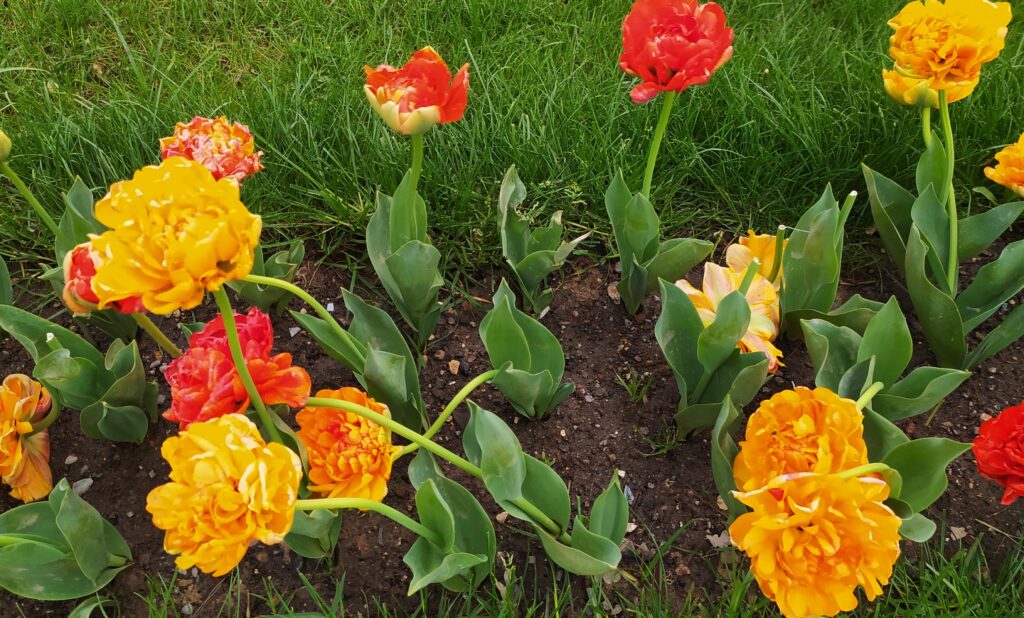
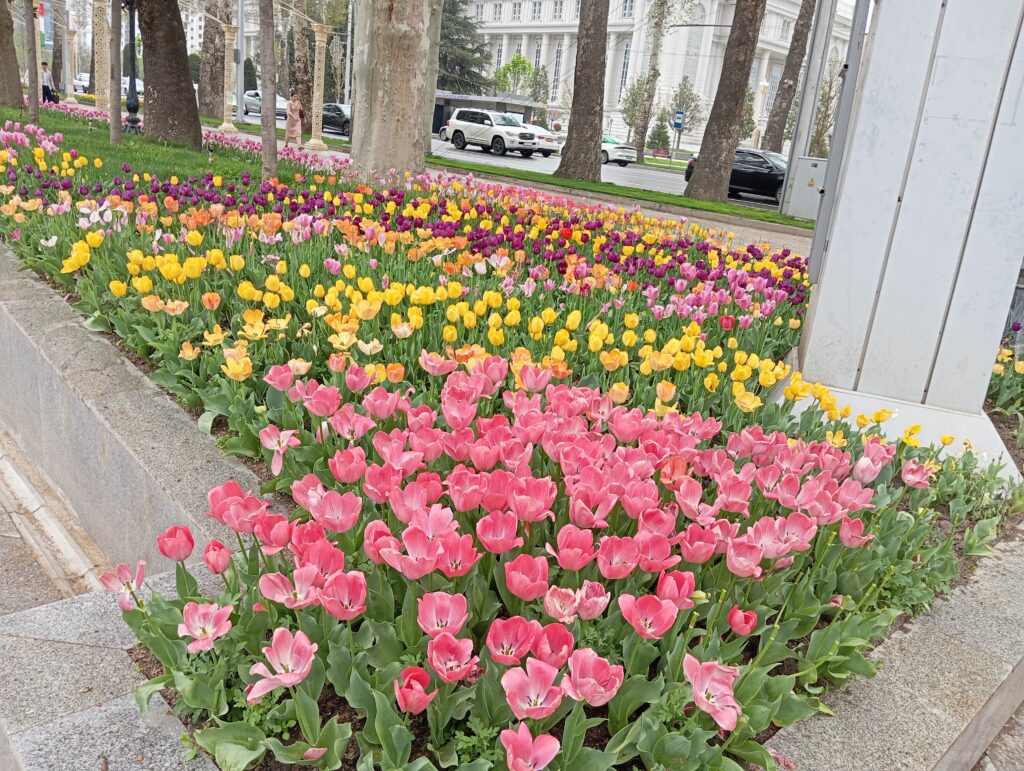
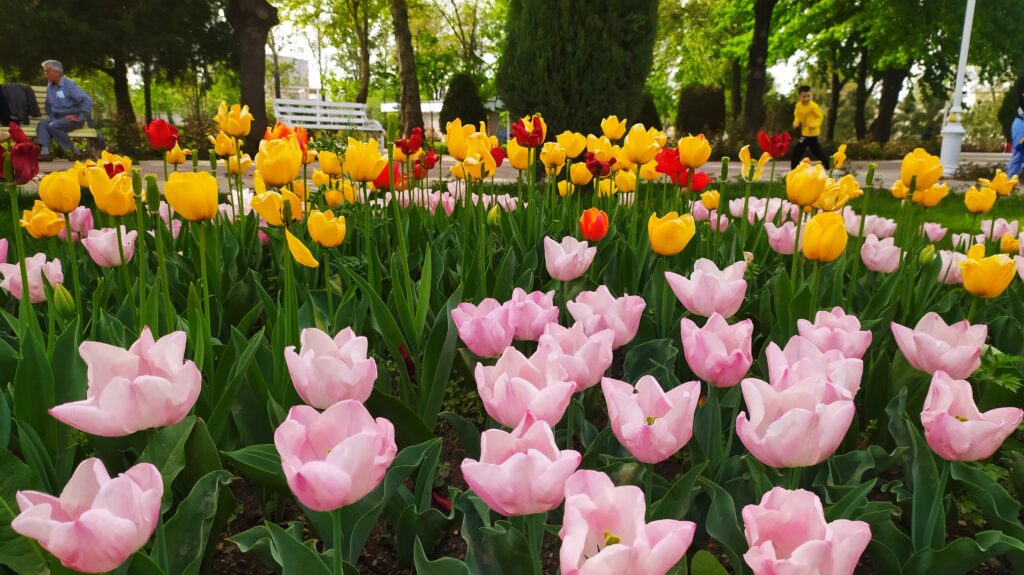
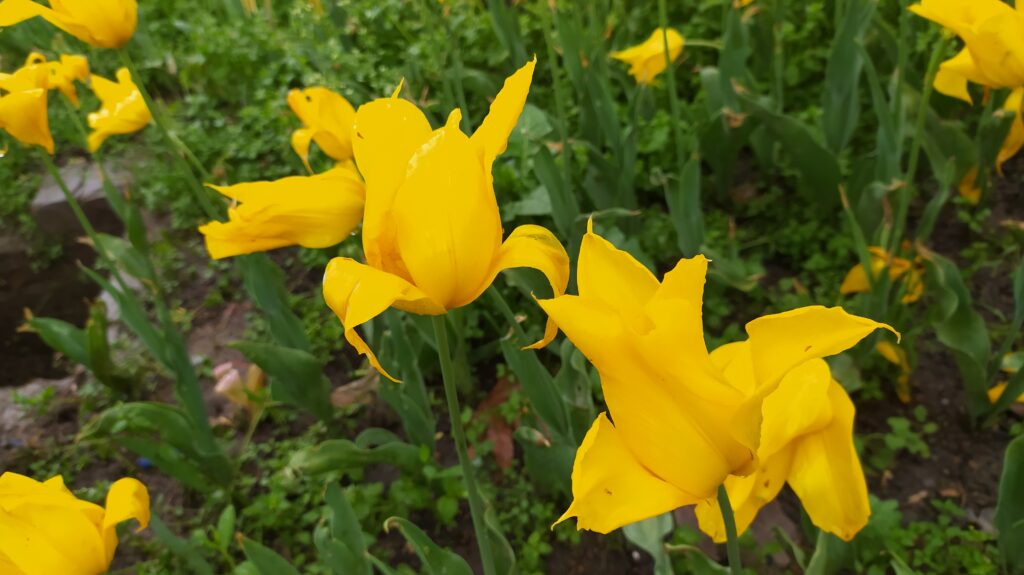
Graceful fringed varieties flaunt along the footpaths, and double peony tulips create a carpet effect in open spaces. This year’s favorites include:
— Triumph (Purple Prince, Strong Gold): stately, goblet-shaped, keep their shape despite any winds.
— Darwinian hybrids: giants with a bowl up to 10 cm in diameter.
— Greig’s Tulip (Tulip Gissarsky) – the brightest tulips of all kinds of colors that decorate the city.
The legend of a ruler in love
The tulip has more meaning, symbolism and romance than we used to think. The flower was first mentioned in the fiction of the Middle East. According to ancient Persian legend, there was a king who fell in love with a mere mortal. He dreamed of a happy family and children, but evil people started a rumor that his beloved had died.
Then the ruler, maddened by mental pain, jumped from the cliff and crashed on sharp stones, on the edges of which scarlet tulips bloomed from drops of his blood. So the flower became a symbol of chastity and strength.
By the way, the famous Persian poet Hafiz Shirazi dedicated the following line to him: “Even a rose cannot compare with his virgin charm.”
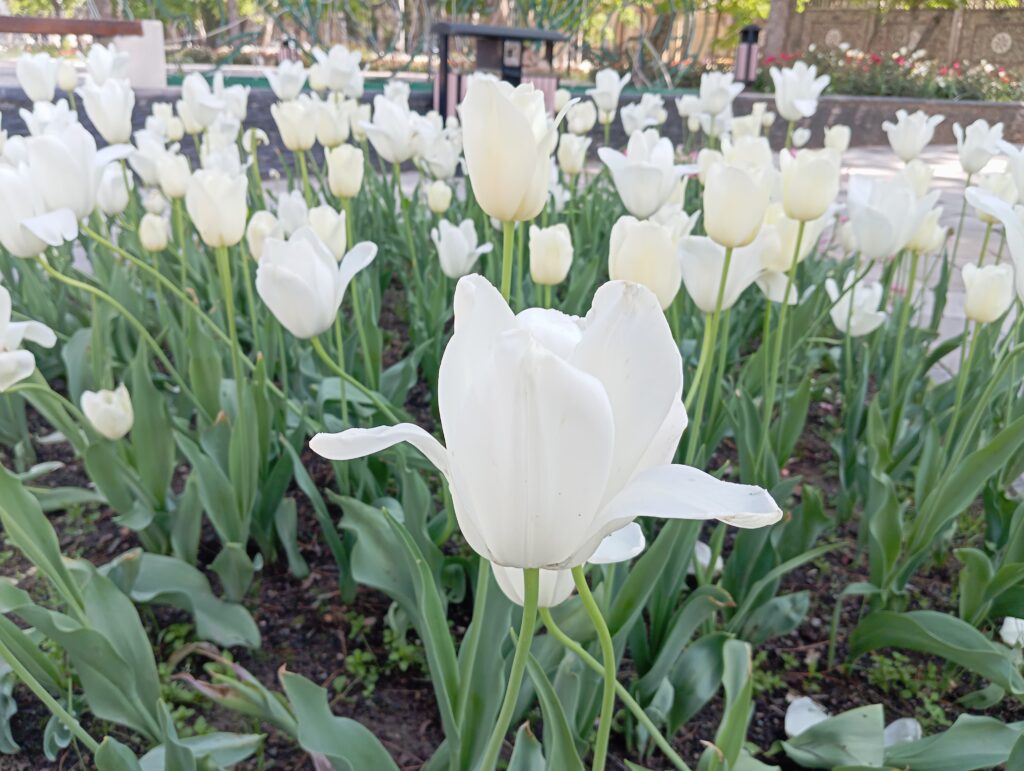
In modern Tajikistan, tulips are a symbol of friendship, fidelity and purity of thoughts. It is known that 24 species were discovered on the territory of the country, 19 of which are Red Book plants. By the way, the popular female name Lola comes from the Persian name Lala and means “tulip”.
A festival with the scent of centuries
The peak of the “waltz of flowers” – the final of the festival-competition “Sairi Guli Lola” – falls on the fourth Saturday of April. This year it is scheduled for the 25th. And although today it is a large-scale city competition with cash prizes and nominations for the best design, the roots of the holiday go back to ancient times.
“Sairi guli lola” (literally – Walk for tulips) has been celebrated since pre-Islamic times for several days during the period of wild flowering; this holiday was especially loved by young people. On the first day there was a say – a party. Boys and girls gathered around the majestic trees, to whose branches they attached tulips and made wishes. Then followed songs and dances.
On the second day, everyone went to visit cemeteries and holy places, and near the saint’s mazar one could ask God for mercy on the dead by drinking water from a spring.
In the book by E. M. Peshchereva, “The Tulip Festival (Lola) in the village of Isfara, Kokand District” (Tashkent-1927 publishing house), it is described as a real carnival: young men went to the mountains to buy flowers, and the city greeted them with songs and dances. Choirs of hundreds of people competed in teahouses, and the air trembled with the sounds of karnais.
Elena Mikhailovna Peschereva is a Soviet ethnographer, orientalist, linguist, and specialist in Central Asia. One of the last representatives of the first generation of scientists – the founders of Soviet ethnography in Central Asia.
Many rituals associated with sowing or threshing became a thing of the past along with manual labor, but “Sairi Guli Lola” survived. It has transformed from a sacred ritual into the aesthetic pride of a modern metropolis.
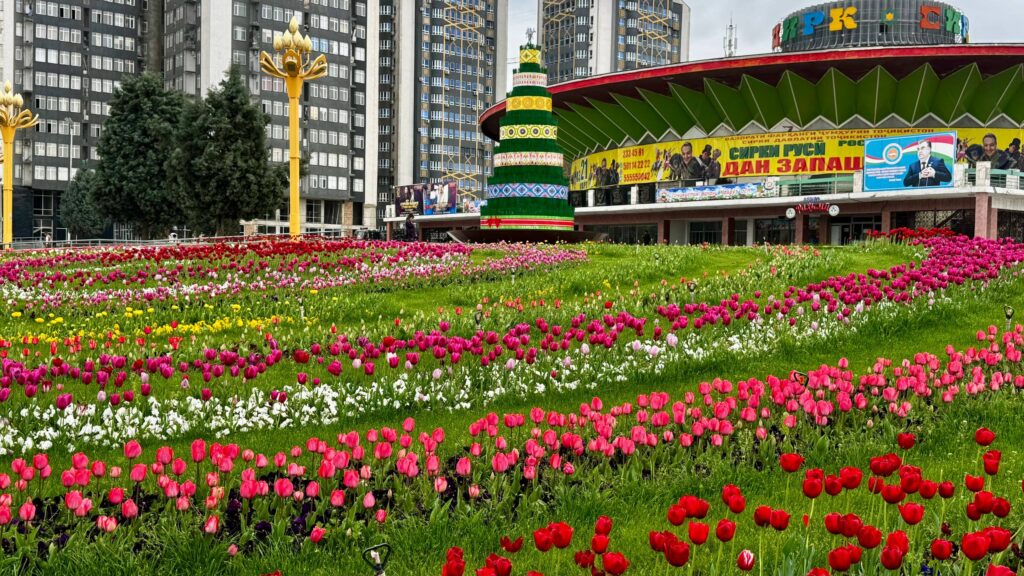
“Anyone who comes to our city in the spring remembers it as a large blooming garden,” Firuza Zoirova finally notes, and it’s hard to disagree with her. In a world where everything changes so quickly, the stability of spring blooms in Dushanbe is the best gift the city gives to its residents.