
Voting is the maximum expression of citizenship because it gives us the opportunity and the right to elect our authorities, the people who in one way or another will affect our present and future.
In Peru, voting is mandatory and if one does not exercise it, one is subject to paying a fine. That is why it has been a serious attack on the right to vote that on Sunday, April 12, citizens in Lima had serious difficulties in voting.
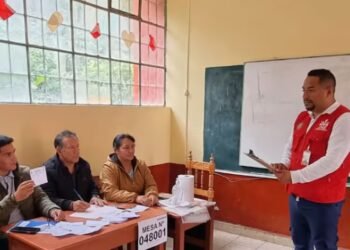
On Sunday, 13 voting centers in Lima Sur were affected because the electoral material did not arrive. Citizens of San Juan de Miraflores, Lurín and Pachacámac were not able to vote on Sunday, and it was a decision of the National Elections Jury that resolved that those who did not vote in those locations could do so on Monday the 13th from 7 am to 6 pm, in an unprecedented fact never before seen in other elections.
Although the voters of the 13 polling stations that were only able to vote on Monday are quantified (they are estimated at more than 50,000 voters), the same cannot be said of the citizens in Lima who approached their voting centers and, since the table had not been set up (due to the delay in the arrival of electoral material), they left and did not return. There have been reported cases of people waiting in line to vote for up to five hours.
The historical absenteeism rate in elections in Lima is 13%; In 2021 it reached 25%, in the middle of the pandemic, while this year it has been estimated at 20%.
This serious irregularity is under investigation, and even led to an arrest against the former ONPE Electoral Management Manager José Samamé, whose department hired Galaga, a company whose contract was S/100,000 higher than that of the Hermes company, for example.
The first reaction of the head of the ONPE, Piero Corvetto, on the same day of the elections, was to evade his direct responsibility and point to the company contracted to provide the service, which has defended itself by claiming that the trucks were ready, but that there was no material to transport. Everything is still under investigation.
Corvetto’s responsibility in this matter is constitutional. Article 182 of the Constitution establishes that the head of the ONPE “is responsible for organizing all electoral, referendum and other types of popular consultation processes, including their budget, as well as the preparation and design of the voter’s card. He is also responsible for delivering the minutes and other material necessary for the elections and the dissemination of their results. He provides permanent information on the count from the beginning of the vote at the voting tables.”
In such an arduously contested election, whose definition of the candidate who goes to the second round could be defined by less than 10,000 votes, it is urgent that the investigation into the disaster on Sunday the 12th be known, because the consequences have been that an electoral party becomes a sad comedy of errors.