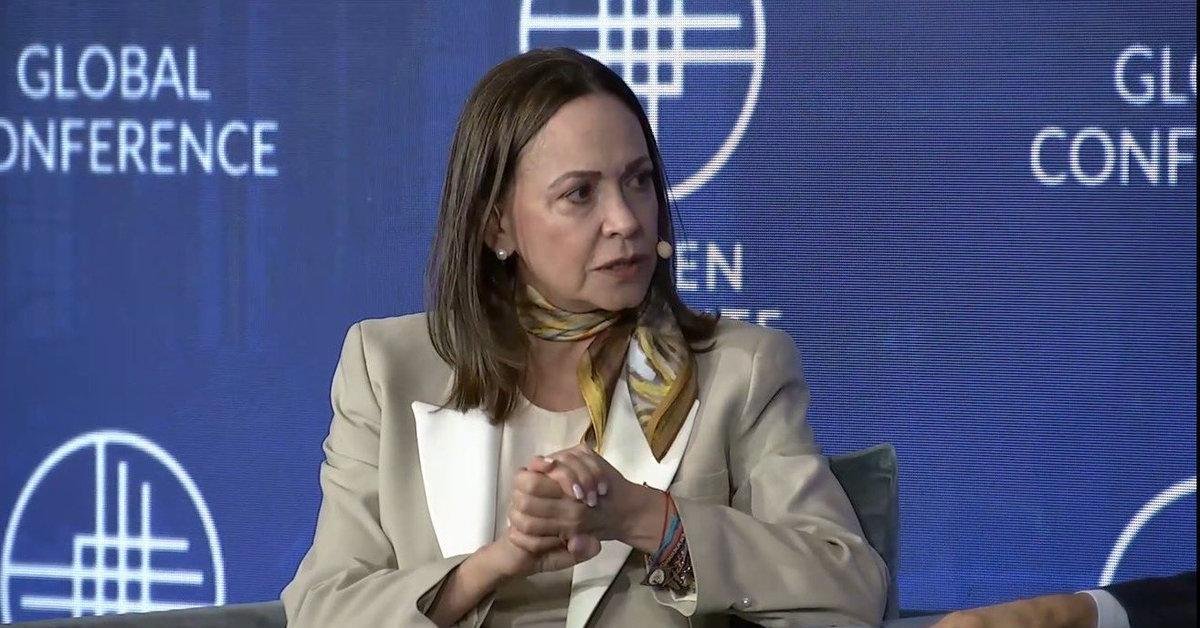
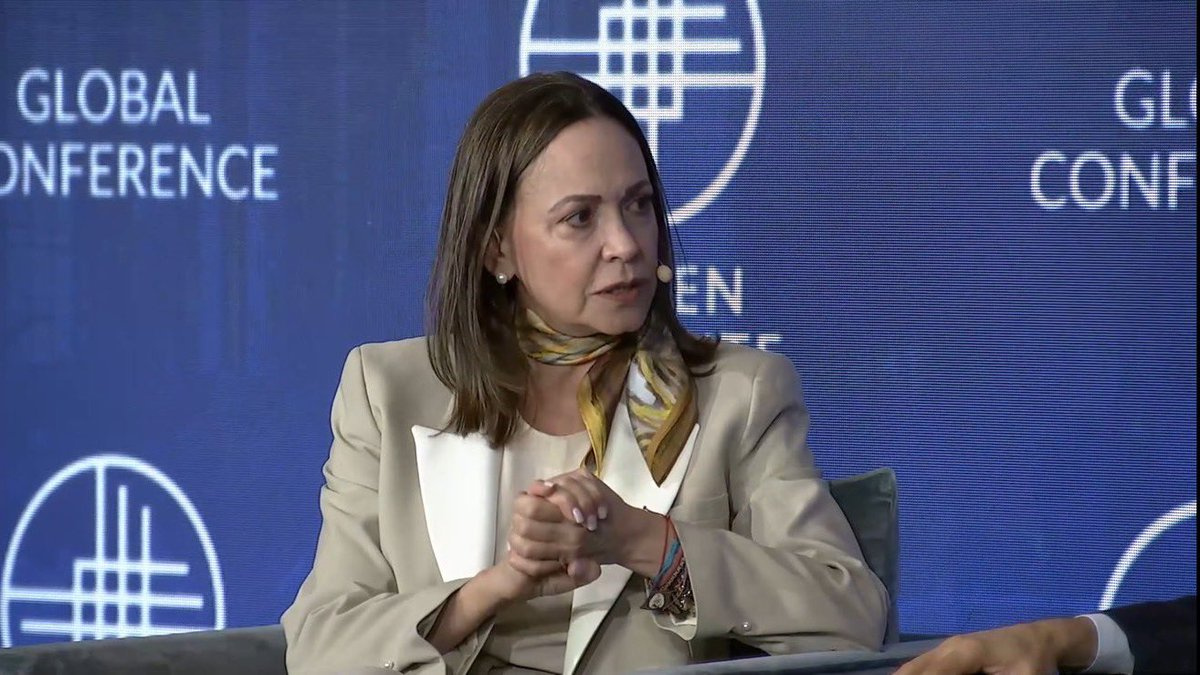
Los Angeles / Caracas /Venezuelan opposition leader María Corina Machado believes that elections in Venezuela should occur in the next 12 months “at most,” as she said this Monday in her participation in the 2026 Global Conference held by the Milken Institute in Los Angeles (California).
Machado, Nobel Peace Prize 2025, was one of the first to participate in the economic meeting held in Beverly Hills, where she reiterated the need to accelerate the elections in her country, although always following the plan of the Administration of the President of the United States, Donald Trump.
“The Secretary of State, Marco Rubio, has presented a three-phase process. The final result is an electoral process that will relegitimize the president, the National Assembly and other authorities (of Venezuela). We believe that this should take place in the next 12 months, at most,” said the opponent.
“We believe this should take place in the next 12 months, at most,” said the opponent.
Since the capture of Nicolás Maduro in the US operation in Venezuela on January 3, the White House has established relations with the Government of Chavista Delcy Rodríguez and has allowed the country to open to investment.
Trump spoke in January 2026 of a period of approximately 18 months for holding elections, although the opposition considered that they should be before the end of the year.
The White House has kept the opposition embodied by Machado in the background in the transition facing the South American country, and mentions have been almost limited to the Nobel Prize. Last week, President Trump said that when the Venezuelan opponent gave him the Nobel Peace Prize, he told her that she “didn’t deserve it.”
Machado today avoided directly answering that issue and focused his talk on explaining the opposition’s objectives, which focus on “achieving an electoral calendar with a defined date for the elections.”
The opposition leader has been outside Venezuela since last December, when she left to receive the Nobel Peace Prize medal in Norway after spending a year in hiding to avoid being arrested by the authorities, who have accused her of being violent and calling for a military invasion.
This Monday, Machado reiterated that he plans to return to his country, although he acknowledged that he fears for his life. Last March, the opponent also stated that if it were up to her, she would have already returned. However, the American press affirms that Trump himself has advised against a return that, at this time, would complicate the stabilization process in Washington.
Meanwhile, thousands of migrants continue to return to the country. This Monday, 157 migrants did so on a repatriation flight from Miami, reported the Ministry of the Interior and Justice.
In a Telegram message, the State Ministry detailed that 106 men, 29 women and 22 minors arrived on the flight, without specifying their ages.
The plane landed at the Simón Bolívar International Airport in Maiquetía, which serves Caracas, where they were received by officials from different police forces, including the Bolivarian National Intelligence Service and the Bolivarian National Police.
According to official figures, more than 20,000 migrants have returned to Venezuela on repatriation flights since February 2025.
This is flight number 140 since Caracas and Washington signed an agreement for the repatriation of migrants in January of last year, and which was maintained even amid tensions over the US military deployment in the Caribbean Sea.
On Friday, a total of six minors and one adult returned to Venezuela on a “special flight” for repatriation from the United States, the Ministry of the Interior and Justice reported at the time.
Through Telegram, the State Ministry indicated that all those repatriated that day received medical attention from national institutions and were taken to their homes by security agencies.
According to official figures, more than 20,000 migrants have returned to Venezuela on repatriation flights since February 2025.