Of Giada Aquilino
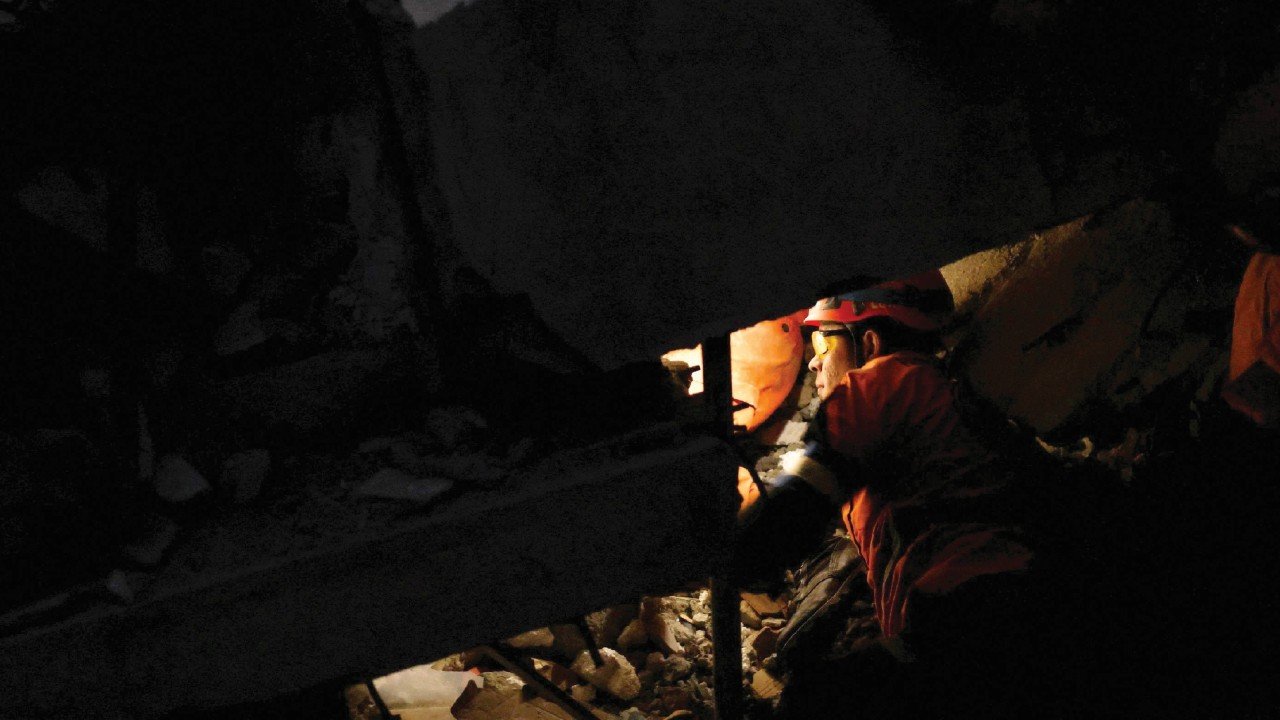
It is now more than a race against time, more than a desperate search with bare hands, more than a non-stop work in the midst of devastation. Every minute is precious in Venezuela as they try to snatch lives from the rubble of the two powerful earthquakes which, on Wednesday afternoon around 6pm local time, devastated the northern part of the Latin American country, north-west of Caracas, in particular the coastal area of La Guaira. Almost 72 hours after the earthquake, a period of time within which civil protection agencies all over the world indicate that it is still statistically possible to extract living people from the rubble after a disaster, hope is not extinguished, despite at least 920 deaths and over 3,300 injuries. There were 172 living people identified under the piles of stones and debris.
While a new earthquake measuring 4.9 on the Richter scale was recorded today in central Venezuela, the tens of thousands of missing people already convey the image of the enormous disaster: over 54,000 people of whom there is no news, according to reports received on the website opened by a group of citizens to help families trace their loved ones and relaunched by the local media.
To the Vatican media, Monsignor José Luis Azuaje Ayala, president of Caritas Venezuela, an organization on the front line of the emergency, launches an appeal to speed up the search for “the people buried under the rubble”, underlining the urgency of evaluating the infrastructures that could collapse due to the numerous and intense aftershocks – more than 300 so far – and of organizing, between authorities and civil society, “joint work that contributes to minimizing the consequences” of the tragedy that has affected the states of La Guaira, Miranda, Aragua, Carabobo, Falcón, Zulia, Yaracuy and Lara, as well as the capital district.
“There are currently many people missing: it is believed that they are under the remains of various buildings”, reports Monsignor Azuaje Ayala, specifying that they are not only homes, but also hotels, leisure centers and commercial structures. Official data speak of around 400 buildings and houses destroyed or severely damaged, to which must also be added 13 hospitals, 25 shopping centers and over 1,000 infrastructures. But the communications blackout makes the budgets still dramatically too provisional.
In recent hours, the apostolic nuncio to Caracas, Archbishop Alberto Ortega Martín, has brought the closeness of Pope Leo The prelate prayed for the victims and urged the entire population to find strength “in the comfort of God”: now, he said, “is the time for charity, for solidarity, to help” all those who have been affected by the disaster.
On the ground, meanwhile, the interim president, Delcy Rodríguez, asked the population not to travel to the area north of Caracas and the Interior Minister, Diosdado Cabello, announced that the government is preparing to limit access to the state of La Guaira, to facilitate – he reported – the rescue operations.
The emergency teams, but also volunteers and ordinary citizens, continue to work, even without means, without excavators, without tools, in search of a cry for help, a moan, a signal from under the mountains of rubble and dust in which the buildings have crumbled. It happened for two women and a newborn baby, extracted alive from the collapsed buildings of La Guaira.
In a context of continuing economic and social crisis and total emergency of the electricity system and drinking water distribution, which were already suffering and which are now, in some areas, completely out of use, there is then the drama of the evacuated and displaced people. The president of Caritas Venezuela confirmed that “there are thousands of people gathered in the squares or in open spaces, for fear of new aftershocks that could cause the collapse of other already seriously damaged infrastructures and buildings.” The International Organization for Migration (IOM) estimates up to 6.8 million people affected, of which around two million in the metropolitan area of Caracas alone. According to the figures released by the president of the National Assembly, Jorge Rodríguez, the “left-wing” people are more than 3,000, while the Ministry of the Interior spoke of food aid distributed to 70,000 families. But beyond the numbers, the picture of the emergency of those who cannot return to their homes is beginning to emerge forcefully and painfully: in various areas of La Guaira and the capital, families can be observed camped at the foot of now abandoned buildings, with the few things they have managed to recover.
Amid the difficulties on the ground, international solidarity is in motion. The first rescue teams from all over the world are arriving: at least 25 emergency teams from 17 countries, in addition to those from the UN, are joining the local teams. Those from Spain, Italy, Mexico, Colombia, Chile, Ecuador, El Salvador, the United States, the Dominican Republic and Switzerland have already landed, while the United States Department of the Treasury has eased sanctions on Venezuela by authorizing all transactions connected to the relief interventions.
From the communities abroad comes the closeness to their compatriots affected by the earthquake. This Sunday at 6pm in Rome, at San Nicola in prison, a mass in Spanish will be celebrated by the parish priest, Venezuelan Father Jesús Yrady. He explains to the Vatican media how “the Venezuelan and Latin American communities in the area will pray for the victims of the earthquake and for the situation in the country”.