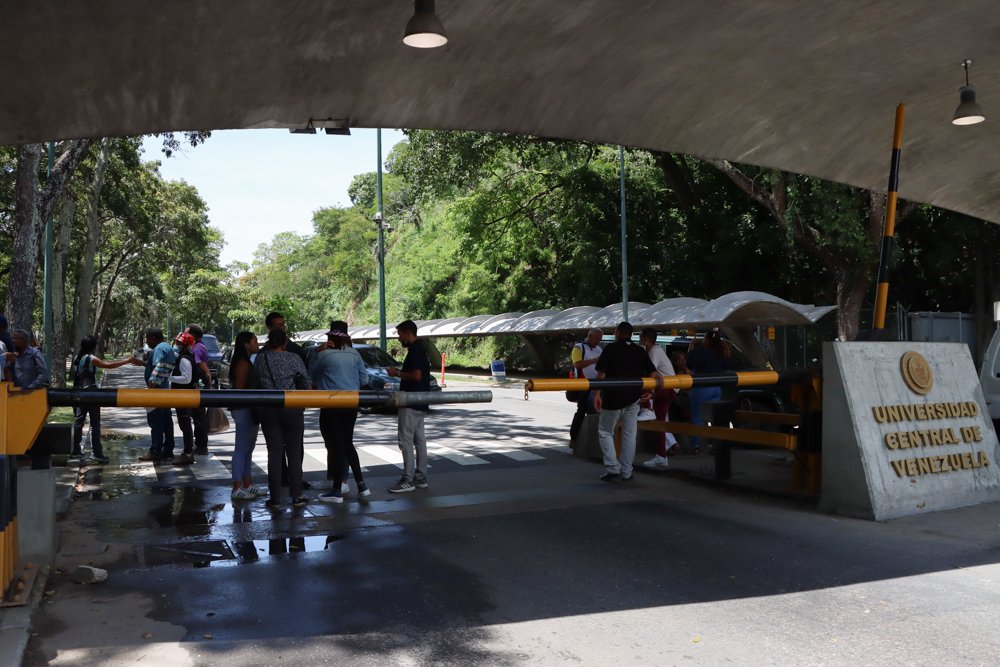
The Inter-Union of University Workers, in a meeting held this Tuesday at the Central University of Venezuela (UCV), announced that next week, if their demands before the Executive are not resolved, they will paralyze their academic and work activities for at least 24 hours on April 22.
The announcement was made by the president of the Association of Professors of the Central University of Venezuela (Apucv), Professor José Gregorio Afonso, during an inter-union assembly held at the Faculty of Engineering.
Afonso called to “paralyze all universities in the country” with an action “without any fear”, which he invited to also join secondary education and the health sector.
“They have stolen everything from us. They stole our decision in the electoral process on July 28,” said Afonso, who stressed that the mobilization will be “absolutely legal and peaceful.”
“Next week, 24 hours of strike. And if the government responds to us, it will know if it has to come to terms with the universities paralyzed or functioning,” he added.
Concentration in front of the TSJ
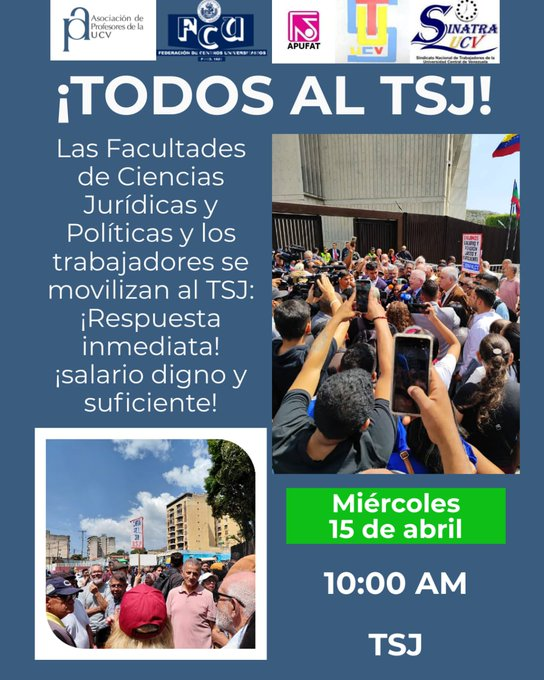
As part of the same day of protests, the Faculty of Legal and Political Sciences (FCJP) of the UCV, together with various unions and unions in the country, called a rally for this Wednesday, April 15 at 10:00 am in front of the Supreme Court of Justice (TSJ) in Caracas.
The dean of the FCJP, Juan Carlos Apitz, explained in a press conference that the objective is to demand a formal response to the appeal for legislative and constitutional omission introduced on February 2 by deans of Law at the UCV, University of Carabobo (UC) and University of the Andes (ULA), given the lack of adjustment of the minimum wage in more than four years.
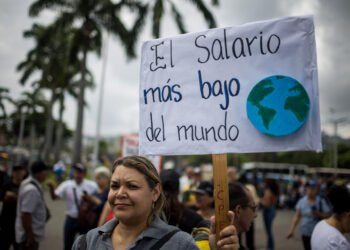
The minimum wage in Venezuela has remained at 130 bolivars since March 2022, which represents more than 1,400 days without an official increase. Afonso confirmed that university workers “will continue to mobilize throughout the country” until an immediate salary adjustment and the protection of labor rights are achieved.
These actions are part of a series of protests that have intensified during the first quarter of 2026 by professors, workers and university students, demanding salary improvements and compliance with collective contracts.