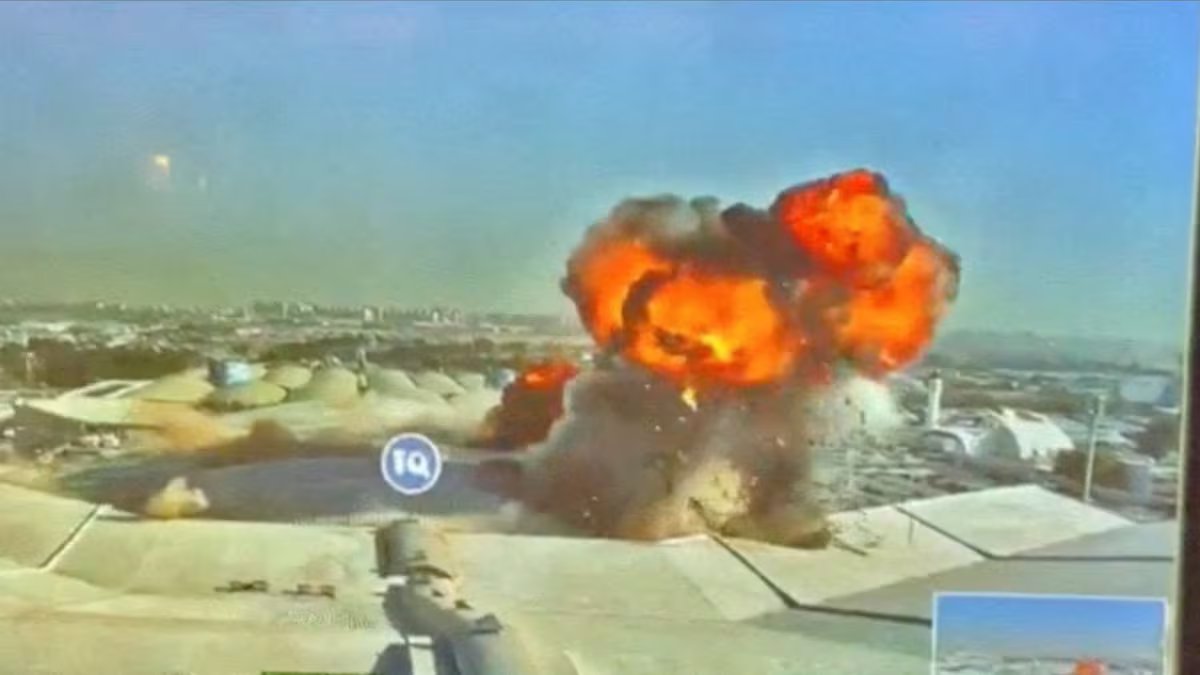
A simple example of asymmetric warfare: an Iranian drone flies to hit gas facilities in Qatar. The cost of the projectile, depending on the model and year, is between 17,000 and 43,000 euros. An interceptor from an American-made Patriot anti-aircraft battery comes out to meet him to destroy him. Each unit of this type of missile is around 3.2 million euros. In addition, to ensure the shot, two projectiles are usually launched. The cost-benefit ratio of interception can be as high as 1 to 10 in favor of unmanned attack aircraft. It is more expensive to shoot down a drone (with kinetic means, not electronic) than to fly it. And this example explains, in part, what has happened in the war that has pitted the United States—along with Israel—and Iran..
A conflict of unequal forces in which the weaker side, the Iranian regime, knew how to stay in the fight through a mix of military capabilities improved over decades, high and low cost, and a strategy of horizontal escalation (extension of the conflict far from the battlefield; in this case, to the international energy sector with the control of maritime traffic in the Strait of Hormuz) that turned the coffers of the US Department of Defense and the world economy upside down.
The example of the drone in Qatar could be a frustrated attack, but a lot of ammunition reached its target during the 39 days of the conflict and in the most recent violations of the ceasefire reached on April 8: proof of this is that Iranian hammering paralyzed 17% of Qatari liquefied natural gas shipments, that is, close to 15 billion euros in revenue. “Iran faced a titanic task in the face of a much larger and more advanced army,” Steven Feldstein, from the Carnegie Endowment for International Peace think tank, points out in an email exchange. “He quickly realized that fighting on the terms of the United States or Israel would lead to catastrophic defeat.”
Tehran then activated a decentralized military decision-making strategydesigned 20 years ago by General Mohammad Jafari, to replace the death of its commanders and carry out a multiple offensive: precision ballistic missiles, low-cost attack drones, and terror in Gulf waters at the hands of the naval arm of the Iranian Revolutionary Guard. A complete war manual against the greatest military power in the world that other conflicts can use as a reference.
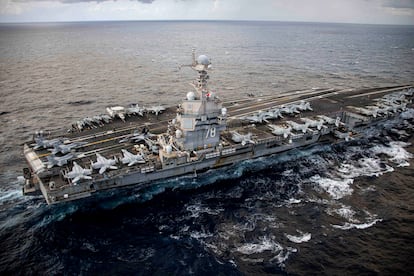
The Iranian military has placed a strain on the offensive and defensive capabilities deployed by the United States in the region. It was the first time that American air defense systems installed in the allied countries of the Gulf suffered swarm attacks, that is, combined offensives of unmanned bomb aircraft and missiles, ballistic or cruise, to saturate the protection shields of Kuwait, Bahrain, Qatar, the United Arab Emirates and Saudi Arabia.
According to calculations by Mark F. Cancian and Chris H. Park for the Center for Strategic and International Studies (CSIS, in its acronym in English), the United States used between 3,710 (in its lowest range) and 4,510 units of seven of the most precious missiles in its arsenals – to which were added ammunition such as LUCAS drones or bombs with guidance systems. For four of these projectile models, the Pentagon has reportedly used up half the inventory (including the Patriot and THAAD interceptors, so prized by partners like Ukraine).
Cancian and Park estimate that returning missile stores to pre-Iran war levels could take between one and four years. A pressure within the Pentagon that was in crescendo from the first weeks of operations, the most demanding for the US defense systems installed in the Gulf. This is why the Donald Trump Administration, which aims to increase military spending by 40%, to 1.3 trillion euros, has urged American weapons manufacturers to work faster and cheaper.
Asymmetric warfare is not new. As Feldstein mentions, military history remembers, for example, the Ukrainian counteroffensive after the great Russian invasion of 2022; some phases of the Israeli-Palestinian conflict; the wars in Afghanistan, against the army of the Soviet Union or the United States, or the strategy of the Algerian National Liberation Front in its fight against France in the fifties of the last century. With one difference: the moment. The current confrontation in the Middle East takes place in the midst of an explosion of low-cost lethal weapons, with drones at the forefront, and an interconnected and in that sense more vulnerable world economy. All of this makes the horizontal escalation undertaken by Mojtaba Khamenei’s regime and the Revolutionary Guard.
The United States deployment has been massive, the largest since the invasion of Iraq more than two decades ago. Washington sent about 40% of its operational ships to the Middle East. A sufficient force, with elite soldiers and amphibious assault ships, to set foot on Iranian territory. But that wasn’t the plan. “(United States President Donald) Trump never convinced his followers, much less the country, of the need for war, so the risk of a ground invasion that would stall and cause numerous American casualties was politically unacceptable,” Feldstein continues. And without stepping on enemy soil, it is difficult to secure military positions and declare complete victory.
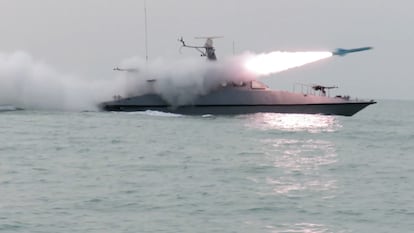
A war of attrition then began with artillery blows. The United States estimates that 13,000 targets have been hit with its missiles, drones and guided bombs. Iran launched around 1,300 projectiles and 4,400 attack drones against Israel, its neighbors in the region and ships in Gulf waters. Needless to say, the smallest contender has lost the most on the battlefield. Tehran estimates that the offensive caused at least losses of 230 billion euros (57% of GDP). The US central command in the region has reiterated that it has annihilated a large part of the Iranian missile apparatus, a hallmark of the country’s defense. The damage has been very significant, but there is no evidence that it was permanent.
At the beginning of May, the newspaper The New York Times reported, citing US intelligence sources, that The regime has restored operational access to 30 of the 33 missile bases it maintains along the Strait of Hormuzas well as 90% of its underground storage and launch facilities. As Matthew Savill of the Royal United Services Institute pointed out in a brief analysis on Thursday, in the peace memorandum reached between Washington and Tehran there is no trace of the Iranian ballistic missile program, a war objective for the United States and Israel. It is and will continue to be non-negotiable for the Iranian regime.
Part of the power that Iran has deployed has to do with the lack of information about its arsenals, launching points and production centers. Something very different from the enemy’s objectives, which were easily located, whether they were US bases or energy facilities in the region’s neighbors. Military experts have also questioned the United States’ successes. Yes ok The US central command in the region (Centcom) has broadcast videos of bombings against shuttles, weapons factories or military posts, it is unknown if each hit published on the network completely annihilated the enemy’s defensive capabilities. Without boots on the ground, the analysis lends itself to speculation.
Horizontal climbing
The Iranian defense forces are estimated to have suffered a major hit to their inventories, in addition to the loss of at least a dozen senior military commanders. The regime, however, could maintain a stocks of missiles of between 2,500 and 4,400 units. Enough to maintain shooting capacity. Another thing is the section that is gaining weight in the world’s conflicts: drones. Iranian manufacturing is large scale—still capable of supplying the Russian ally. Before this war, the number of these attack devices available in their warehouses was around 80,000.
Regardless and with numbers in hand, the United States, the world’s leading military power, had the capacity on paper to maintain its operations in the region, including the blockade of the Strait of Hormuz, for which it assigned 15,000 soldiers. But Iran pressed the psychological panic button through a horizontal escalation in two directions: first, the threat of attack on the waters of the Gulf. As Mike Plunket, an analyst at the intelligence firm Janes, recently pointed out, finding one mine had the same effect as many. Maritime traffic was jammed due to the possibility of colliding with one of these bombs —Iranian warehouses store between 5,000 and 6,000 units of this type of device— or suffer the impact of an Iranian drone.
Second, Tehran skirted the rules of war largely drawn up after World War II to target civilian targets such as energy facilities, airports and even desalination plants. He hit the shot and caused fear among the United States’ Arab allies in the region, who felt unprotected.
The result of this dual strategy of horizontal escalation is perfectly summed up by Feldstein: “Iran vigorously and successfully exploited the psychological cost of the war. The strategy was effective; it established a narrative among American and global audiences that the United States was not meeting its objectives and opened a path for Iran to wait for the United States and settle for a better deal rather than give in in the first weeks and give up important concessions.” That’s how it was.