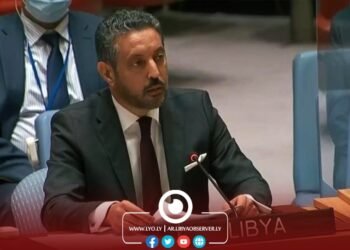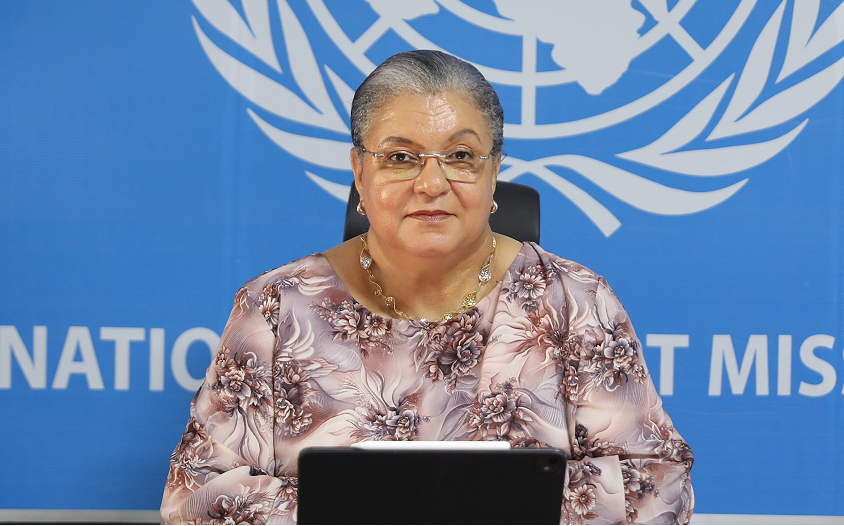
The UN Secretary-General’s Special Representative for Libya, Hanna Tetteh, warned the UN Security Council of what she described as a growing wave of hate speech and coordinated disinformation campaigns targeting UN agencies and humanitarian workers in Libya.
Tetteh firmly rejected allegations that the United Nations is planning to resettle migrants or refugees in Libya, stressing that such claims are false. She said the misinformation has fueled a hostile environment and recently led to attacks and vandalism targeting UN and refugee agency premises in Tripoli.
The UN envoy announced the conclusion of the Structured Dialogue process on June 7 after six months of consultations held between Tripoli and Benghazi. The process involved around 120 Libyan participants representing a broad range of political and social groups, with women accounting for 35 percent of participants.
According to Tetteh, the dialogue produced nearly 600 recommendations aimed at addressing Libya’s structural challenges. The proposals focus on restoring unified and legitimate state institutions, building broad political consensus for credible national elections under a clear legal framework, strengthening the rule of law and judicial independence, improving transparency in public resource management, and ensuring a fair distribution of wealth and services.
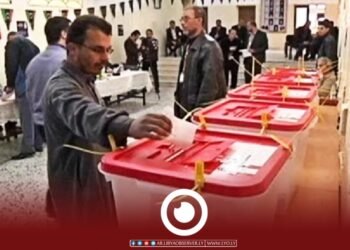
On the political front, she said she continues to facilitate the so-called “small group” (4+4) meetings between representatives of the Government of National Unity and the leadership of Haftar’s forces, alongside members of the House of Representatives and the High Council of State. She revealed that the parties have reached a preliminary agreement on restructuring the board of the High National Elections Commission and on a mechanism for selecting its chairperson, while substantive discussions on electoral laws have also begun.
Tetteh reiterated that if institutional paralysis and obstacles to the electoral process continue, she may return to the Security Council with an alternative proposal to move the political process forward, stressing that Libyans’ right to choose their representatives cannot remain hostage to political divisions indefinitely.
Economically, the envoy painted a bleak picture of Libya’s financial situation and its impact on citizens’ purchasing power. Citing reports by the Audit Bureau and the Anti-Corruption Authority, she highlighted figures indicating widespread financial corruption and fuel smuggling.
The reports showed a 621 percent increase in gasoline withdrawals by security agencies, a 1,527 percent rise in diesel consumption by armed forces between 2021 and 2024, and a 203 percent increase in diesel use in the electricity sector, figures she said point to large-scale smuggling operations.
The reports also revealed what Tetteh described as systemic corruption and conflicts of interest in the pharmaceutical sector, involving government officials and influential figures with ownership stakes in drug-import companies. Some firms reportedly recorded import financing growth ranging between 1,300 and 1,834 percent between 2022 and 2025.
On security issues, Tetteh expressed serious concern over renewed clashes between rival armed groups in the city of Zawiya near residential areas and the oil refinery, which resulted in 13 deaths and the temporary shutdown of the refinery. She condemned the use of heavy weapons in populated areas.
At the same time, she welcomed progress made by the Joint Technical Border Security Coordination Team in Sirte, including the launch of joint operations in Ghat and Ghadames and the activation of coordination centers in Benghazi and Tripoli to address security challenges.
On judicial and human rights issues, Tetteh warned that continued divisions within the Supreme Judicial Council and other constitutional institutions risk creating parallel legal systems, undermining confidence in the rule of law and negatively affecting the electoral process.
She also welcomed the release of more than 400 detainees in eastern and western Libya during the Eid al-Adha period, while noting that the UN mission is investigating two deaths in detention facilities in eastern Libya. She called for an end to arbitrary arrests and for stronger protection of freedom of expression.
Tetteh concluded by stating that the political options are now clear and the necessary tools are available, arguing that what Libya’s leaders lack today is the genuine political will needed to steer the country toward lasting stability.