Senior Reporter
Trinidad and Tobago’s plans to revive the former ArcelorMittal steel plant at Point Lisas are raising questions over how the country will produce vanadium, where the raw material will come from and whether there is enough energy capacity to support the ambitious plans.
The mineral, which is used in speciality steel, aerospace applications and battery technology, is expected to form part of the plant’s new industrial role beyond its traditional steelmaking operations.
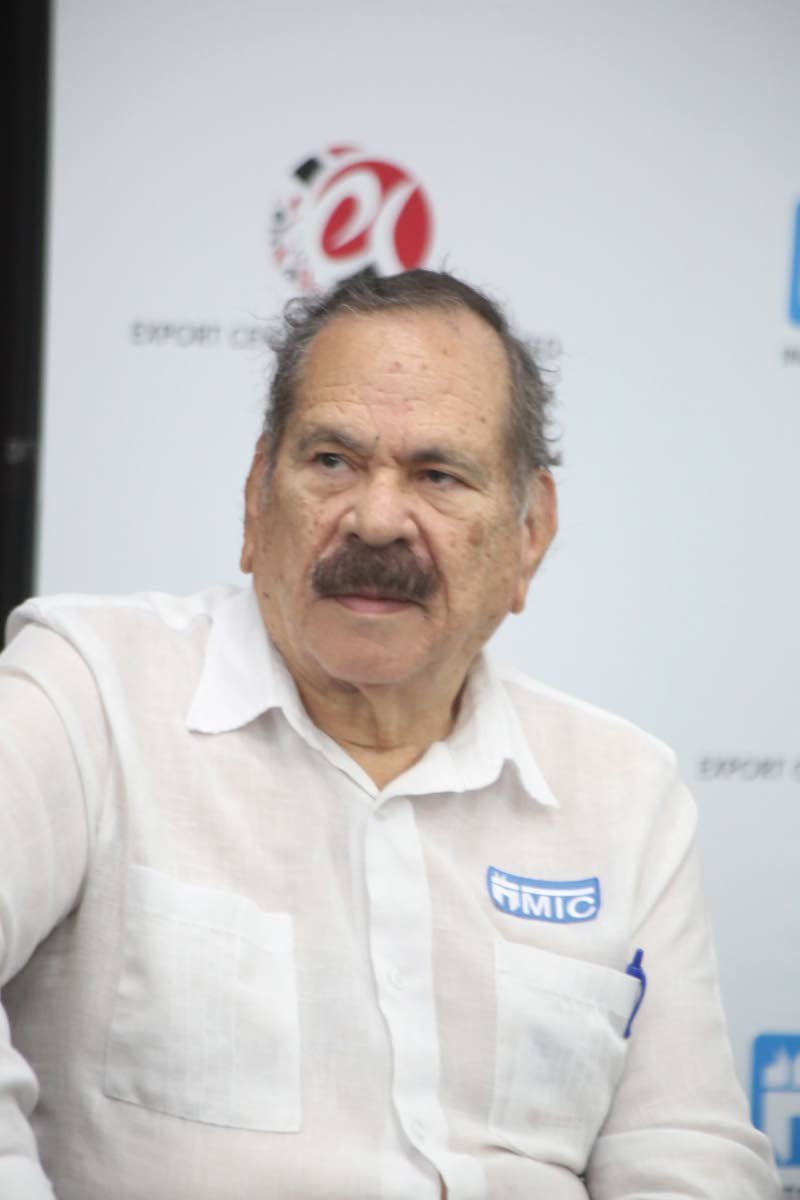
Speaking to Guardian Media yesterday, metallurgist Professor Clement Imbert questioned whether T&T has the raw materials necessary to produce vanadium domestically.
“I do not think that we have any capacity to produce vanadium on our own,” Imbert said.
He believes the country would have to import the necessary raw materials before processing them here.
“We’ll have to import raw materials,” Imbert said.
Vanadium is a metallic element that is rarely used in its pure form. Its major industrial value comes from its ability to strengthen steel and improve properties such as hardness, durability and resistance to wear.
It is, therefore, used in specialised steels, including applications where strength and performance are critical.
“Vanadium, like many other minerals, like chromium and tungsten and those things, are used in making specialist steels and are used for other purposes also.”
One of its increasingly important applications is in energy storage.
Vanadium can be used in batteries, which store electricity in liquid electrolytes and can be particularly useful for large-scale, long-duration energy storage, an increasingly important technology as countries expand renewable-energy generation.
That strategic value has placed vanadium among minerals attracting increased attention from governments seeking to strengthen critical-mineral supply chains.
The questions come as local subsidiary Ibis Steel Company, backed by US-based Pinnacle Steel and Vanadium Corporation, begins refurbishment of the former ArcelorMittal facility.
At Monday’s ribbon-cutting ceremony, CEO Edwin Bennett said the company plans an overall investment of US$750 million, with the potential to create up to 1,000 permanent jobs.
First production is targetted for the end of 2027.
Bennett has described vanadium as the project’s key differentiator and said the company wants to produce the equivalent of 50 per cent of US vanadium consumption.
Imbert said T&T does not have an obvious domestic source of the raw material.
He pointed to the country’s previous steel-making experience, noting that ArcelorMittal had to import its iron ore, primarily from Brazil.
He said the same fundamental issue would apply to a new vanadium operation if the necessary feedstock is not available locally.
Imbert said the former ArcelorMittal facility could potentially be adapted for the new operation.
He added that the plant was relatively modern and incorporated the MIDREX direct-reduced iron process, which uses natural gas to remove oxygen from iron ore.
“They should be able to revive that plant to produce different types of metals and vanadium and vanadium-type steel,” he said.
But Imbert cautioned that the availability of natural gas could become another factor in determining whether the proposed operation is economically viable.
On Monday, Prime Minister Kamla Persad-Bissessar announced a landmark cross-border gas breakthrough and a series of major energy and industrial agreements during an official visit by US Deputy Secretary of State Christopher Landau. In doing so, the Prime Minister signalled an industrial renewal in T&T and said the country will be securing the gas needed to sustain it.