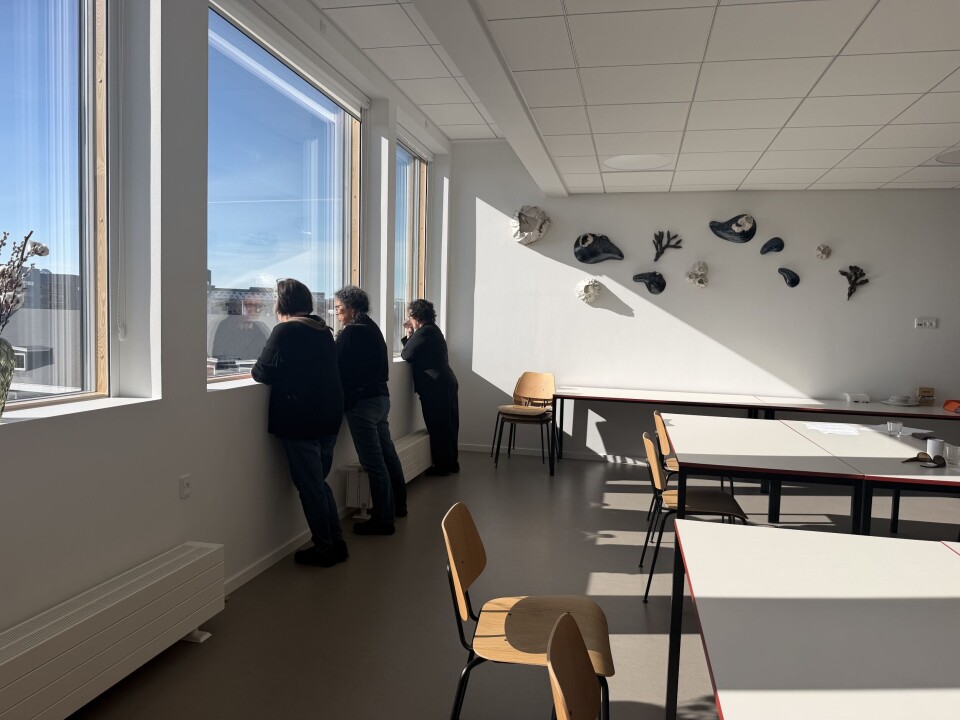
Sørine Lennert Johansen steps familiarly into the bright room.
She greets the employee who is in the process of emptying the dishwasher and refuels a cup of coffee. The coffee machine hums and the sound mixes with the notes coming from the piano.
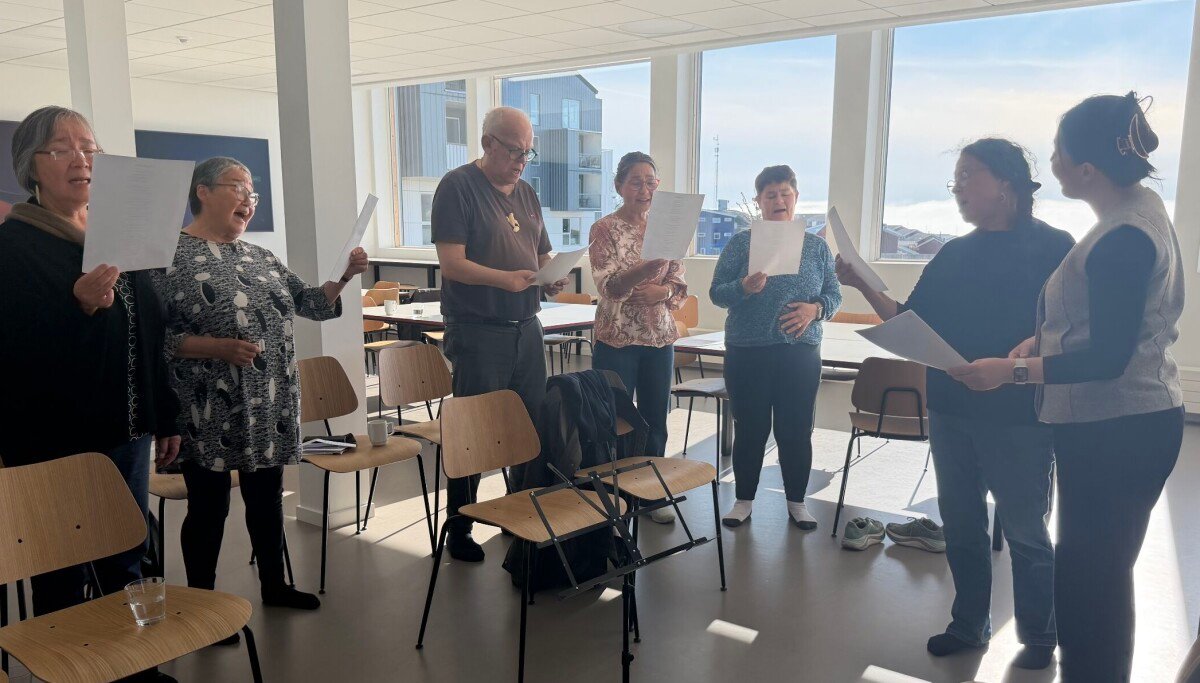
For just over a year, Sørine Lennert Johansen has been going to choir in Inuunerissaavik Steno Kalaallit Nunaat (Steno Diabetes Center Greenland) in Nuuk. In a little while, she will sing at the top of her lungs again with other patients.
Research shows that singing has a positive effect for COPD patients, and perhaps also for other types of lung patients, such as Sørine Lennert Johansen, who is 72 years old and has asthma.
– Ti-ti-ta, it sounds a quarter of an hour later from 8 voices.
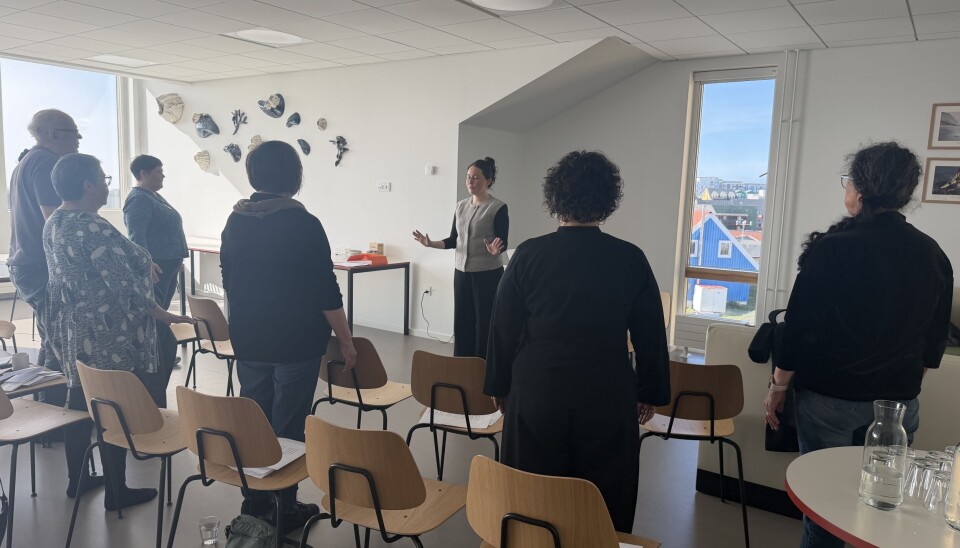
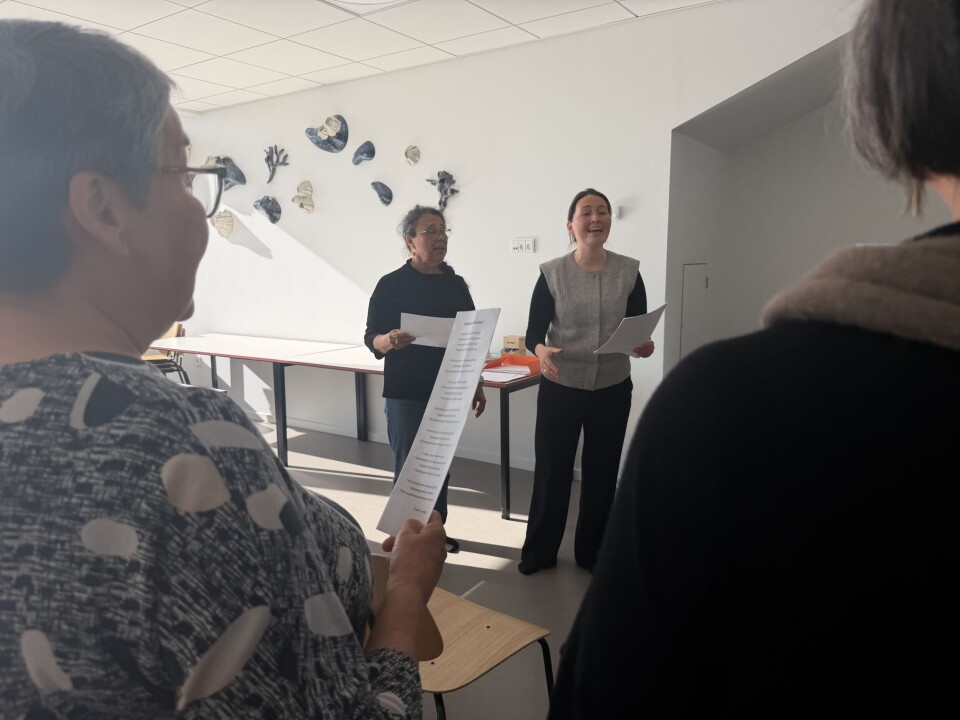
Pipaluk Lynge Berthelsen, who is the choir director together with Hansinnguaq Lennert, has arrived, and they have started the vocal warm-up.
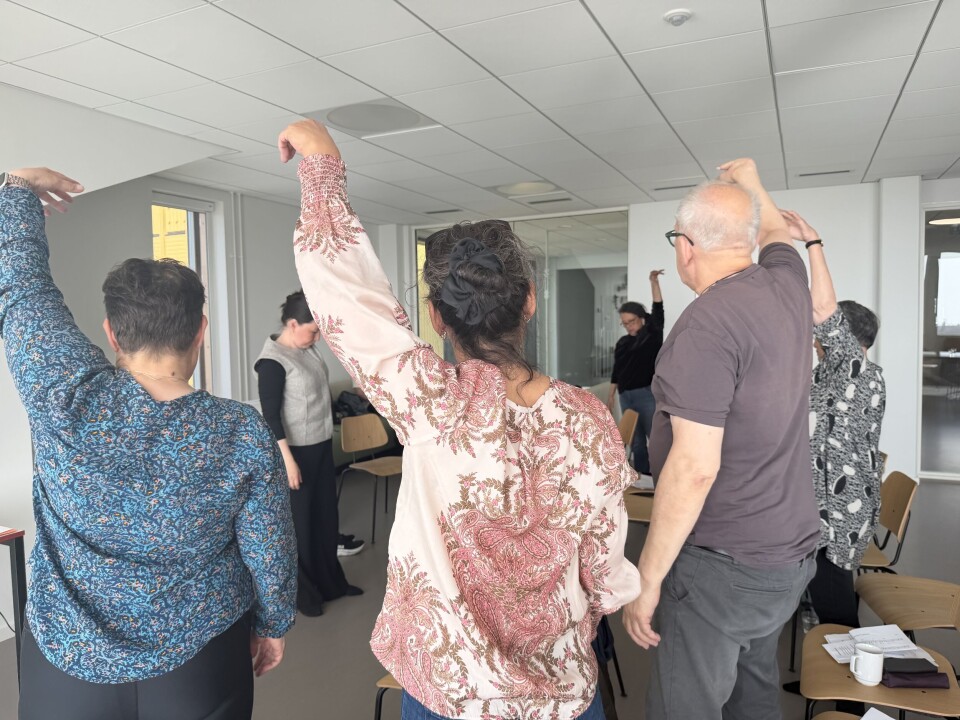
On the last syllable, they exhale as long as they can. The sound level lowers as the lungs are emptied of air. At the end, just a hissing “ah” sounds.
Cough at the long tones
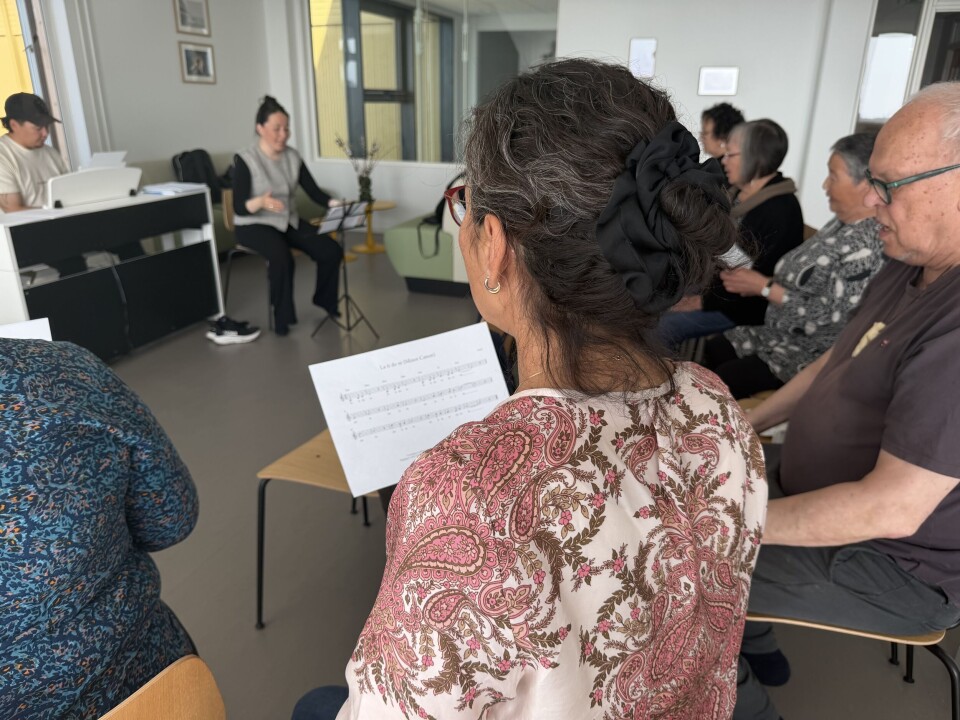
– Li lo li lo li lo li lo, says the assembly, which is now accompanied by the piano.
They repeat the same melody and gradually increase the pitch.
– Lo, lo, lo, lo, lo.
Pipaluk Lynge Berthelsen signals that they must stick to the o.
– Aamma!, she says, and several of the singers begin to cough.
They do this because the mucus in their lungs has been mobilized.
– Respiratory infections are prevented when the mucus is pushed up, explains Anna Petersen.
She is a nurse in Inuunerissaavik Steno Kalaallit Nunaat with a special interest in COPD and asthma, and AG called her to find out more about the disease and the difference choral singing can make to those living with it.
COPD (Chronic Obstructive Pulmonary Disease) is a chronic disorder that goes beyond breathing and over time leads to increasing shortness of breath. Other symptoms are cough with mucus from the lungs and for that reason increased risk respiratory tract infections.
COPD can be anxiety-provoking to live with because you lose control over your breathing. Having COPD is therefore also associated with a risk of isolation, because the fear of shortness of breath can outweigh the desire to go out.
So just getting out the door and going to choir has a positive effect, explains Anna Petersen.
– It improves the patients’ quality of life, also because they enter a social community. You can pack away the COPD disease a little, because the song becomes the starting point for the meeting itself, says Anna Petersen.
– We are conjuring
The warm-up continues with a song exercise.
– Do re mi fa, they sing, following the notes from Hansinnguaq Lennert’s piano playing.
– Why can’t we make it sound like you, says one of the choristers with a smile.
– We are about to cast a spell, answers Pipaluk Lynge Berthelsen and returns the smile.
– You have to believe it!, she insists.
They sing the melody once more. Now more powerful.
– Can you hear the difference, says Pipaluk Lynge Berthelsen to AG’s reporter.
– You just have to believe it!
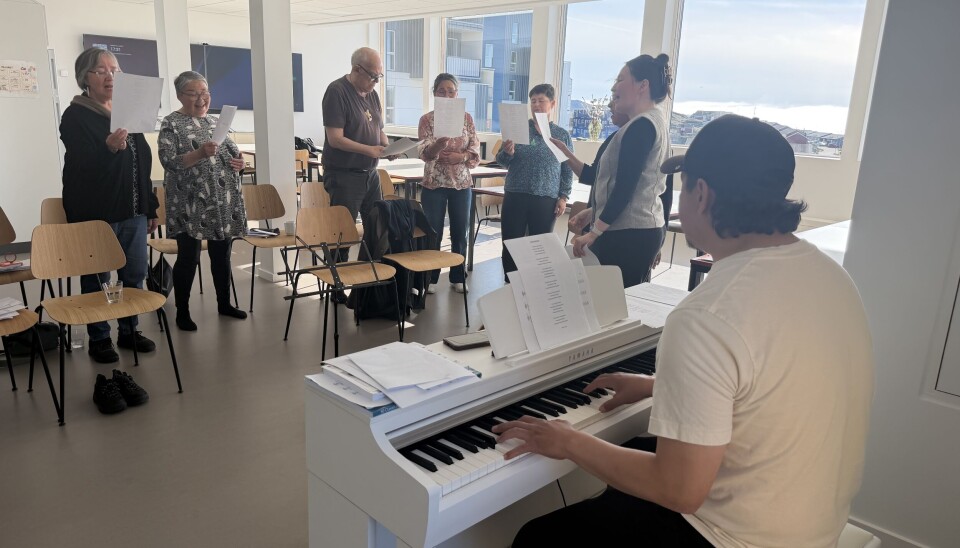
One of the singers in the choir is Solveig Kramer. She is 65 years old, senior pensioner and co-owner of a shop. She has been with the choir since it was established last year.
– I always wanted to sing, but I didn’t think I could, she says.
When she sang along in church, it sounded completely wrong. But now she can sing along. And the choir has even performed on several occasions.
– Who would have thought that you would ever sing in Katuaq (culture center in Nuuk, ed), says Solveig Kramer.
For singing lessons, she has learned to fill up her lungs all the way down to her stomach and to use her abdominal muscles, she says. She also finds that it has become easier to breathe.
She no longer sees stars when she has to hold the long notes. Now she feels like one.
– It’s as if it’s bubbling inside you that you can sing!
The effect of the song
The symptoms of COPD can be reduced through physical activity. And on the shorter track also through singing, shows a study on which the Danish senior researcher Mette Kaasgaard is the first author.
She is associate professor at the pulmonary medicine research unit at Zealand University Hospital and at the institute for regional health research at the University of Southern Denmark. And she’s also a singer.
She wanted to investigate the intersection between singing and lung diseases more closely when she herself was affected by a rare lung disease. She investigated a type of singing training from England called ‘Singing for Lung Health’ and compared its effects to the effects of physical training in the context of community pulmonary rehabilitation.
A total of 11 Danish municipalities took part in the study, which is the largest study yet carried out in this field, and a total of 270 COPD patients participated.
– We wanted to investigate whether singing could be used in a rehabilitation context and whether it had an effect, among other things, on the participants’ physical capacity and quality of life, says Mette Kaasgaard.
Half of the COPD patients in the research project received singing training for 10 weeks, while the other half participated in standard physical training. And after the period, the measurements showed that both physique and quality of life had improved, also in those who took part in the singing training.
However, it is not the lungs themselves that get better, she points out. On the other hand, it is the muscles around the lungs that you can strengthen and learn to coordinate better. Mette Kaasgaard is investigating the precise mechanisms behind the singing training in her further research.
The research results do not mean that singing can replace medical preparations or stand in place of physical exercise. But singing can be a supplement that can possibly have a motivating effect when, for example, it is difficult to stick to training, explains Mette Kaasgaard.
– And then singing can provide a positive experience of relearning to breathe in a healthy and natural way, she says.
A social community
Solveig Kramer goes to choir with her sister. She doesn’t have any lung diseases, and hasn’t actually sung in a choir before, but is there as support.
– My sister is the one who says that we must go on the days when I am not fully motivated, says Solveig Kramer.
For Marit Eika Jørgensen, who is medical center manager in Inuunerissaavik Steno Kalaallit Nunaat, and also singer and initiator of the choir, this is also the most important thing: to create a sense of security so that patients show up, even if they are in a bad period.
– Finally, you have to take a relative with you if it is important for it to be easier to leave, she says.
She had heard about COPD choirs elsewhere, and had read up on the literature on the documented effects of singing training.
– People say that it gives them a sense of mastery that they can sing, says Marit Eika Jørgensen.
But it is not so important for her to measure up to the patients as it is to create a social community for them.
– I think we succeed every time people come, sing together and have a good time together, she says.
That is why they have chosen not to document the effects systematically, because it is already well documented in other studies, and instead to focus on creating visibility:
– We must be an example that you can be together about something other than the disease, says Marit Eika Jørgensen.
Isumama
Sørine Lennert Johansen appreciates being with people who have the same problem as herself.
– We can laugh at ourselves and immediately understand that we have a common problem with our lungs, she says.
She has always liked to sing. But occasionally she loses her voice.
– I can feel that when I sing with others, it comes out again, she says.
With sheet music in hand and eyes fixed on the choir director, the choir sings Mariina’s ‘Isumama’ in a polyphonic version.
– Neriuutingivara asaqatingiilluta / Qatanngutitut pilluta / Qimaqqilerumaartungut kingumut.
They may not hit the notes quite cleanly. But it goes straight to the heart when Hans Lennert moves his fingers from the keys so that their voices stand alone. And stronger than when class started.
The KOL choir is open to new members, and practices every Tuesday 16.30-17.30 at Inuunerissaavik Steno Kalaallit Nunaat (Steno Diabetes Center Greenland) in Nuuk.