In an interview, the US president calls Nato a paper tiger, which he has never been convinced of.
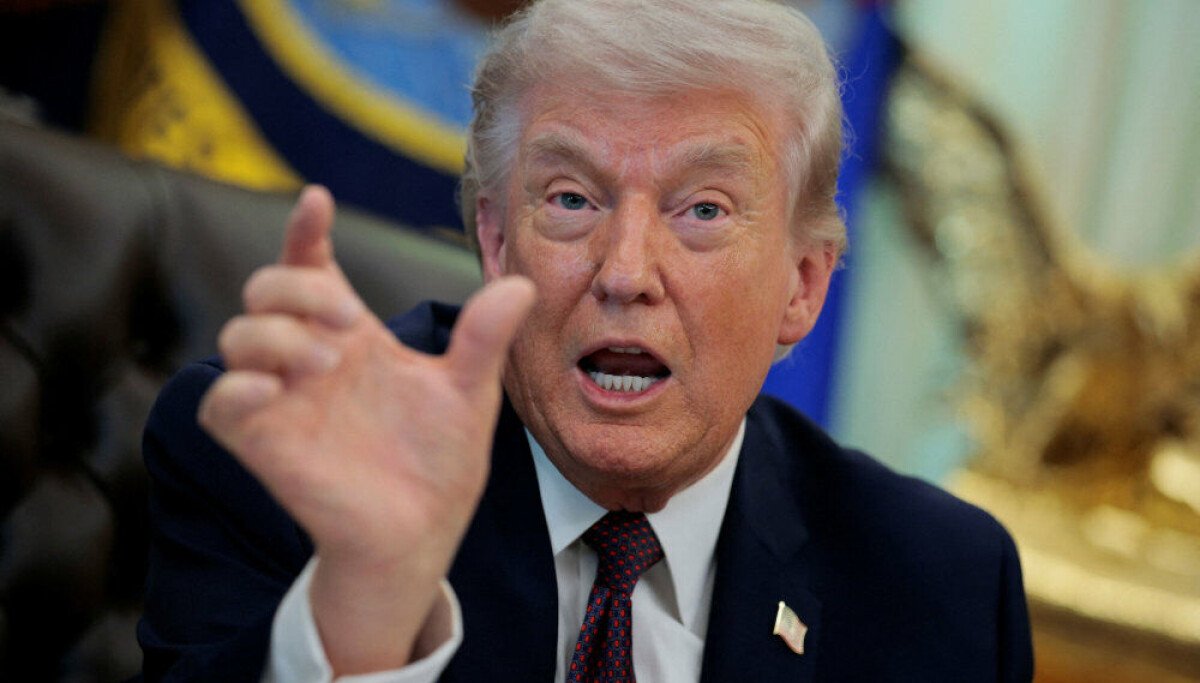
President of the United States, Donald Trump is considering withdrawing the US from the NATO defense alliance.
He says this in an interview with the British media The Telegraph on Wednesday.
Asked whether he will reconsider US membership after the war in Iran, he replies that it is “beyond reconsideration”.
– I have never been convinced of Nato (swayed by Nato). I always knew it was a paper tiger, and Putin knows it too, he tells the media.
A paper tiger is an institution or a person that outwardly seems very scary, but in reality is not so dangerous.
Following Trump’s statements, British Prime Minister Keir Starmer called Nato “the most effective military alliance the world has ever seen”.
– Nato has given us security for many decades, and we are fully committed to Nato, says Starmer at a press conference on Wednesday, according to the AFP news agency.
The message from Trump comes after the US Secretary of State, Marco Rubio, has also emphasized that the US needs to reassess its relationship with the defense alliance once the war in Iran is over.
He also says this on Wednesday in an interview with the television station Fox News.
– In my opinion, unfortunately, there is no doubt that after the conflict we have to reassess the relationship, says Rubio.
The US and Israel have been at war with Iran since February 28.
Since then, Trump has repeatedly expressed his dissatisfaction with the reluctance of European NATO countries to provide military support to the United States.
Among other things, it concerns sending the military to help secure the Strait of Hormuz, which is a crucial sea route for the export of oil and natural gas.
Ship traffic through the strait has largely come to a standstill in recent weeks, which has sent energy prices skyrocketing.
A number of European countries – including the UK, France, Germany and Denmark – have said they will contribute to the effort to secure the Strait of Hormuz.
However, the countries have not made concrete commitments yet.
/ritzau/