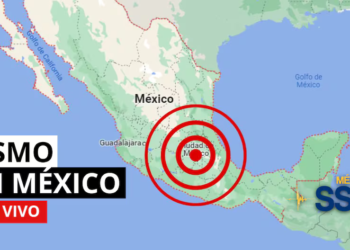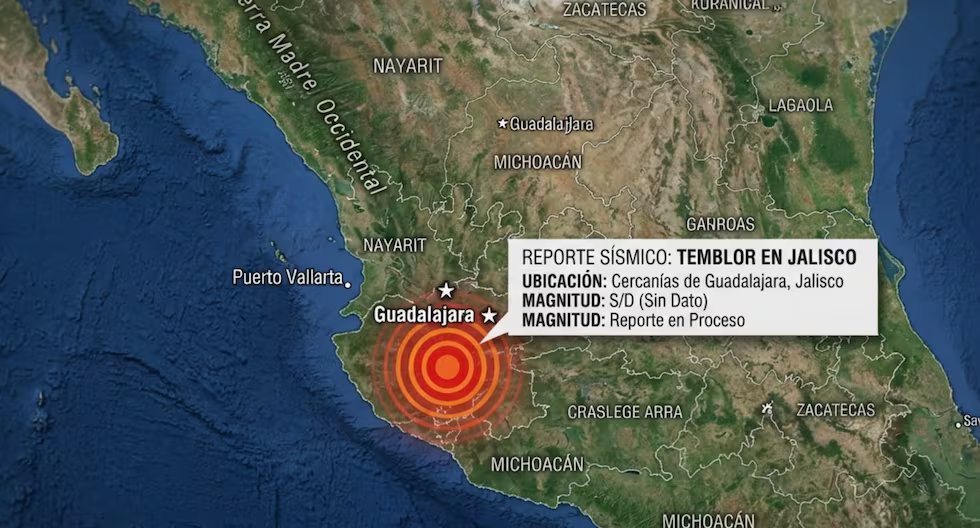
He National Seismological Service (SSN) maintains active surveillance on seismic activity in Mexico this Thursday July 9, 2026. The entity publishes in real time the magnitude, depth, epicenter and time of each earthquake, data that millions of people in the Mexican territory and in the Mexican community residing in the United States consult daily. This continuous flow of information is key to detecting rapid changes in the seismic sequence and assessing the risk of aftershocks. SSN updates also offer maps and lists that facilitate immediate verification of each event. Staying on official channels helps avoid rumors and unverified reports.
In the last hours, the registered movements were concentrated above all in the region of the Peaceful and the south: Oaxaca, Warrior, Chiapas, Michoacan and Jalisco They added up the majority of events. These areas are at the intersection of several tectonic plates, which explains the recurrence of low to moderate magnitude tremors. They also remain monitored Colima and Baja Californiawhere the most common activity is usually short-term but frequent. The geographical location of the epicenters allows authorities to anticipate possible aftershocks and prioritize reviews of critical infrastructure.
Specialists point out that the interaction between plates of North America, Cocos, Rivera, Pacific and Caribbean It is the main cause of seismicity in the country. This convergence generates active faults along the Pacific coast and in the south, turning Mexico into one of the most seismically dynamic regions in America. Faced with this scenario, the SSN remains the official reference for verified data and real-time updates. The organization’s technical reports also serve universities and research centers that analyze patterns and risk in the short and medium term.
Civil defense and local authorities recommend reviewing basic prevention measures: knowing evacuation routes, securing heavy objects, and verifying the status of electrical and gas installations. These actions are a priority in municipalities with high seismic exposure and in urban areas where population density increases the risk of indirect damage. For residents in the United States with family members in Mexico, following the official SSN accounts and communications from the consulates allows coordinating reliable information on impacts and response protocols.
Latest earthquakes in Mexico today, Thursday, July 9
This coverage will be updated throughout the day with the information published by the National Seismological Service (SSN).
How many earthquakes were recorded in Mexico during the last 24 hours?
Mexico It reports dozens of seismic movements of different magnitudes daily. The majority correspond to microseisms or low intensity events that are not perceived by the population and that are only detected by the monitoring network of the National Seismological Service.
However, each record provides valuable information for the analysis of the tectonic behavior of the country and allows specialists to evaluate the evolution of the areas with the greatest seismic activity.
What was the last earthquake recorded in Mexico today?
He National Seismological Service It permanently updates its database with detailed information about each earthquake detected by its network of stations.
Official reports include:
- Magnitude.
- Exact time.
- Epicenter.
- Depth.
- Geographic coordinates.
- Reference location.
Why does it shake so much in Mexico?
Mexico It is located in one of the most geologically active regions in the world due to the contact between various tectonic plates.
Among the main ones, the following stand out:
- North America plate.
- Coconut Plate.
- Pacific Plate.
- Rivera plate.
- Caribbean plate.
The constant interaction between these structures causes subduction processes and energy release that generate thousands of earthquakes each year.
Which states register the most seismic activity?
The historical records of SSN show that the entities with the highest seismic activity are:
- Oaxaca.
- Warrior.
- Chiapas.
- Michoacan.
- Colima.
- Jalisco.
- Baja California.
These regions concentrate a good part of the telluric movements due to their proximity to important areas of tectonic interaction.
Can a distant earthquake be felt in Mexico City?
Yeah.
The Mexico City It has unique geological characteristics because a large part of its territory sits on ancient lake deposits.
These conditions can amplify seismic waves from events that occur hundreds of kilometers away, which is why some moderate earthquakes can be felt intensely in certain areas of the capital.
What is the seismic alert in Mexico?
Seismic alert is a prevention system that detects potentially dangerous earthquakes and issues a warning before the strongest seismic waves reach certain cities.
The lead time depends on the distance between the epicenter and the area that will receive the alert.
What to do before an earthquake?
- Identify safe areas.
- Prepare a family emergency plan.
- Define evacuation routes.
- Prepare an emergency backpack.
- Fix furniture and heavy objects.
- Check gas and electricity installations.
- Participate in drills.
What to do during an earthquake?
- Keep calm.
- Stay away from windows.
- Protect head and neck.
- Locate yourself in a safe area.
- Do not use elevators.
- Follow the instructions of the authorities.
What to do after an earthquake?
- Check for possible damage.
- Check for gas leaks.
- Stay alert for aftershocks.
- Consult only official sources.
- Do not enter affected properties until you receive authorization.
What is a microseism?
A microseism is a low-magnitude telluric movement that is generally not perceived by the population.
Although they usually go unnoticed, these events allow specialists to know more precisely the seismic behavior of different regions of the country.
Can earthquakes be predicted?
No.
To date, there is no scientific method capable of accurately predicting when an earthquake will occur.where it will occur or what its magnitude will be.
Authorities and research centers can only identify risk areas and monitor tectonic activity permanently.
FAQ: frequently asked questions about earthquakes in Mexico
What was the last earthquake recorded today?
The most recent information is published by the National Seismological Service as new earthquake movements are detected.
What is the difference between earthquake, tremor and earthquake?
From a scientific point of view they are the same geological phenomenon. In everyday language, “earthquake” is usually used for large-scale events.
How many earthquakes occur every day in Mexico?
The figure varies daily, although the SSN registers dozens and even hundreds of seismic movements every day.
What are the states where it shakes the most?
Oaxaca, Guerrero, Chiapas, Michoacán, Colima and Jalisco are among the entities with the highest seismic activity.
Can Mexico City feel earthquakes originating far from the capital?
Yes. Subsurface characteristics can amplify seismic waves and make perceptible movements that occur hundreds of kilometers away.