Tuesday, August 25, 2026
    The GeoStrategic Consensus
    No Result
    View All Result
    • Login
    • HOME
    • AMERICAS
      • Argentina
      • Brazil
      • Canada
      • Chile
      • Colombia
      • Costa Rica
      • Cuba
      • Dominican Republic
      • Ecuador
      • El Salvador
      • Greenland
      • Guatemala
      • Honduras
      • Mexico
      • Nicaragua
      • Panama
      • Paraguay
      • Peru
      • United States
      • Uruguay
      • Venezuela
    • ASIA-PACIFIC
      • Australia
      • Brunei Darussalam
      • Cambodia
      • China
      • Federated States of Micronesia
      • Fiji
      • Indonesia
      • Japan
      • Kiribati
      • Laos
      • Malaysia
      • Marshall Islands
      • Mongolia
      • Myanmar
      • Nauru
      • New Zealand
      • North Korea
      • Palau
      • Papua New Guinea
      • Philippines
      • Samoa
      • Singapore
      • Solomon Islands
      • South Korea
      • Taiwan
      • Thailand
      • Timor-Leste
      • Tonga
      • Tuvalu
      • Vanuatu
      • Vietnam
    • CARICOM
      • CARICOM – Non-English
        • Haiti
        • Suriname
      • CARICOM Associates
        • Anguilla
        • Bermuda
        • British-Virgin-Islands
        • Cayman-Islands
        • Curacao
        • Turks-and-Caicos
      • CARICOM English
        • Antigua and Barbuda
        • Barbados
        • Belize
        • Dominica
        • Grenada
        • Guyana
        • Jamaica
        • Montserrat
        • Saint Kitts and Nevis
        • Saint Lucia
        • Saint Vincent and the Grenadines
        • The Bahamas
        • Trinidad and Tobago
    • EURASIA
      • Armenia
      • Azerbaijan
      • Balarus
      • Georgia
      • Kazakhstan
      • Kyrgyzstan
      • Moldova
      • Russia
      • Tajikistan
      • Turkmenistan
      • Ukraine
      • Uzbekistan
    • EUROPE
      • Albania
      • Andorra
      • Austria
      • Bosnia and Herzegovina
      • Bulgaria
      • Croatia
      • Cyprus
      • Czech Republic
      • Denmark
      • Estonia
      • Finland
      • France
      • Germany
      • Greece
      • Holy See
      • Hungary
      • Iceland
      • Ireland
      • Italy
      • Kosovo
      • Latvia
      • Liechtenstein
      • Lithuania
      • Luxembourg
      • Malta
      • Monaco
      • Montenegro
      • Netherlands
      • North Macedonia
      • Norway
      • Poland
      • Portugal
      • Romania
      • San Marino
      • Serbia
      • Slovakia
      • Slovenia
      • Spain
      • Sweden
      • Switzerland
      • United Kingdom
    • MIDDLE EAST AND NORTH AFRICA
      • Algeria
      • Bahrain
      • Egypt
      • Iran
      • Iraq
      • Israel
      • Jordan
      • Kuwait
      • Lebanon
      • Lybia
      • Morocco
      • Oman
      • Palestinian Territories
      • Qatar
      • Saudi Arabia
      • Syria
      • Tunisia
      • Turkey
      • United Arab Emirates
      • Western Sahara
      • Yemen
    • SOUTH ASIA
      • Afghanistan
      • Bangladesh
      • Bhutan
      • India
      • Maldives
      • Nepal
      • Pakistan
      • Sri Lanka
    • SUB-SAHARAN AFRICA
      • Angola
      • Benin
      • Botswana
      • Burkina Faso
      • Burundi
      • Cabo Verde
      • Cameroon
      • Central African Republic
      • Chad
      • Comoros
      • Cote d’Ivoire
      • Democratic Republic of the Congo
      • Djibouti
      • Equatorial Guinea
      • Eritrea
      • Eswatini
      • Ethiopia
      • Gabon
      • Gambia
      • Ghana
      • Guinea
      • Guinea Bissau
      • Kenya
      • Lesotho
      • Liberia
      • Madagascar
      • Malawi
      • Mali
      • Mauritania
      • Mauritius
      • Mozambique
      • Namibia
      • Niger
      • Nigeria
      • Republic of the Congo
      • Rwanda
      • Sao Tome and Principe
      • Senegal
      • Seychelles
      • Sierra Leone
      • Somalia
      • South Africa
      • South Sudan
      • Sudan
      • Tanzania
      • Togo
      • Uganda
      • Zambia
      • Zimbabwe
    • HOME
    • AMERICAS
      • Argentina
      • Brazil
      • Canada
      • Chile
      • Colombia
      • Costa Rica
      • Cuba
      • Dominican Republic
      • Ecuador
      • El Salvador
      • Greenland
      • Guatemala
      • Honduras
      • Mexico
      • Nicaragua
      • Panama
      • Paraguay
      • Peru
      • United States
      • Uruguay
      • Venezuela
    • ASIA-PACIFIC
      • Australia
      • Brunei Darussalam
      • Cambodia
      • China
      • Federated States of Micronesia
      • Fiji
      • Indonesia
      • Japan
      • Kiribati
      • Laos
      • Malaysia
      • Marshall Islands
      • Mongolia
      • Myanmar
      • Nauru
      • New Zealand
      • North Korea
      • Palau
      • Papua New Guinea
      • Philippines
      • Samoa
      • Singapore
      • Solomon Islands
      • South Korea
      • Taiwan
      • Thailand
      • Timor-Leste
      • Tonga
      • Tuvalu
      • Vanuatu
      • Vietnam
    • CARICOM
      • CARICOM – Non-English
        • Haiti
        • Suriname
      • CARICOM Associates
        • Anguilla
        • Bermuda
        • British-Virgin-Islands
        • Cayman-Islands
        • Curacao
        • Turks-and-Caicos
      • CARICOM English
        • Antigua and Barbuda
        • Barbados
        • Belize
        • Dominica
        • Grenada
        • Guyana
        • Jamaica
        • Montserrat
        • Saint Kitts and Nevis
        • Saint Lucia
        • Saint Vincent and the Grenadines
        • The Bahamas
        • Trinidad and Tobago
    • EURASIA
      • Armenia
      • Azerbaijan
      • Balarus
      • Georgia
      • Kazakhstan
      • Kyrgyzstan
      • Moldova
      • Russia
      • Tajikistan
      • Turkmenistan
      • Ukraine
      • Uzbekistan
    • EUROPE
      • Albania
      • Andorra
      • Austria
      • Bosnia and Herzegovina
      • Bulgaria
      • Croatia
      • Cyprus
      • Czech Republic
      • Denmark
      • Estonia
      • Finland
      • France
      • Germany
      • Greece
      • Holy See
      • Hungary
      • Iceland
      • Ireland
      • Italy
      • Kosovo
      • Latvia
      • Liechtenstein
      • Lithuania
      • Luxembourg
      • Malta
      • Monaco
      • Montenegro
      • Netherlands
      • North Macedonia
      • Norway
      • Poland
      • Portugal
      • Romania
      • San Marino
      • Serbia
      • Slovakia
      • Slovenia
      • Spain
      • Sweden
      • Switzerland
      • United Kingdom
    • MIDDLE EAST AND NORTH AFRICA
      • Algeria
      • Bahrain
      • Egypt
      • Iran
      • Iraq
      • Israel
      • Jordan
      • Kuwait
      • Lebanon
      • Lybia
      • Morocco
      • Oman
      • Palestinian Territories
      • Qatar
      • Saudi Arabia
      • Syria
      • Tunisia
      • Turkey
      • United Arab Emirates
      • Western Sahara
      • Yemen
    • SOUTH ASIA
      • Afghanistan
      • Bangladesh
      • Bhutan
      • India
      • Maldives
      • Nepal
      • Pakistan
      • Sri Lanka
    • SUB-SAHARAN AFRICA
      • Angola
      • Benin
      • Botswana
      • Burkina Faso
      • Burundi
      • Cabo Verde
      • Cameroon
      • Central African Republic
      • Chad
      • Comoros
      • Cote d’Ivoire
      • Democratic Republic of the Congo
      • Djibouti
      • Equatorial Guinea
      • Eritrea
      • Eswatini
      • Ethiopia
      • Gabon
      • Gambia
      • Ghana
      • Guinea
      • Guinea Bissau
      • Kenya
      • Lesotho
      • Liberia
      • Madagascar
      • Malawi
      • Mali
      • Mauritania
      • Mauritius
      • Mozambique
      • Namibia
      • Niger
      • Nigeria
      • Republic of the Congo
      • Rwanda
      • Sao Tome and Principe
      • Senegal
      • Seychelles
      • Sierra Leone
      • Somalia
      • South Africa
      • South Sudan
      • Sudan
      • Tanzania
      • Togo
      • Uganda
      • Zambia
      • Zimbabwe
    No Result
    View All Result
    Agentially
    No Result
    View All Result
    Home AMERICAS United States

    How U.S.-Canada Tariff Negotiations Turned Into an All-Out Trade War

    The Analyst by The Analyst
    August 25, 2026
    in United States
    How U.S.-Canada Tariff Negotiations Turned Into an All-Out Trade War


    The clock ticked toward midnight on Friday. New U.S. tariffs on Canada were about to come into effect and negotiators cooped up across the street from the White House were still plodding through the differences on each side. Aides shuffled in and out with new drafts, adjusting and readjusting.

    U.S. officials said they had offered Canada the best trade deal of any nation. Canadians believed it was a bad one. In the waning hours, both sides dug in even more.

    One Canadian negotiator said it was as if “shadow figures were suddenly in the room,” raising topics that had supposedly been settled in previous days.

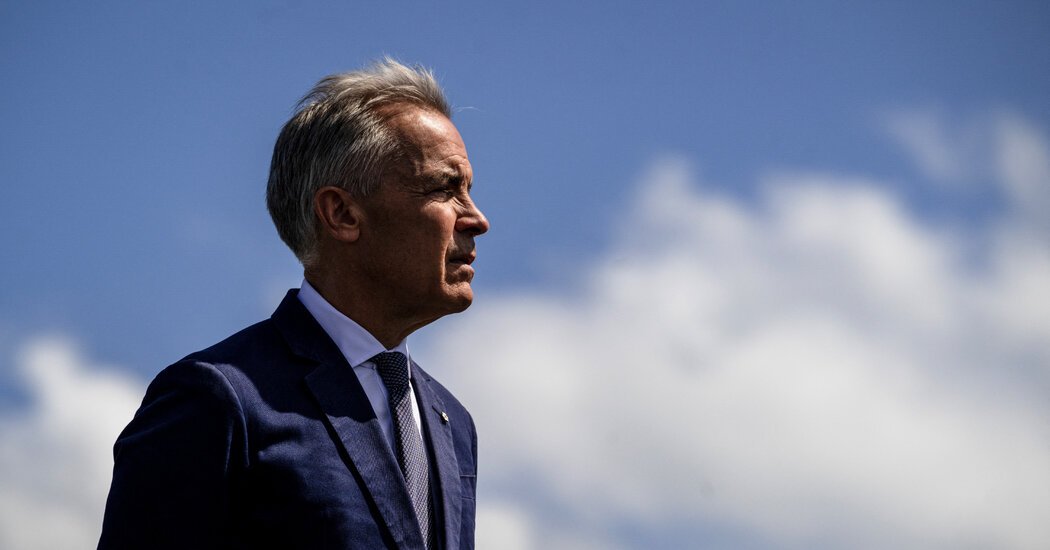
    Back in Ottawa, Prime Minister Mark Carney got off the phone with Doug Ford, the premier of Ontario. Mr. Ford had told him plainly: Don’t take the deal.

    Mr. Ford told Mr. Carney he would not comply with a key U.S. demand: restoring the sale of U.S. alcohol that he, alongside most other provincial leaders, had banned. American tariffs on Canadian steel and automobiles were still too high to enable their long-term survival, Mr. Ford had decided.

    Mr. Carney called his team in Washington for the latest news from the negotiations. Then, just after 10:30 p.m., he pulled the plug and ordered them home.

    A month of intense talks to stave off new U.S. tariffs on Canada and soften the ones previously imposed by the Trump administration had been yielding steady progress. But they collapsed suddenly, setting in motion an all-out trade war between the two nations.

    The sticking points were many. In the last few hours, negotiators clashed over Canadian rules promoting French-language movies and shows online, as well as the Trump administration’s demands to dictate Canada’s steel tariffs on other countries. Canada, in turn, insisted on more generous treatment for its autos, electric vehicles and products made with metal — and ultimately backed away from its offer to cooperate on the Keystone XL pipeline that President Trump has long desired, people familiar with the negotiations said.

    On Monday, after the negotiations collapsed, Mr. Trump vowed to increase tariffs on all cars, trucks, car parts and steel from Canada to 50 percent, starting on Jan. 1. He called Canadian officials “clowns” from “among the worst Nations in the World to deal with.”

    “WE DON’T NEED CANADA, THEY NEED US!” he wrote.

    Mr. Carney fired back: “The attitude, at the negotiation table, that Canada is a subsidiary of the United States,” he said, “that’s not something we’re going to accept.”

    Mr. Carney is now expected to announce Canada’s retaliation tariffs against the United States.

    What led to the breakdown is a story of fundamental misalignment between the countries — ideological, economic and political. Ultimately, Mr. Carney decided to defy Mr. Trump and endure his economic and political targeting of Canada.

    This account, which contains previously unreported details of the final days and hours of the trade negotiations, is based on interviews with five American and Canadian officials with direct knowledge of the talks, two former U.S. officials, as well as seven senior industry leaders on both sides of the border who were briefed throughout.

    The interviews show that the red lines for the two sides were so far apart that it would have required major concessions, particularly by Canada, to come to a final agreement.

    The Zombie Pipeline

    “The great Keystone XL Pipeline, long ago killed by Sleepy Joe Biden, may be awoken from the grave!” Mr. Trump said in a Tuesday evening social media post, in which he also claimed that the United States and Canada had a “DEAL!”

    Mr. Trump’s love of the beleaguered pipeline extension, meant to transport oil from Canada to the U.S. Gulf Coast until it was canceled by Mr. Biden in 2021, is well known.

    Mr. Carney had brought up the idea of reviving it during his first White House visit last year.

    Officials said that, when Mr. Carney and Mr. Trump spoke by phone early in the week, Mr. Carney again mentioned the pipeline, saying that, for the right deal on tariffs, Canada would consider bringing its side of the pipeline back to life. Mr. Trump was thrilled, a former official briefed on the talks said.

    But by Friday, the Keystone XL pipeline idea was buried again. A U.S. official said that, in the last few hours, Canada had expressed reluctance to cooperate. A Canadian official said that the trade deal on offer was not good enough to make the pipeline make sense.

    The Lutnick Factor

    Last Monday afternoon, with the talks still underway, Jamieson Greer, the U.S. trade representative, and Dominic LeBlanc, the Canadian trade minister, dodged reporters waiting in the Washington humidity as they left a roughly two-hour meeting at the Commerce Department.

    Canadian negotiators were used to working closely with Mr. Greer, who oversees U.S. trade deals and helped negotiate the United States-Mexico-Canada Agreement during Mr. Trump’s first term. But many of the issues that Canadians cared about most were instead the purview of the man who stayed inside in the air conditioning: Howard Lutnick, the secretary of commerce.

    Mr. Lutnick, a hard-charging former bond broker who has known Mr. Trump for decades, oversees the administration’s tariffs on cars, trucks, steel and aluminum. And in the coming days, he would take a hard line on those topics, issues that ultimately took down the talks.

    Negotiators were hopeful to start that week. After Mr. Trump threatened last month to impose 50 percent tariffs on hundreds of products, the Canadians reached out to negotiate, asking for a comprehensive deal that resolved Mr. Trump’s earlier tariffs and his latest threats, a U.S. official said. Mr. Trump gave Mr. Greer a green light to see what the Canadians had to offer.

    American officials felt confident that they could get Canada to both scale back the retaliatory tariffs they had imposed against Mr. Trump and to remove what the United States saw as unfair barriers to agriculture, energy and digital trade.

    On Tuesday night, U.S. and Canadian officials agreed on the outlines of a deal, and Mr. Trump proclaimed on social media that he had paused his tariffs until midnight Friday to finalize the paperwork.

    But on Wednesday, as the two sides got into the details, particularly on metals and autos, snags emerged. Mr. Lutnick was wary of Canadian proposals that would lower the tariff on autos below the level he wanted.

    As word leaked last week that the United States would reduce its tariffs on Canadian steel and aluminum, U.S. companies lobbied the Commerce Department and the White House to preserve their protections. Mr. Lutnick intervened on their behalf, including suggesting that only a certain volume of aluminum be subject to lower tariff rates.

    After spending several days in negotiations, Mr. LeBlanc flew home to Ottawa on Wednesday afternoon. But early the next morning, he urgently returned to Washington, as did Marc-André Blanchard, Mr. Carney’s chief of staff.

    Neither was scheduled to be in Washington that day, according to two people familiar with the events. They were rushing back because of Mr. Lutnick’s intervention.

    Mr. Lutnick also insisted that tariffs not be lowered for heavy trucks, as they would be for cars. And Canada, which produces the GM Silverado and Ford F-350 and F-450 in Ontario, insisted this was a red line.

    Mr. Lutnick’s interventions caused frustration inside the trade office, which had been in talks with the Canadians for weeks, one person close to the office said. The person said that Mr. Greer did not disagree with Mr. Lutnick substantively, but he did not think the Canadians would accept the proposals.

    A White House official said that Mr. Lutnick’s hard line did not derail the negotiations. Kush Desai, a White House spokesman, said that the entire trade and economic team was “playing from one playbook, President Trump’s playbook.”

    The United States ultimately offered to reduce its tariffs on steel, aluminum and cars, and eliminate entirely a tariff on Canadian lumber imposed last year, Mr. Greer said in an interview on Saturday.

    For Canadians, Mr. Lutnick was already something of a villain. Though he is friendly enough to exchange text messages with Mr. Carney, he has offended many Canadians, including intervening to block the opening of a new Canada-U.S. bridge and saying that Canadian officials “suck” during an event in Washington in April.

    Mr. Lutnick had also made clear that his goal was moving auto production out of Canada into the United States. Speaking virtually at a U.S.-Canada summit late last year, Mr. Lutnick told a Canadian audience that the United States was no longer interested in buying Canadian-made cars.

    Sovereignty Matters

    For the Canadian team, a number of different issues came down to sovereignty.

    On Friday, U.S. officials raised concerns about Canada’s future trade agreements and how they would guard against foreign products flooding into North America. They wanted to be able to review and potentially dictate the terms for Canada’s trade agreements with other countries, a Canadian official said.

    Canadian negotiators had gone into the talks suggesting the ultimate goal should be to create a “Fortress North America,” as they called it, with ultralow or nonexistent tariffs inside its walls, namely between Canada and the United States, and aligned tariffs for outsiders.

    The United States wanted Canada to apply U.S. tariffs to other countries, particularly when it came to steel, now and in the future: If the United States changed policy and place higher tariffs on certain goods from a third country, Canada would need to do the same, even if it already had a trade agreement in place, a Canadian official said.

    For the Trump administration, this was necessary to prevent, for example, cheaper steel from flooding third countries through Canada and into the United States.

    But this was unacceptable to the Canadians, who are currently in talks on multiple trade deals with Latin American and other nations as part of Mr. Carney’s vision to diversify trade away from dependence on the United States.

    A Canadian official also said that the U.S. side also wanted Canada to swiftly roll back a program it began last year to support industries impacted by U.S. tariffs, known as “Buy Canadian,” which prioritizes using domestic products and suppliers for public-sector projects — similar to a policy the United States implements to favor its own industries.

    The Canadians also pressed the United States for a level of certainty that the deal would not be scrapped overnight by the Trump administration. But the United States maintained that it would retain all power to change tariff policy against Canada at any time, irrespective of the agreement, officials said. Mr. Carney would say in his seething Saturday address to Canadians: Sometimes, the United States signature is “written in pencil.”

    Lost in Translation

    A particularly sore point in the talks, and one that has animated Canadians since they collapsed, was the suggestion by Mr. Carney that the United States wanted to intervene in Canada’s all-important policy to protect the use of the French language.

    French, spoken mostly but not exclusively in Quebec, is one of Canada’s two official languages and bilingualism is government policy across the country. Different kinds of laws protect and guarantee the continued use of French in daily life, from labels on products to funding for the arts and education. Quebec would likely break away from Canada, as it has often threatened to, without such guarantees.

    As part of the trade talks, Canada had agreed to review laws that protect Canadian-made online content, including French-language shows. On Friday, and until the final moments, the United States was asking Canada to repeal a law that would, among other provisions, compel streaming platforms to place such movies or series more prominently for Canadian subscribers.

    The U.S. side, officials said, viewed such policies as an intervention in the platforms’ freedoms.

    A person with direct knowledge of the talks said that the American side was flexible on this point, and did not make any asks regarding the French language explicitly. A Canadian counterpart said that, even if that were the case, the topic was still being debated until the last minute before the talks broke down on Friday.

    READ ALSO

    Jelly Roll Celebrates His 300-Pound Weight Loss on ‘Jimmy Kimmel Live’

    Trump’s Attempt to Strangle Iran’s Economy Depends on China’s Cooperation

    It would be one of many issues left unresolved, as Mr. Carney decided the concessions were unthinkable for Canada.

    “We cannot accept what they have offered, and we will not give what they have asked,” he said.


    Source link

    Related Posts

    Jelly Roll Celebrates His 300-Pound Weight Loss on ‘Jimmy Kimmel Live’
    United States

    Jelly Roll Celebrates His 300-Pound Weight Loss on ‘Jimmy Kimmel Live’

    August 25, 2026
    Trump’s Attempt to Strangle Iran’s Economy Depends on China’s Cooperation
    United States

    Trump’s Attempt to Strangle Iran’s Economy Depends on China’s Cooperation

    August 24, 2026
    Trump’s trade ‘war’ with Canada has Carney facing his biggest test yet
    United States

    Trump’s trade ‘war’ with Canada has Carney facing his biggest test yet

    August 24, 2026
    Trump Administration Prepares to Revoke Up to 200,000 Visas From Asylum Seekers
    United States

    Trump Administration Prepares to Revoke Up to 200,000 Visas From Asylum Seekers

    August 24, 2026
    Zohran Mamdani Is Turning His Fire on Amazon
    United States

    Zohran Mamdani Is Turning His Fire on Amazon

    August 24, 2026
    Supreme Court Removes Hurdle to Trump Directive on Mail Voting
    United States

    Supreme Court Removes Hurdle to Trump Directive on Mail Voting

    August 24, 2026
    Next Post

    Gonsalves calls again for gov’t to buy back Pignataro’ Canouan leasehold

    POPULAR NEWS

    2026 Regional and International Conventions of Jehovah’s Witnesses

    2026 Regional and International Conventions of Jehovah’s Witnesses

    July 7, 2026
    Thaksin, Yingluck and Paetongtarn meet Indonesian President Prabowo for investment talks

    Thaksin, Yingluck and Paetongtarn meet Indonesian President Prabowo for investment talks

    July 13, 2026
    Løkke is personally disappointed with the United States, which is celebrating its 250th birthday

    Løkke is personally disappointed with the United States, which is celebrating its 250th birthday

    July 9, 2026
    India’s imports from China soar to $80 billion in first half of 2026, exports up 37%

    India’s imports from China soar to $80 billion in first half of 2026, exports up 37%

    July 16, 2026
    This is how Nicolás Maduro and Cilia Flores reappeared in their hearing

    This is how Nicolás Maduro and Cilia Flores reappeared in their hearing

    July 24, 2026

    EDITOR'S PICK

    PM urges citizens to help reduce crime

    PM urges citizens to help reduce crime

    August 6, 2026
    MIST summer camp sparks science-tech curiosity

    MIST summer camp sparks science-tech curiosity

    July 15, 2026
    $500 Reward Offered After 12-Year-Old Girl Reportedly Robbed in Golden Grove Extension

    $500 Reward Offered After 12-Year-Old Girl Reportedly Robbed in Golden Grove Extension

    August 6, 2026
    VT1M cheque was borrowed money, not VAICF funds: Pipite

    VT1M cheque was borrowed money, not VAICF funds: Pipite

    July 28, 2026

    Recent Posts

    • Grand Mufti urges reflection on Prophet’s teachings
    • Delhi SIR: draft roll publication deferred to Aug. 31 amid delay in polling station rationalisation
    • Procurement master composer Ali on stage
    • Gonsalves calls again for gov’t to buy back Pignataro’ Canouan leasehold

      © 2026 Agentially - Navigating shifting sovereignties and global risk .

      Welcome Back!

      Login to your account below

      Forgotten Password?

      Retrieve your password

      Please enter your username or email address to reset your password.

      Log In
      No Result
      View All Result
      • HOME
      • AMERICAS
        • Argentina
        • Brazil
        • Canada
        • Chile
        • Colombia
        • Costa Rica
        • Cuba
        • Dominican Republic
        • Ecuador
        • El Salvador
        • Greenland
        • Guatemala
        • Honduras
        • Mexico
        • Nicaragua
        • Panama
        • Paraguay
        • Peru
        • United States
        • Uruguay
        • Venezuela
      • ASIA-PACIFIC
        • Australia
        • Brunei Darussalam
        • Cambodia
        • China
        • Federated States of Micronesia
        • Fiji
        • Indonesia
        • Japan
        • Kiribati
        • Laos
        • Malaysia
        • Marshall Islands
        • Mongolia
        • Myanmar
        • Nauru
        • New Zealand
        • North Korea
        • Palau
        • Papua New Guinea
        • Philippines
        • Samoa
        • Singapore
        • Solomon Islands
        • South Korea
        • Taiwan
        • Thailand
        • Timor-Leste
        • Tonga
        • Tuvalu
        • Vanuatu
        • Vietnam
      • CARICOM
        • CARICOM – Non-English
          • Haiti
          • Suriname
        • CARICOM Associates
          • Anguilla
          • Bermuda
          • British-Virgin-Islands
          • Cayman-Islands
          • Curacao
          • Turks-and-Caicos
        • CARICOM English
          • Antigua and Barbuda
          • Barbados
          • Belize
          • Dominica
          • Grenada
          • Guyana
          • Jamaica
          • Montserrat
          • Saint Kitts and Nevis
          • Saint Lucia
          • Saint Vincent and the Grenadines
          • The Bahamas
          • Trinidad and Tobago
      • EURASIA
        • Armenia
        • Azerbaijan
        • Balarus
        • Georgia
        • Kazakhstan
        • Kyrgyzstan
        • Moldova
        • Russia
        • Tajikistan
        • Turkmenistan
        • Ukraine
        • Uzbekistan
      • EUROPE
        • Albania
        • Andorra
        • Austria
        • Bosnia and Herzegovina
        • Bulgaria
        • Croatia
        • Cyprus
        • Czech Republic
        • Denmark
        • Estonia
        • Finland
        • France
        • Germany
        • Greece
        • Holy See
        • Hungary
        • Iceland
        • Ireland
        • Italy
        • Kosovo
        • Latvia
        • Liechtenstein
        • Lithuania
        • Luxembourg
        • Malta
        • Monaco
        • Montenegro
        • Netherlands
        • North Macedonia
        • Norway
        • Poland
        • Portugal
        • Romania
        • San Marino
        • Serbia
        • Slovakia
        • Slovenia
        • Spain
        • Sweden
        • Switzerland
        • United Kingdom
      • MIDDLE EAST AND NORTH AFRICA
        • Algeria
        • Bahrain
        • Egypt
        • Iran
        • Iraq
        • Israel
        • Jordan
        • Kuwait
        • Lebanon
        • Lybia
        • Morocco
        • Oman
        • Palestinian Territories
        • Qatar
        • Saudi Arabia
        • Syria
        • Tunisia
        • Turkey
        • United Arab Emirates
        • Western Sahara
        • Yemen
      • SOUTH ASIA
        • Afghanistan
        • Bangladesh
        • Bhutan
        • India
        • Maldives
        • Nepal
        • Pakistan
        • Sri Lanka
      • SUB-SAHARAN AFRICA
        • Angola
        • Benin
        • Botswana
        • Burkina Faso
        • Burundi
        • Cabo Verde
        • Cameroon
        • Central African Republic
        • Chad
        • Comoros
        • Cote d’Ivoire
        • Democratic Republic of the Congo
        • Djibouti
        • Equatorial Guinea
        • Eritrea
        • Eswatini
        • Ethiopia
        • Gabon
        • Gambia
        • Ghana
        • Guinea
        • Guinea Bissau
        • Kenya
        • Lesotho
        • Liberia
        • Madagascar
        • Malawi
        • Mali
        • Mauritania
        • Mauritius
        • Mozambique
        • Namibia
        • Niger
        • Nigeria
        • Republic of the Congo
        • Rwanda
        • Sao Tome and Principe
        • Senegal
        • Seychelles
        • Sierra Leone
        • Somalia
        • South Africa
        • South Sudan
        • Sudan
        • Tanzania
        • Togo
        • Uganda
        • Zambia
        • Zimbabwe

      © 2026 Agentially - Navigating shifting sovereignties and global risk .

      This website uses cookies. By continuing to use this website you are giving consent to cookies being used. Visit our Privacy and Cookie Policy.