For generations, an elected representative’s connection with constituents was built through community meetings, church services, town halls, political meetings, and knocking on doors. Today, a politician can reach thousands of people with nothing more than a smartphone.
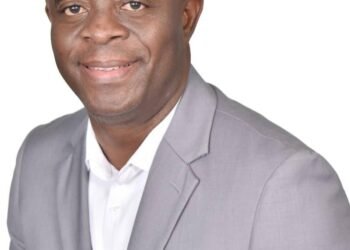
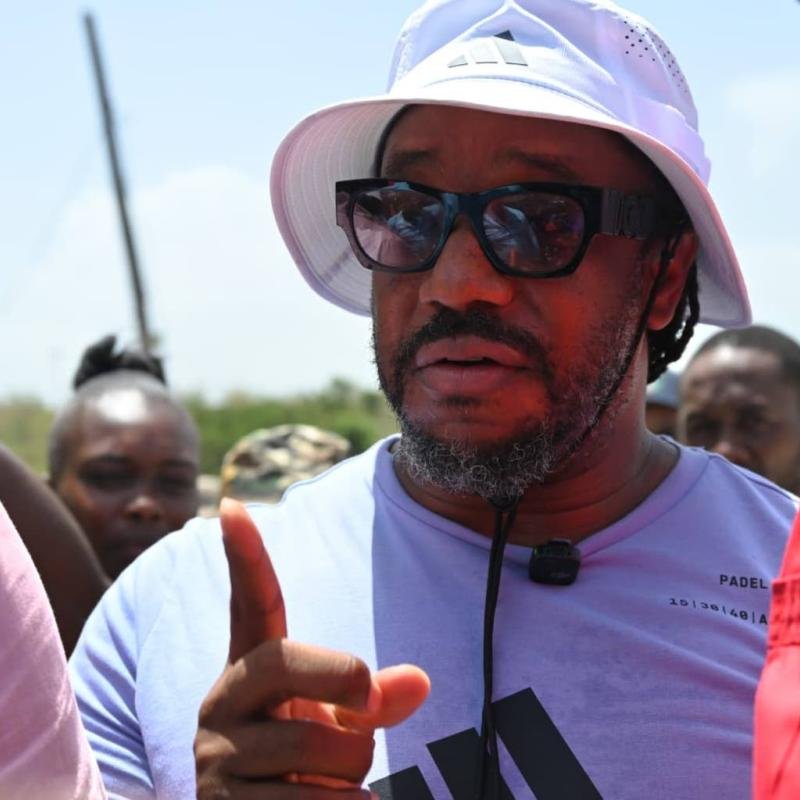
Social media has changed political engagement, allowing politicians to communicate directly with constituents and meet people where they are. However, there is growing controversy surrounding Eastern Portland Member of Parliament Isat Buchanan and his appearances on TikTok Live. For some Jamaicans, his participation in TikTok games and encouragement of users to “tap” the screen are unbecoming of someone who occupies public office.
But is the problem really TikTok? Or is it that some people have a particular idea of what a member of parliament should be?
Buchanan was elected MP for Eastern Portland in the September 3, 2025 general election, defeating incumbent Ann-Marie Vaz. He is an attorney-at-law who became nationally prominent as part of the legal team representing Vybz Kartel before the Judicial Committee of the Privy Council. He is also the opposition spokesperson on youth and human rights.
Radio host Gabrielle Hylton, on her programme ‘At the National Level’ on Sleek Radio Jamaica, made some remarks concerning a politician whom she did not name. She questioned why politicians who are paid millions of dollars would be on TikTok Live “begging” users to tap the screen so they would not lose a match.
In a video clip posted to her own social-media accounts, Hylton said: “There are politicians, even after we pay them so much, find themselves on social media, on TikTok Live, on their poolside, riding their Pelotons, begging people to tap up the screen and don’t mek dem lose dem match.”
She then asked: “What has politics gone to in this country?”
Hylton continued: “After paying them $14 million per year, they show up online, on TikTok, begging you and I who earn less than them to give us more of what we have because it is not enough … and using the platform to increase their public profile for whatever reason, perhaps tied to more wages outside of politics. What have we gone to as a country?”
WHAT IS THE PROBLEM?
The question is, if Buchanan is using TikTok to increase his public profile, then what is the problem? Politicians have always sought visibility through interviews, press conferences, rallies and other public engagements. Visibility is part of politics.
Members of parliament are highly paid public officials, and their conduct is subject to scrutiny. But being an MP does not mean becoming a different species of Jamaican. There is an old-fashioned image of political leadership that tells us a politician must always be behind a podium, formally dressed and speaking in prepared language.
But social media has broken down those barriers. If younger constituents are on TikTok, politicians should be willing to meet them there. The platform does not determine the quality of representation. It is their work that matters.
Buchanan has repeatedly said that his TikTok activity is connected to fundraising for his constituents. That explanation deserves to be taken seriously.
Buchanan was seen on TikTok Live at UWI’s Orientation Day recently. There, he donated several laptops to university students, which he says were a result of support from his TikTok followers. He has spoken publicly about using a TikTok pool challenge to help raise funds for additional hospital beds in Portland. He said two beds had already been delivered and another 10 were expected. His constituency website also reports that more than 3,000 tablets have been distributed to children through his constituency initiatives. If the criticism is that Buchanan is using TikTok to take money from Jamaicans for himself, critics must prove that allegation.
Buchanan’s constituents may care less about TikTok and more about whether he shows up.
It is not lost on me, the irony of criticising politicians for finding unconventional ways to raise resources for constituents while complaining about inadequate public resources. If the government is not providing everything a constituency needs, should we be outraged when an MP finds another way to help?
If Buchanan is using his platform to build political capital while raising resources for his constituency, it is the voters who are entitled to decide whether they consider that acceptable.
The answer to unconventional politics should not automatically be ridicule, but an assessment of whether the activity interferes with parliamentary responsibilities. Perhaps politics is changing. The politician of the 21st century does not necessarily have to stand behind a podium to lead. He may be in Parliament in the afternoon, at a community meeting in the evening, and on TikTok at night.
So, instead of asking, “What has politics come to?” perhaps we should ask: What is the politician accomplishing for the people who elected him? If the evidence shows that the TikTok games are helping to put resources into the hands of constituents, then perhaps the problem is not that the MP has gone too far into social media.
Perhaps it is some of us who still have not caught up with it.
Chelsea Chin is a community advocate based in St Mary with a background in public service, youth leadership and community development. She is the former Region 2 chairman of PNPYO.