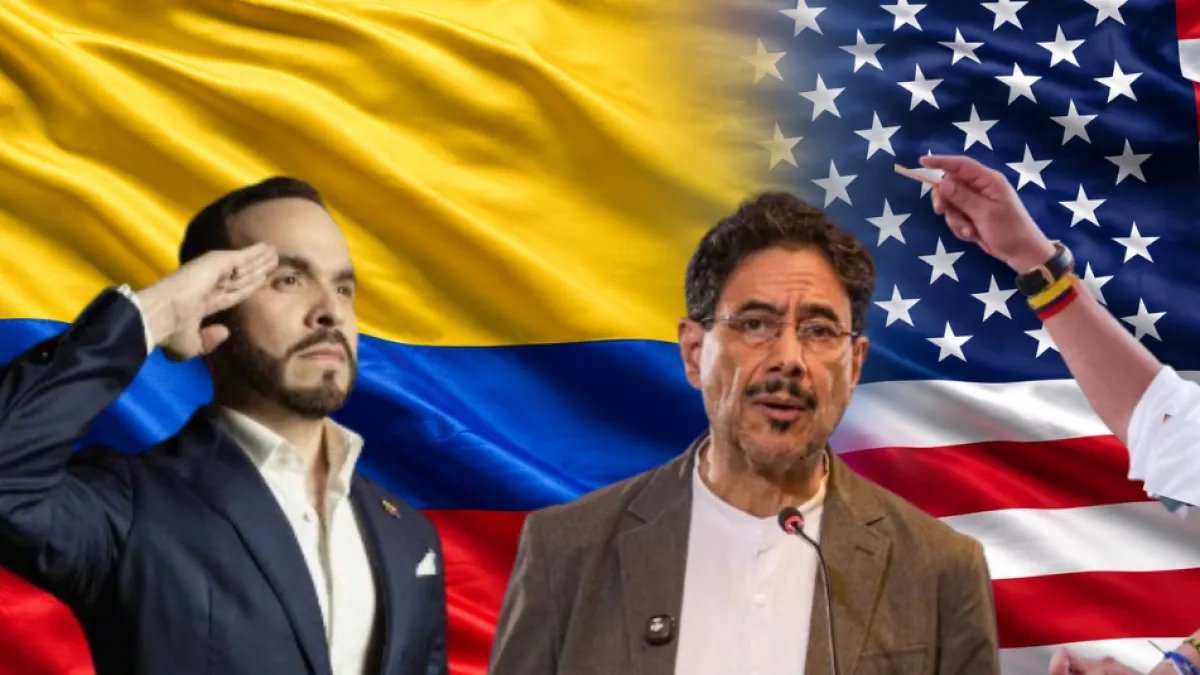
After his defeat at the polls, Senator Iván Cepeda has continued to insist that he is not going to recognize the president-elect Abelardo de la Espriella until he renounces his US citizenship, desists from any attempt to extradite Gustavo Petro and clarifies whether he is a collaborator or member of any of the US security agencies.
It is now clear that the issue of citizenship is not a legal impediment for someone to be president; and that extradition is regulated in Colombia and depends on several instances. And as for some link with security agencies, in Petrism itself they have dusted off the so-called Petroleaks, which became known in 2019 and in which they talk about data that the outgoing president, then a senator, passed on to the United States.
READ ALSO
The ‘Farcpolitics’
William Brownfield, former United States ambassador to Colombia. Photo:Sergio Acero. THE TIME
The information came from a cable, dated Tuesday, May 27, 2008 at 7 hours and 27 minutes at night, of which the Central Intelligence Agency (CIA), the Department of Justice, the Department of Defense and the United States Southern Command received a copy. In addition, the diplomatic headquarters of that country in Bolivia, Brazil, Ecuador, Panama, Peru and Venezuela.
The topic: the call Farcpolitics or links between the FARC guerrilla and politicians, which both the Supreme Court and the Prosecutor’s Office had been investigating.
The cable starts counting that the Attorney General’s Office ordered an investigation against nine people, including a US citizen and three other foreigners.
“Senator Gustavo Petro told us that he does not rule out the possibility that some members of the Democratic Pole maintain inappropriate ties with the FARC.”, point out officials from the United States Embassy in Colombia. And give the names of those members of the Pole.
Former congressman, Wilson Borja, former minister, Gloria Ramírez, and former senator Piedad Córdoba. Photo:THE TIME
The mail With the information it appears sent with the classified-confidential seal by the then political advisor of the diplomatic mission in Colombia John S. Creamer and signed with the last name of the then ambassador William Brownfield.
The information never It was rectified or clarified by Petro and was even published in Colombia in a column in Semana magazine, by Daniel Coronell.
READ ALSO
Cable details
This is the cable in which Gustavo Petro’s delivery of information is mentioned. Photo:THE TIME
The wire -which still rests on the WikiLeaks portal- refers to the then congresswoman Piedad Córdoba (at that time a member of the Liberal Party); and Wilson Borja (RIP) and Gloría Inés Ramírez, the latter two from the Democratic Pole.
Point 6 of the communication states: “Polo senator Gustavo Petro, who is opposed to Borja and Ramírez in the Polo’s internal elections, does not rule out the possibility that the two maintained inappropriate ties with the FARC.”
As recorded in court records, congressmen Ramírez and Borja were acquitted of FARCpolitics. As for Piedad Córdoba (RIP), the Supreme Court of Justice declared that the evidence obtained on the computer of alias Raúl Reyes, leader of the FARC, was not “legal” because the chain of custody had been broken.
That decision implied that an investigation against former congressman Wilson Borja was archived.
READ ALSO
What happened to the information?
This is another part of the cable on the Farcpolitics. Photo:THE TIME
In another part of the cable that is being dusted off, it is stated, attributing it to Petro: “If the two were involved in active relations with the FARC, that would divide the Polo.”
At the time, the Polo released a statement stating that they trusted their militants and justice.
About Petro, another cable He placed him close to Hugo Chávez and was referring to Carlos Gaviria, the former magistrate who sought to be president.
“The two are night and day in style and tactics. While Petro organizes bombastic debates criticizing the Colombian government on several fronts, Gaviria talks about the importance of the ‘rule of law’ and the sanctity of the 1991 Constitution. Petro cultivates public ties with Venezuelan President Hugo Chávez and Gaviria stays on the sidelines” reads another WikiLeaks cable.
At the end of 2010, Petro resigned from Polo and after 14 years, That party became one of the forces that brought him to power, with the Historical Pact, and Gloria Inés Ramírez became his first Minister of Labor. And today, the topic revives.
INVESTIGATIVE UNIT
u.investigativa@eltiempo.com
@UinvestigativaET
Follow us now on Facebook