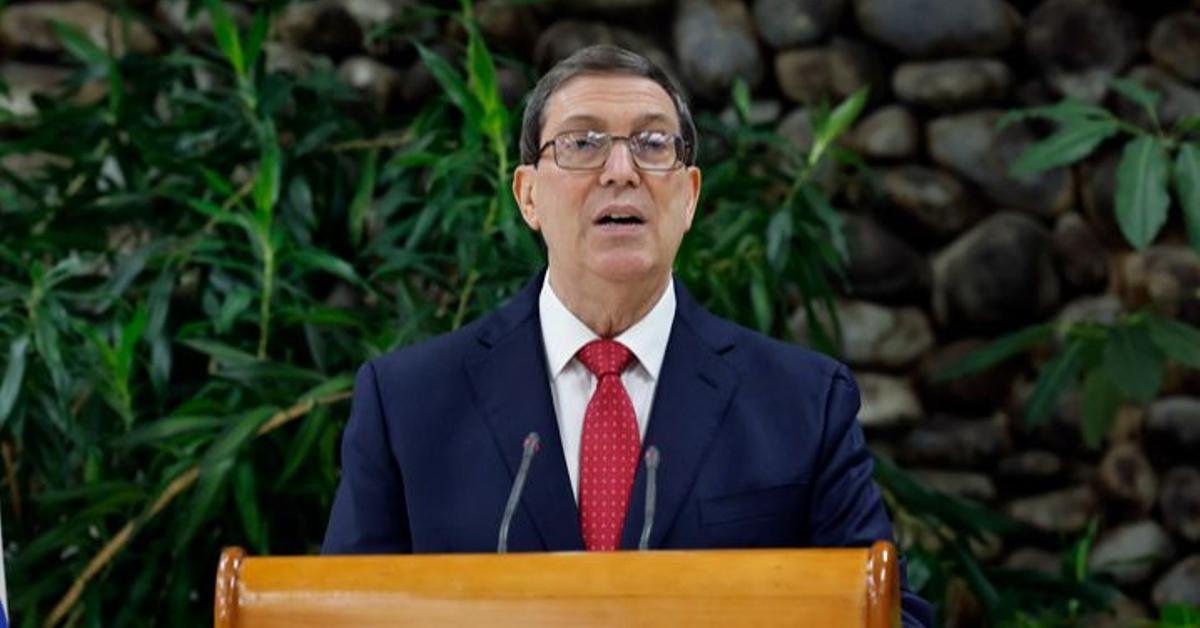
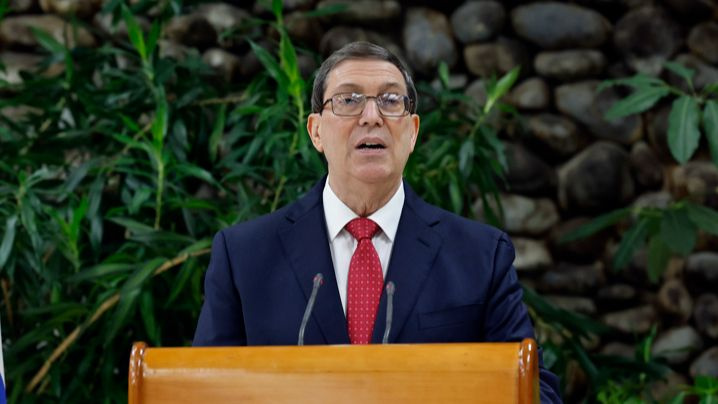
Havana/The Cuban Foreign Minister, Bruno Rodríguez, charged this Friday against the recent report of the Harvard group, which he pointed out for trying to “confuse and manipulate the American and international public.” The document attributes direct responsibility to the Government of Havana for the crisis in the country and proposes profound political and economic changes.
“The recent pseudoscientific report of the Harvard Working Group on the future of Cuba demonstrates the incorporation of sectors with marked ideological biases and clear monetary interests,” wrote the Cuban foreign minister in X.
Published on last September 10 under the name Harvard Working Group on the Future of Cuba Reportthe 21-page text describes the panorama of collapse in the island’s basic services and blames the Cuban Government, which “has not managed to take the necessary steps to prevent the crisis or a minimally adequate management of national challenges.”
Rodríguez also stated that the investigation responds “to the propaganda designed by the State Department” of the United States and to “the psychological war” against Cubans, “calling into question the prestige and scientific rigor of that renowned American university for which they claim to work.”
Despite Rodríguez’s criticism, the Harvard report does mention the relevant impact of the new sanctions applied by Washington
The chancellor attacked the study for “intentionally hiding the consequences for almost 70 years of the policy of US economic asphyxiation, of commercial and financial persecution, of imposing fear on those who trade and invest in Cuba.” The minister insisted on the effects of the US economic embargo on Cuba and added that the report does not mention “at all” the persecution and closure of any “escape valve” explicitly declared by the US Secretary of State, Marco Rubio.
Despite Rodríguez’s criticism, the Harvard report does mention the relevant impact of the new sanctions applied by Washington, which, according to its authors, “aggravated the problems of transportation, access to health, and food distribution,” among other consequences for the Island. The Harvard group also describes the policies of Donald Trump’s Administration as “explicitly imperial.”
However, according to Rodríguez, the report “focuses more than 50% of its pseudo-report on criticism and political recommendations aligned with the American discourse.”
The Harvard group also describes the policies of the Donald Trump Administration as “explicitly imperial”
The Harvard Document generated controversy because it maintains that the current Cuban authorities must assume a leadership role and act as facilitators of the transition process. The authors suggest that building consensus on the future of the Island “will not be easy” without the shared will of the Cuban Government, the diaspora, the international community, the opposition, civil society and the Administration of US President Donald Trump.
The report also recommends a general amnesty for political prisoners and the calling of a new constituent assembly to establish the foundations of a plural political system. Washington, according to the proposal, would have to respond “immediately, positively and forcefully,” starting by eliminating sanctions that affect fuel supplies and providing resources to stabilize the economy.
The document also advocates the construction of a social market economy, with full recognition of private property, and the reintegration of Cuba into international organizations such as the International Monetary Fund (IMF) or the Development Bank of Latin America and the Caribbean.
The report is signed, among others, by Tania Bruguera, Manuel Cuesta Morúa, Omar Everleny Pérez Villanueva, Rafael Rojas, Julio Antonio Fernández Estrada and former US diplomat Jeffrey DeLaurentis. The group presents it as a “living, under construction” document.